
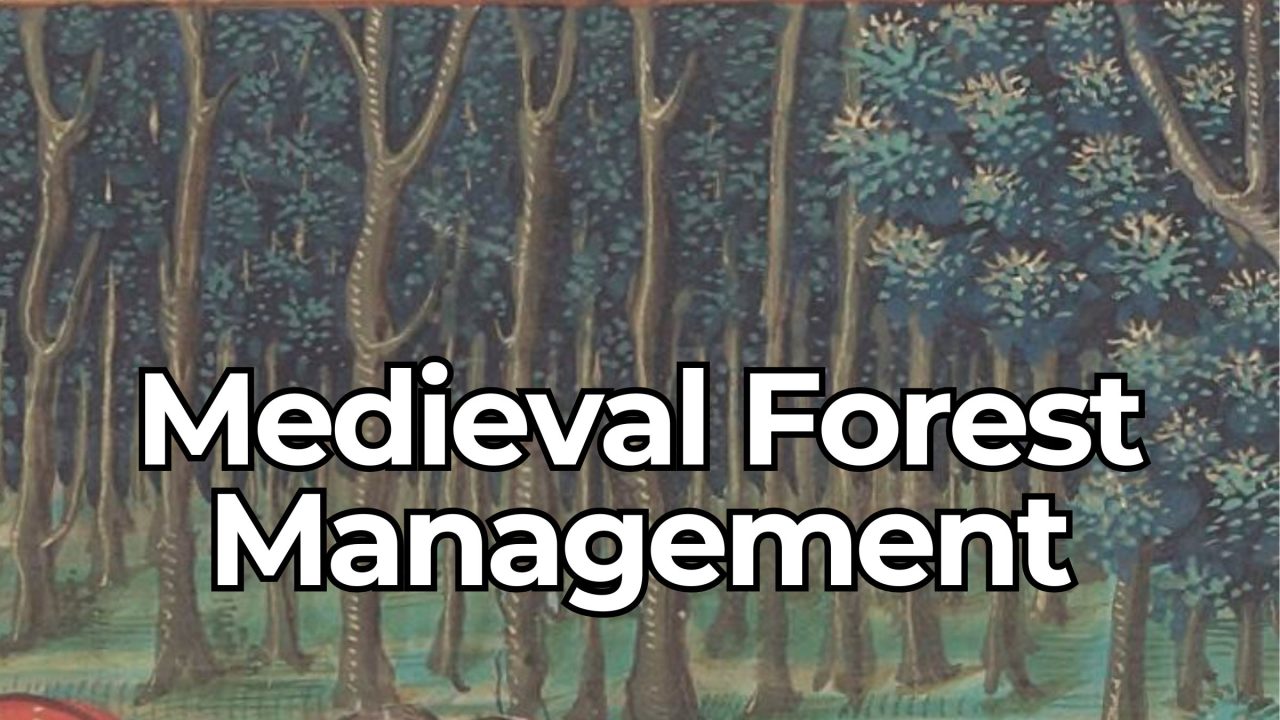
Long before modern conservation laws or environmental agencies, medieval rulers were already wrestling with a problem that sounds remarkably familiar: how do you protect a finite natural resource when everyone needs it at once?
In medieval Normandy, that resource was the forest. And according to research by historian Danny Lake-Giguère, published via Medievalists.net, the answer involved surprisingly organized systems of regulation, enforcement, and royal oversight — centuries before anyone used the word “sustainability.”
The story of how Normandy managed its woodlands is really a story about power, economics, and survival. And it turns out the medieval world was far more deliberate about environmental stewardship than most people assume.
Why Medieval Normandy Treated Forests Like a National Resource
Historian Michel Pastoureau has described medieval Europe as a “civilization of wood” — and Normandy was one of the clearest examples of that reality. Wood wasn’t just useful. It was foundational to almost every aspect of life.
Peasants needed it to heat their homes and cook food. Builders needed it for everything from simple farmhouses to the grand cathedrals that still stand across northern France today. Craftsmen relied on it for tools. And entire industries — including mining and glassmaking — were powered by it.
That level of demand created real pressure on the landscape. Forests were being pulled in multiple directions at once: cleared for farmland, harvested for timber, grazed by livestock, and burned for industrial fuel. Without some form of management, the resource could be exhausted entirely.
Royal authorities in Normandy recognized this threat and responded by developing increasingly sophisticated systems to regulate who could use the forests, how much they could take, and under what conditions. Managing these competing needs, Lake-Giguère argues, became one of the central challenges of medieval government in the region.
What the Forests Actually Provided — and Why That Made Them So Contested
To understand why forest management mattered so much, it helps to see just how many different things woodland provided. This wasn’t a single-use resource. It was more like a medieval version of a public utility — supplying raw materials across almost every sector of the economy.
| Use Category | Specific Application |
|---|---|
| Domestic | Heating and cooking fuel for households |
| Construction | Building peasant homes, castles, and cathedrals |
| Crafts and Tools | Crafting everyday tools and implements |
| Industry | Fueling mining operations and glassmaking |
| Agriculture | Woodland clearings used as grazing land |
Each of these uses competed with the others. Land cleared for grazing couldn’t grow timber. Wood burned in a glassmaking furnace couldn’t be used to build a roof. The more the population and economy grew, the sharper those trade-offs became.
Royal authorities weren’t just protecting forests out of ecological concern — they were protecting a revenue stream, a military resource, and a social safety net all at once. Forests were valuable, and rulers knew it.
How Medieval Normandy Managed Its Forests — The Regulatory Picture
What makes this history particularly striking is the level of organization involved. This wasn’t passive stewardship. According to Lake-Giguère’s research, Norman rulers developed active systems to regulate, protect, and profit from their woodlands.
The pressures driving this regulation were real and mounting. As demand grew across domestic, industrial, and agricultural uses, the strain on forest resources became impossible to ignore. The response from royal authorities was to impose structured oversight — controlling access, setting limits, and enforcing rules in ways that look surprisingly modern in their intent, if not their method.
- Forests were treated as a strategic resource requiring active royal oversight
- Rulers sought both to protect woodland from overuse and to profit from its managed exploitation
- Industrial uses like mining and glassmaking created significant demand that had to be balanced against other needs
- Woodland clearings served agricultural purposes, adding another layer of competing interest
- The regulatory systems that emerged grew increasingly sophisticated over time
The dual goal — protection and profit — is worth noting. This wasn’t purely conservation for its own sake. Medieval rulers understood that a depleted forest was a less valuable forest. Sustainable management, in practical terms, meant keeping the resource productive enough to keep generating revenue and materials over the long term.
The Broader Lesson Hidden in Medieval Woodland Policy
There’s a tendency to think of environmental awareness as a modern invention — something that arrived with the industrial revolution or the twentieth-century conservation movement. The history of medieval Normandy complicates that story.
Centuries before any formal legal framework for environmental protection existed, rulers were already grappling with resource depletion, competing economic interests, and the challenge of managing a shared landscape. They didn’t always get it right. But they were asking the right questions.
Lake-Giguère’s research, drawing on the broader framework established by historians like Pastoureau, suggests that the medieval world had a more nuanced relationship with its natural environment than popular history tends to acknowledge. Forests weren’t just backdrop. They were infrastructure — and they were managed as such.
That reframing matters. It places medieval Normandy not as a primitive precursor to modern governance, but as an early example of something recognizable: a society trying to balance immediate economic needs against the long-term health of its most critical natural resource.
Frequently Asked Questions
Who conducted the research on medieval Norman forest management?
The research was conducted by historian Danny Lake-Giguère, whose work examines how rulers in Normandy developed systems to regulate and protect forest resources.
What were forests mainly used for in medieval Normandy?
Forests supplied fuel for heating and cooking, timber for construction, materials for crafting tools, wood for industries like mining and glassmaking, and cleared land for grazing.
Why did medieval rulers get involved in managing forests?
Royal authorities recognized that forests were a vital and increasingly strained resource, and they developed regulatory systems to protect them while also profiting from their managed use.
Which historian described medieval Europe as a “civilization of wood”?
Historian Michel Pastoureau coined that description, and Lake-Giguère’s research on Normandy is framed partly within that broader argument about wood’s central role in medieval life.
Did medieval forest management become more sophisticated over time?
According to the research, yes — the systems Norman rulers used to regulate forest use grew increasingly sophisticated as demands on woodland resources intensified.
Was medieval forest regulation purely about conservation?
Not entirely. Rulers sought both to protect forests from overuse and to profit from them, making the motivation as much economic as it was protective.



Leave a Reply