
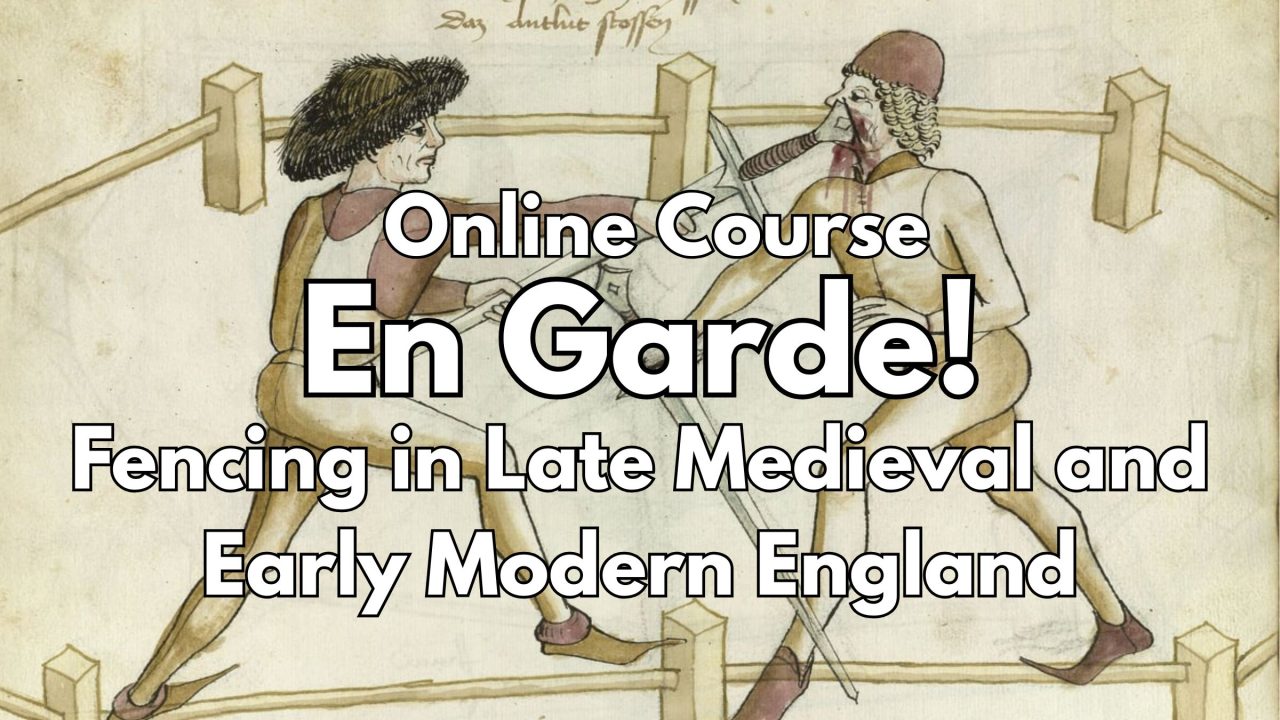
The afternoon sun streamed through the tall windows of the university library as Professor Elwyn Hartwell carefully turned the pages of a 16th-century manuscript. His fingers traced the detailed illustrations of sword positions and defensive stances, each drawing telling a story of England’s forgotten martial heritage. “These aren’t just old drawings,” he whispered to his research assistant. “They’re blueprints for an entire lost world of combat.”
For centuries, the art of fencing in medieval and early modern England has remained locked away in dusty archives and private collections. The techniques that once determined life and death in duels, that shaped the training of knights and gentlemen, have been largely forgotten by modern audiences.
But that’s about to change in a big way.
Bringing Medieval Swordplay Back to Life
Medievalists.net has just launched an groundbreaking online course titled “En Garde! Fencing in Late Medieval and Early Modern England,” and it’s already creating waves among history enthusiasts, martial arts practitioners, and academic researchers worldwide. This isn’t your typical dry historical survey – it’s an immersive journey into the world of English swordplay from the 14th to the 17th centuries.
The course promises to unlock secrets that have been hiding in plain sight for generations. Medieval fencing wasn’t just about swinging heavy swords around – it was a sophisticated martial art with complex techniques, philosophical underpinnings, and social implications that shaped English society.
The level of technical sophistication in medieval English fencing manuals is absolutely stunning. These weren’t crude fighters – they were highly trained martial artists with systems as complex as anything we see today.
— Dr. Margaret Thornfield, Medieval Combat Historian
What makes this course particularly exciting is its focus specifically on English traditions. While Italian and German fencing manuals have received extensive academic attention, English sources have often been overlooked or misunderstood. This course aims to correct that historical blind spot.
What You’ll Actually Learn
The course content goes far beyond basic sword techniques. Students will explore the complete ecosystem of medieval English martial culture, from the social contexts that drove combat training to the specific weapons and techniques that defined different periods.
Here’s what the comprehensive curriculum covers:
- Historical development of English fencing from medieval to early modern periods
- Analysis of surviving English fencing manuals and treatises
- Weapon evolution: from medieval longswords to Renaissance rapiers
- Social and cultural contexts of dueling and combat training
- Comparison with continental European fencing traditions
- Archaeological evidence and manuscript interpretation techniques
- Practical applications for modern historical European martial arts (HEMA)
The course structure is designed for maximum engagement, combining video lectures, interactive manuscript analysis, and virtual demonstrations of historical techniques.
| Course Component | Duration | Focus Area |
|---|---|---|
| Video Lectures | 12 hours | Historical context and analysis |
| Manuscript Studies | 6 hours | Primary source interpretation |
| Interactive Demos | 4 hours | Technique visualization |
| Discussion Forums | Ongoing | Community engagement |
| Final Project | Self-paced | Original research component |
We’re not just teaching history – we’re teaching people how to think like medieval martial artists. That requires understanding their mindset, their social world, and their technical innovations.
— Professor James Blackwood, Course Director
Who’s Actually Taking This Course
The enrollment numbers tell a fascinating story about who’s hungry for this knowledge. The course has attracted an incredibly diverse audience that spans multiple communities and interests.
Historical European Martial Arts (HEMA) practitioners make up the largest single group of students. These modern martial artists are passionate about recreating historical fighting techniques with authentic accuracy, and they’re always seeking better source material and expert interpretation.
Academic researchers represent another significant portion of the enrollment. Graduate students working on dissertations about medieval culture, professors developing new courses, and independent scholars are all diving deep into the material.
But perhaps most surprisingly, the course has attracted hundreds of general history enthusiasts – people with no martial arts background who are simply fascinated by this hidden aspect of English cultural heritage.
I expected mostly HEMA people to sign up, but we’re seeing retired teachers, museum professionals, historical fiction writers, and even video game developers. The appeal is much broader than we anticipated.
— Sarah Chen, Medievalists.net Course Coordinator
The geographic distribution is equally impressive. While English-speaking countries dominate enrollment, students from over thirty countries have registered, including significant numbers from Germany, Italy, and Japan – places with their own rich martial traditions who are eager to understand the English perspective.
Why This Matters Beyond the Classroom
This course represents something much bigger than just another online educational offering. It’s part of a growing movement to reclaim and understand historical knowledge that was nearly lost to time.
For the HEMA community, authentic historical sources are absolutely crucial. Without proper understanding of historical techniques and contexts, modern recreations become mere fantasy rather than legitimate martial arts. This course provides the scholarly foundation that serious practitioners desperately need.
Museums and cultural institutions are also paying close attention. As interest in medieval history continues to grow – fueled partly by popular media but increasingly by genuine scholarly curiosity – institutions need staff who can accurately interpret and present martial culture to the public.
The course is already influencing academic research directions. Several universities are reportedly developing their own medieval martial studies programs, and at least three major museum exhibitions focusing on historical combat are in planning stages.
This isn’t just about swords and fighting. It’s about understanding how an entire society thought about honor, conflict resolution, social status, and physical training. That has implications for how we understand medieval England as a whole.
— Dr. Robert Ashworth, Medieval Social Historian
The timing couldn’t be better. With traditional academic funding becoming increasingly scarce, online courses like this one provide crucial access to specialized knowledge that might otherwise remain locked in ivory towers.
Registration for “En Garde! Fencing in Late Medieval and Early Modern England” remains open, and early student feedback suggests this could become a model for how specialized historical knowledge gets transmitted in the digital age. Whether you’re a serious martial artist, an academic researcher, or simply someone fascinated by England’s hidden martial heritage, this course offers an unprecedented opportunity to explore a world that’s been waiting centuries to tell its story.
FAQs
Do I need martial arts experience to take this course?
No prior martial arts experience is required. The course focuses on historical and cultural analysis rather than physical training.
How long do I have to complete the course?
Students have six months from enrollment to complete all course materials and assignments at their own pace.
Are there any prerequisites for enrollment?
No formal prerequisites exist, though basic familiarity with medieval history is helpful for understanding the broader context.
Will there be opportunities to interact with instructors?
Yes, the course includes monthly live Q&A sessions and active discussion forums monitored by the teaching team.
Is this course suitable for academic credit?
While not directly offering academic credit, many universities accept the course for continuing education requirements, and the certificate is recognized by historical organizations.
What technology do I need to access the course materials?
Any modern computer or tablet with internet access will work. Mobile phones can access most content, though larger screens are recommended for manuscript analysis sections.

Leave a Reply