
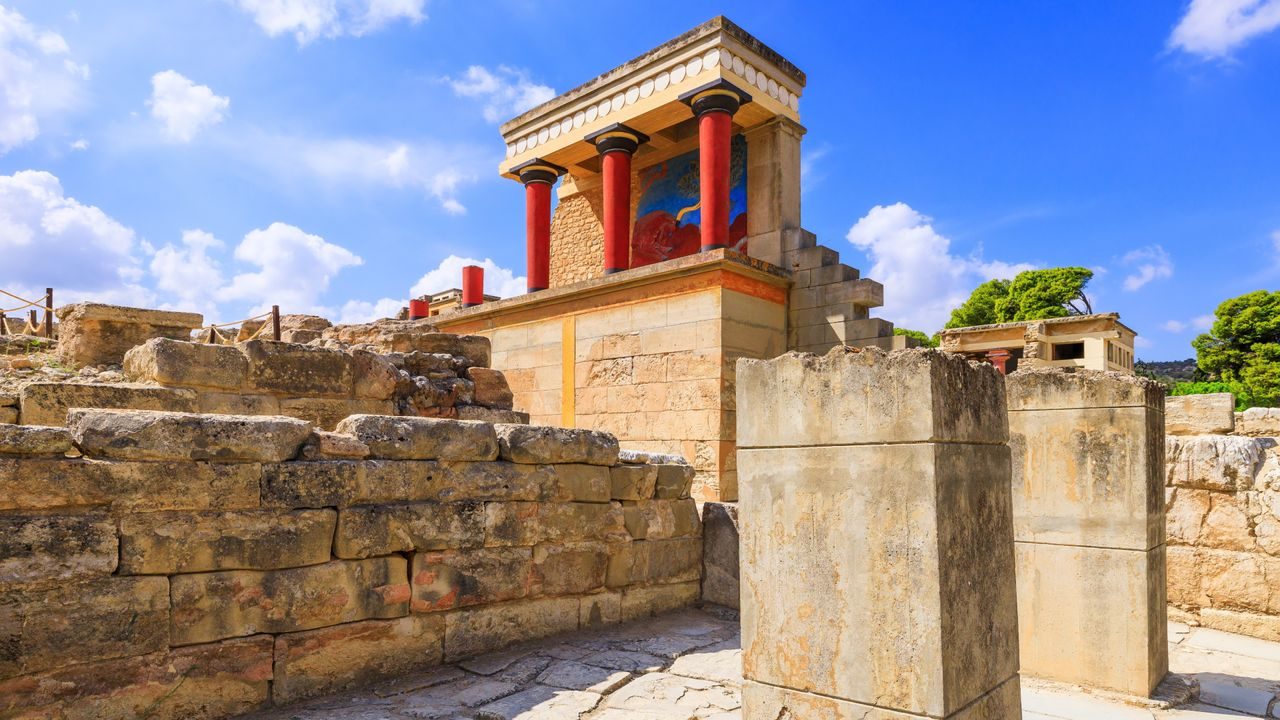
For roughly 500 years, a civilization thrived on the island of Crete that was unlike anything else in the ancient world — and then, somewhere around 1500 B.C., it collapsed. The Minoans left behind enormous palaces, vivid wall paintings, and a written language that scholars still cannot read. What happened to them remains one of archaeology’s most enduring and genuinely fascinating mysteries.
The story of the Minoan civilization is not just a footnote in ancient history. It is a puzzle about how sophisticated, complex societies can vanish — and why. The clues are buried in stone, ash, and undeciphered symbols, and researchers are still piecing them together today.
Here is what we know, what we suspect, and what remains stubbornly unanswered.
Who Were the Minoans?
The Minoan civilization flourished between roughly 2000 and 1500 B.C. on the island of Crete and nearby islands in the Aegean Sea. They were not a warrior culture in the way that many ancient civilizations are remembered. Instead, they were builders, artists, and traders.
Their palaces were decorated with elaborate frescoes — colorful wall paintings that depicted nature, ritual, and daily life. They engaged in athletic activities, including the striking and still-debated practice of bull leaping, in which participants apparently vaulted over the backs of charging bulls. Whether this was sport, religion, or both is a question researchers continue to debate.
They also developed written scripts — at least two of them — that experts have never successfully deciphered. This is one of the most remarkable gaps in our knowledge of the ancient world. We can see their art, walk through the ruins of their cities, and study their pottery, but we cannot read their words.
The City at Knossos and What It Tells Us
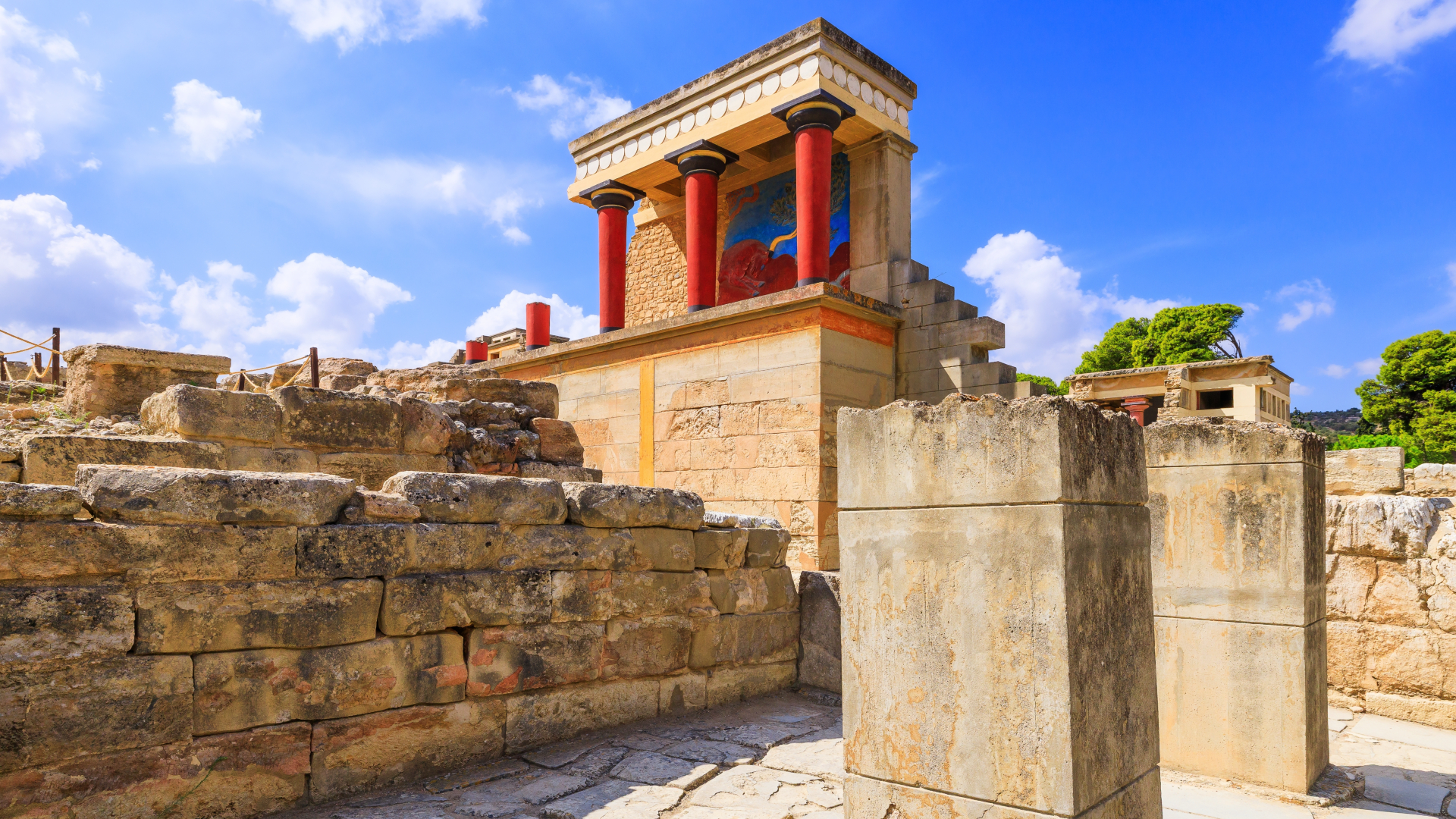
The most important Minoan city was Knossos, located on the northern coast of Crete. At its heart was a palace so large it covered the equivalent of two football fields. That scale alone tells you something significant: this was not a modest settlement. This was the center of a genuinely powerful and organized society.
Knossos has been excavated and studied for well over a century, and it continues to yield new information. The palace’s layout — with its many interconnected rooms, storage areas, and ceremonial spaces — suggests a society capable of coordinating large-scale agriculture, trade, and administration.
The frescoes found there are among the most visually striking artifacts from the ancient world. They show dolphins, griffins, and scenes of human activity rendered with a fluidity and naturalism that feels surprisingly modern.
What We Know About the Minoan Civilization’s Decline
| Time Period | Key Development |
|---|---|
| Around 2000 B.C. | Minoan civilization begins to flourish on Crete and nearby islands |
| 2000–1500 B.C. | Peak period of Minoan culture — palace construction, frescoes, bull leaping, written scripts |
| Around 1500 B.C. | Minoan civilization enters decline and eventually collapses |
The timeline above reflects what archaeology has been able to establish with reasonable confidence. The Minoans were clearly thriving for several centuries, and then, around 1500 B.C., something went badly wrong. What exactly triggered the collapse is where the debate gets complicated.
- Volcanic eruption: The massive eruption of the Thera volcano on the nearby island of Santorini is one of the most frequently cited contributing factors. The eruption would have sent tsunamis, ash clouds, and seismic shockwaves across the region, potentially devastating Minoan coastal settlements and agricultural land.
- Mycenaean invasion: Many historians believe that the Mycenaeans — a Greek-speaking civilization from the mainland — eventually took control of Crete, possibly moving into a power vacuum left by the volcanic disaster or by internal instability.
- Internal collapse: Some researchers point to the possibility of social unrest, economic disruption, or environmental stress weakening the civilization from within before any external blow landed.
- A combination of factors: The most widely accepted view among scholars is that no single cause explains the collapse — rather, a series of cascading pressures overwhelmed a society that had, until then, been remarkably resilient.
The Mystery That Still Cannot Be Solved
Perhaps the most haunting aspect of the Minoan story is the writing. The Minoans developed at least two distinct scripts. One, known as Linear A, has never been deciphered. Without being able to read their own records, historians are working with one hand tied behind their back. We can study what the Minoans built and how they lived, but their own account of events — whatever records they may have kept — remains locked away in symbols no one alive today can interpret.
This is not for lack of trying. Linguists and archaeologists have worked on Linear A for decades. The problem is partly that there is not enough surviving text, and partly that we do not know what language underlies the script. Until those barriers are overcome, a complete picture of Minoan society — including how its people experienced and recorded their own decline — will remain out of reach.
Why the Minoan Civilization Still Matters
The Minoans are not simply a curiosity from the distant past. Their story raises questions that feel relevant to any era: How do complex, successful societies collapse? What combination of environmental disaster, outside pressure, and internal weakness is required to bring down a civilization that seemed, from the outside, to be thriving?
Knossos still stands — or at least its ruins do — on the northern coast of Crete, drawing visitors and researchers alike. The palace that once covered the area of two football fields is still being studied, and new archaeological techniques continue to produce new findings.
The Minoans built something extraordinary. Understanding why it ended is a question that archaeology, linguistics, and geology are still working to answer together.
Frequently Asked Questions
When did the Minoan civilization exist?
The Minoan civilization flourished between roughly 2000 and 1500 B.C. on Crete and nearby islands in the Aegean.
Where was the most important Minoan city?
The most significant Minoan city was Knossos, located on the northern coast of Crete, which contained a palace the size of two football fields.
What activities were the Minoans known for?
The Minoans were known for building palaces decorated with frescoes, engaging in athletic activities such as bull leaping, and developing written scripts that have not been deciphered.
Has the Minoan written language been decoded?
No. The Minoans created written scripts that experts have never been able to decipher, leaving a significant gap in our understanding of their society and history.
What caused the collapse of the Minoan civilization?
The exact cause remains debated among scholars. Proposed factors include a major volcanic eruption, possible Mycenaean invasion, internal instability, and environmental pressures — most likely acting in combination.
Can visitors still see Minoan ruins today?
Yes. The ruins of Knossos on the northern coast of Crete remain one of the most visited and studied archaeological sites in the world.



Leave a Reply