
The Moon has been quietly collecting pieces of Earth’s atmosphere for billions of years — and scientists now believe its dusty surface could hold a detailed chemical record of what our planet’s air looked like long before any human ever breathed it.
That’s the striking premise behind a new study that turns a familiar idea on its head. Most people know Earth’s magnetic field as a planetary shield, something that protects us from the solar wind’s constant barrage of charged particles. That picture is still accurate. But new modeling suggests the shield has a slow, steady leak — and the Moon has been catching what drips out.
The implications are significant. If the findings hold up, the lunar surface may be far more scientifically valuable than previously understood — not just as a target for future human exploration, but as a preserved archive of Earth’s own deep history.
How Earth’s Atmosphere Ends Up on the Moon
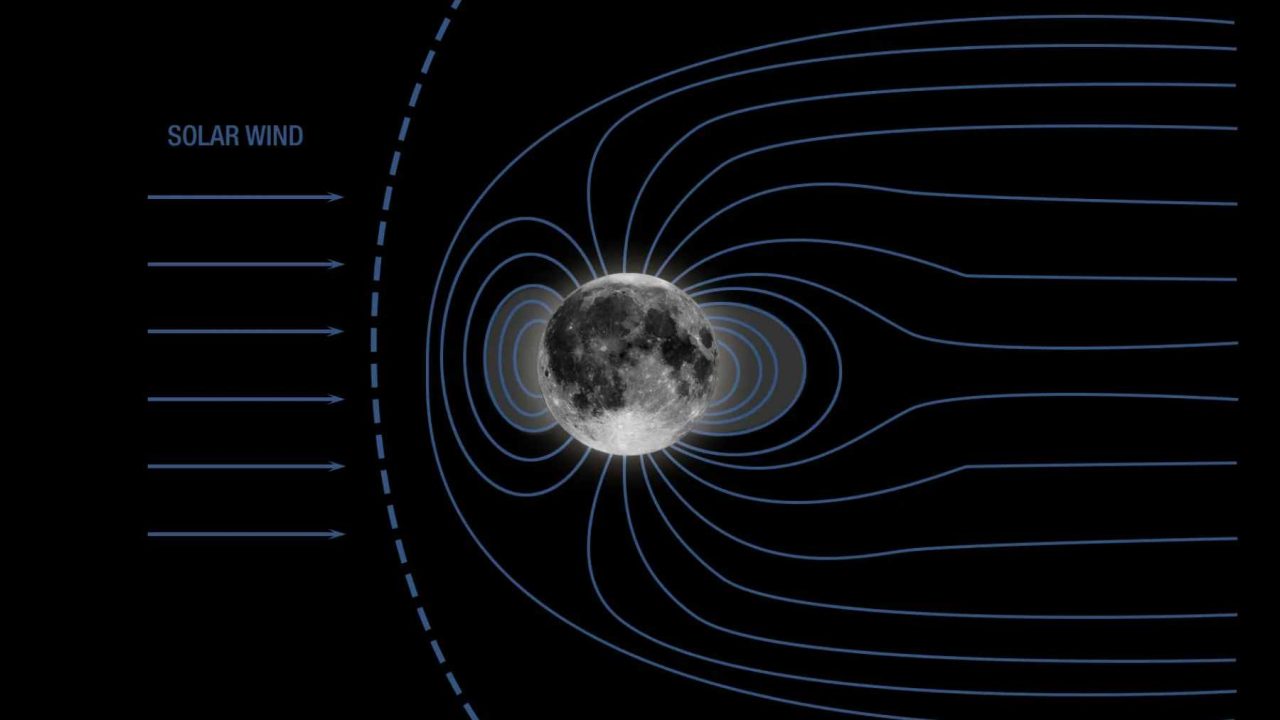
The mechanism at the center of this research involves something called Earth’s magnetotail — the long, comet-like extension of our planet’s magnetic field that stretches away from the Sun on the night side of Earth.
When the solar wind collides with Earth’s magnetic bubble, it doesn’t just bounce off cleanly. According to the new study, it can grab charged particles from Earth’s upper atmosphere and sweep them down into that elongated magnetic tail. The Moon, in its orbit, periodically passes directly through the magnetotail. When it does, some of those atmosphere-derived particles get implanted into the lunar soil rather than drifting off into deep space.
Think of it like a slow drip from a faucet you assumed was fully closed. Over geological timescales — billions of years — even a small, steady transfer adds up to something measurable.
The research team used advanced three-dimensional magnetohydrodynamic simulations combined with models tracking how different gases in Earth’s upper atmosphere become ionized and escape. Their results suggest this transfer process has been operating efficiently across the full history of Earth’s magnetic dynamo — not just during some brief, ancient window when Earth was less protected.
What the Lunar Soil Could Actually Tell Us
This is where the science gets genuinely exciting. If Earth has been seeding the Moon with atmospheric particles throughout its geological history, then the lunar regolith — the loose surface layer of dust and broken rock — could contain a layered chemical record spanning billions of years.
That record would potentially capture snapshots of Earth’s atmosphere at different points in time: before complex life, during major extinction events, through the rise of oxygen, and across every other dramatic chapter in our planet’s atmospheric evolution.
Earth itself is a poor keeper of such records. Plate tectonics, volcanism, erosion, and biological activity constantly recycle and overwrite the geological past. The Moon has none of those processes. What gets deposited on its surface largely stays there, undisturbed, buried under subsequent layers of dust and micrometeorite impacts.
- The Moon lacks plate tectonics, meaning surface deposits are not recycled
- There is no weather or liquid water to erode or redistribute material
- Particles implanted into the lunar regolith can remain chemically preserved over vast timescales
- Layered deposits could, in principle, be read like a timeline of Earth’s atmospheric chemistry
The Science Behind the Simulation
The methodology described in the study combines two distinct modeling approaches, which gives the findings more credibility than either technique would provide alone.
| Method Used | What It Models | Why It Matters |
|---|---|---|
| 3D Magnetohydrodynamic Simulations | Behavior of Earth’s magnetic field and solar wind interaction | Shows how particles move through the magnetotail toward the Moon |
| Atmospheric Ionization Models | How different atmospheric gases become charged and escape | Identifies which chemical species are likely being transferred |
Together, these tools allowed the researchers to model the full pathway — from a gas molecule high in Earth’s atmosphere, through the magnetotail, and down into the lunar surface. The finding that this process has been continuously efficient throughout Earth’s magnetic history is what separates this study from earlier work, which tended to focus on unshielded early-Earth scenarios.
Why This Changes How We Think About Lunar Science
For decades, lunar science has focused primarily on what the Moon can tell us about the Moon — its formation, its geology, the history of impacts across the inner solar system. This research adds a different dimension entirely.
The Moon, in this framing, is not just a neighboring world. It is a passive but faithful recorder of Earth’s own story. Every kilogram of lunar regolith brought back to Earth for analysis could, theoretically, carry chemical fingerprints of the ancient terrestrial atmosphere embedded within it.
That reframes the scientific value of both past and future lunar sample return missions. The Apollo program brought back hundreds of kilograms of lunar material. Researchers armed with this new hypothesis may find reason to reanalyze those samples with fresh questions in mind.
Future crewed and robotic missions to the Moon — currently being planned by multiple space agencies — could be designed specifically to target the kinds of surface deposits most likely to preserve this atmospheric record. The age and depth of those deposits would correspond to different chapters in Earth’s history, making careful site selection critically important.
What Comes Next for This Research
The study represents a modeling result, not yet a confirmed physical detection. The next step would be finding direct chemical evidence in existing lunar samples, or designing future missions to collect samples specifically chosen to test the hypothesis.
Researchers would need to identify the chemical signatures expected from Earth-sourced atmospheric particles, distinguish them from solar wind implantation and other sources, and match them to a timeline that aligns with known events in Earth’s atmospheric history. That is a significant analytical challenge — but not an impossible one.
If confirmed, this would represent one of the more remarkable scientific reversals in recent memory: the Moon, long studied as a window into the early solar system, turning out to be just as valuable as a window into early Earth.
Frequently Asked Questions
How does Earth’s atmosphere end up on the Moon?
When the solar wind interacts with Earth’s magnetic field, it can carry charged atmospheric particles into Earth’s magnetotail. When the Moon passes through that tail, some particles become implanted in the lunar surface.
What is the magnetotail?
The magnetotail is the long extension of Earth’s magnetic field that stretches away from the Sun on the night side of the planet, shaped somewhat like the tail of a comet.
Has this atmospheric transfer actually been confirmed in lunar samples?
The current findings are based on advanced modeling simulations. Physical confirmation in lunar samples has not yet been reported.
Why is the Moon better at preserving this record than Earth itself?
The Moon has no plate tectonics, no weather, and no liquid water, meaning deposited material is not recycled or eroded over time the way it would be on Earth.
Does this change the value of existing Apollo lunar samples?
Potentially yes — researchers may have reason to reanalyze Apollo-era samples using this new hypothesis as a framework, though this has not yet been confirmed as a planned effort.
How long has this atmospheric transfer been happening?
According to the study’s modeling results, the process has been operating efficiently throughout the entire history of Earth’s magnetic dynamo, not just during a brief early phase.

Leave a Reply