
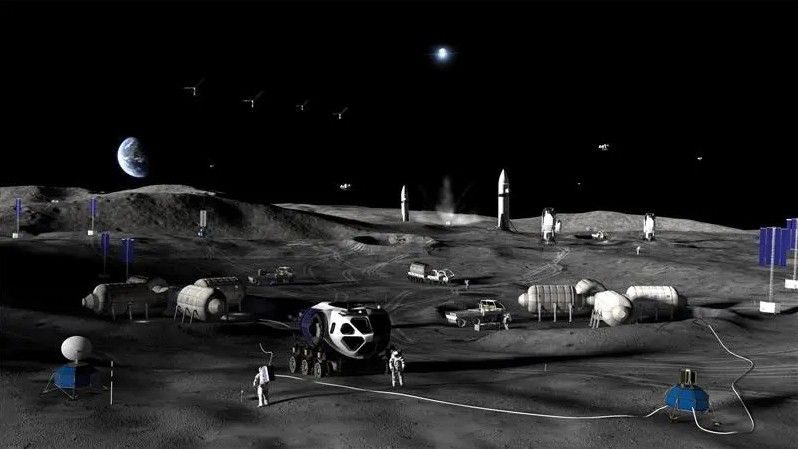
NASA has just announced what it’s calling “near-impossible” plans — and that description isn’t false modesty. The agency is pledging to build a $20 billion moon base, return astronauts to the lunar surface before the end of President Trump’s term, and launch humanity’s first nuclear-powered interplanetary spacecraft by 2028. That’s an extraordinarily compressed timeline for ambitions that would challenge even the most optimistic space program in history.
The announcement represents another significant reshaping of the Artemis program, NASA’s flagship effort to return humans to the Moon. This latest pivot is bold enough that even supporters of expanded space exploration may find themselves raising an eyebrow at the scope and speed being promised.
Here’s what we know, what it means, and why the decisions being made right now could define the next era of human spaceflight.
NASA’s Moon Plans Just Got a Lot More Ambitious
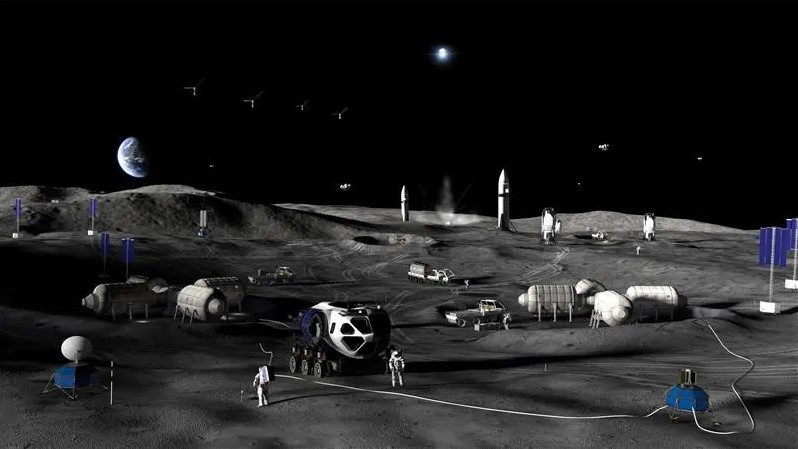
The centerpiece of the new announcement is a permanent moon base — a structure that would give humanity an enduring foothold on the lunar surface. NASA has placed the cost at $20 billion, a figure that signals this isn’t a temporary outpost but a long-term installation designed to support sustained human activity on the Moon.
To make this happen, NASA is making a significant trade-off. The agency is pausing its work on the lunar Gateway — the orbital space station that was previously central to Artemis mission architecture — and redirecting its components toward the moon base project instead. The Gateway was designed to serve as a staging point for lunar landings, so repurposing its parts represents a fundamental rethink of how NASA plans to operate in cislunar space.
Officials have framed this shift as a necessary consolidation of resources, arguing that building a surface base directly is a more efficient path to an “enduring presence” on the Moon than maintaining an orbital station as an intermediary step.
What NASA Is Actually Announcing — The Key Details
The announcement covers several distinct and ambitious targets. Below is a summary of the confirmed elements from NASA’s plans:
| Plan | Details | Timeline |
|---|---|---|
| Moon Base Construction | Permanent lunar surface installation | Before end of President Trump’s term |
| Estimated Cost | $20 billion | Confirmed in announcement |
| Nuclear-Powered Spacecraft | First-ever nuclear-powered interplanetary vehicle | Launch target: 2028 |
| Lunar Gateway | Work paused; components redirected to moon base | Indefinite pause |
| Artemis Program | Restructured to support new priorities | Ongoing |
The nuclear-powered spacecraft is particularly striking. If it launches on schedule in 2028, it would mark a historic first — no crewed or uncrewed interplanetary mission has ever used nuclear propulsion as its primary power source. Nuclear propulsion has been studied for decades as a way to dramatically cut travel times to destinations like Mars, making it one of the most consequential technologies NASA could develop.
- Moon base goal: Establish an enduring human presence on the lunar surface
- Lunar Gateway pause: Parts from the planned orbital station redirected to surface base
- Nuclear spacecraft: Targeted for launch by 2028 — a world first
- Political deadline: Lunar return explicitly tied to President Trump’s term in office
- NASA’s own framing: The agency described these goals as “near-impossible”
Why NASA Called These Plans “Near-Impossible” — And Why That Matters
It’s rare for a federal agency to publicly describe its own goals using language like “near-impossible.” That choice of words is worth sitting with for a moment. NASA isn’t underselling what it’s attempting — it’s signaling that these targets push right up against the boundaries of what current technology, funding, and logistics can realistically deliver.
The Artemis program has already seen multiple delays and redesigns since its inception. Adding a $20 billion moon base to the mission scope — while simultaneously pausing the Gateway and developing nuclear propulsion — compresses an already difficult schedule further. Space policy observers have noted that large-scale infrastructure projects in space rarely arrive on time or on budget even under ideal conditions.
At the same time, NASA’s announcement reflects a broader political momentum behind returning Americans to the Moon before China does. The lunar race has real strategic dimensions, and the urgency being expressed by the agency is partly a response to that competitive pressure.
What This Means for the Future of Space Exploration
If even a portion of these plans come together, the implications are enormous. A permanent moon base would transform the Moon from a destination into a platform — a place from which future missions to Mars and beyond could be staged. It would also enable long-duration scientific research in a low-gravity environment that simply isn’t possible on Earth or aboard the International Space Station.
The nuclear-powered spacecraft, meanwhile, could open entirely new corridors of the solar system to human and robotic exploration. Faster transit times mean less radiation exposure for crews, more flexibility in mission planning, and the ability to reach outer planets on timelines that are currently impractical with chemical propulsion.
The pause on the lunar Gateway will concern some in the international space community. Several partner nations and space agencies had invested planning resources in the Gateway architecture. Redirecting those components changes the calculus for international collaboration on Artemis, though NASA has not yet detailed how it plans to manage those relationships under the new structure.
What Happens Next
The immediate question is whether the funding and political will exist to match the ambition of the announcement. A $20 billion moon base requires sustained congressional appropriations over multiple years — a process that has historically been unpredictable for large NASA programs.
The 2028 nuclear spacecraft launch target is also an aggressive marker. Development, testing, and certification of a first-of-its-kind propulsion system in that window would require essentially no major technical setbacks — something that is difficult to guarantee in advanced aerospace engineering.
NASA has framed this as a moment to “achieve the near-impossible once again,” deliberately invoking the legacy of Apollo-era ambition. Whether the agency can back that language with execution will become clearer as funding requests, technical milestones, and mission schedules are published in the months ahead.
Frequently Asked Questions
What is NASA’s new moon base plan?
NASA has announced plans to build a permanent $20 billion moon base as part of a restructured Artemis program, aiming to establish an enduring human presence on the lunar surface.
What is happening to the lunar Gateway?
NASA is pausing its work on the lunar Gateway orbital space station and redirecting its components toward the newly announced moon base instead.
What is the nuclear-powered spacecraft NASA announced?
NASA has announced plans to launch humanity’s first nuclear-powered interplanetary spacecraft by 2028, which would be a historic first in space exploration.
When does NASA plan to return to the Moon?
NASA has stated its goal is to return astronauts to the Moon before the end of President Trump’s current term in office.
How much will the moon base cost?
NASA has placed the estimated cost of the moon base at $20 billion, according to the announcement.
Has NASA described these goals as realistic?
NASA itself described the plans as “near-impossible,” acknowledging the extraordinary difficulty of the timeline and scope involved.




Leave a Reply