

Four astronauts are preparing to fly further from Earth than any humans have traveled since the Apollo era — and they’ll be doing it during one of the most electrically charged periods in the sun’s 11-year cycle. That raises a question that sounds almost too stark to ask out loud: why send people into deep space when the sun is at its most dangerous?
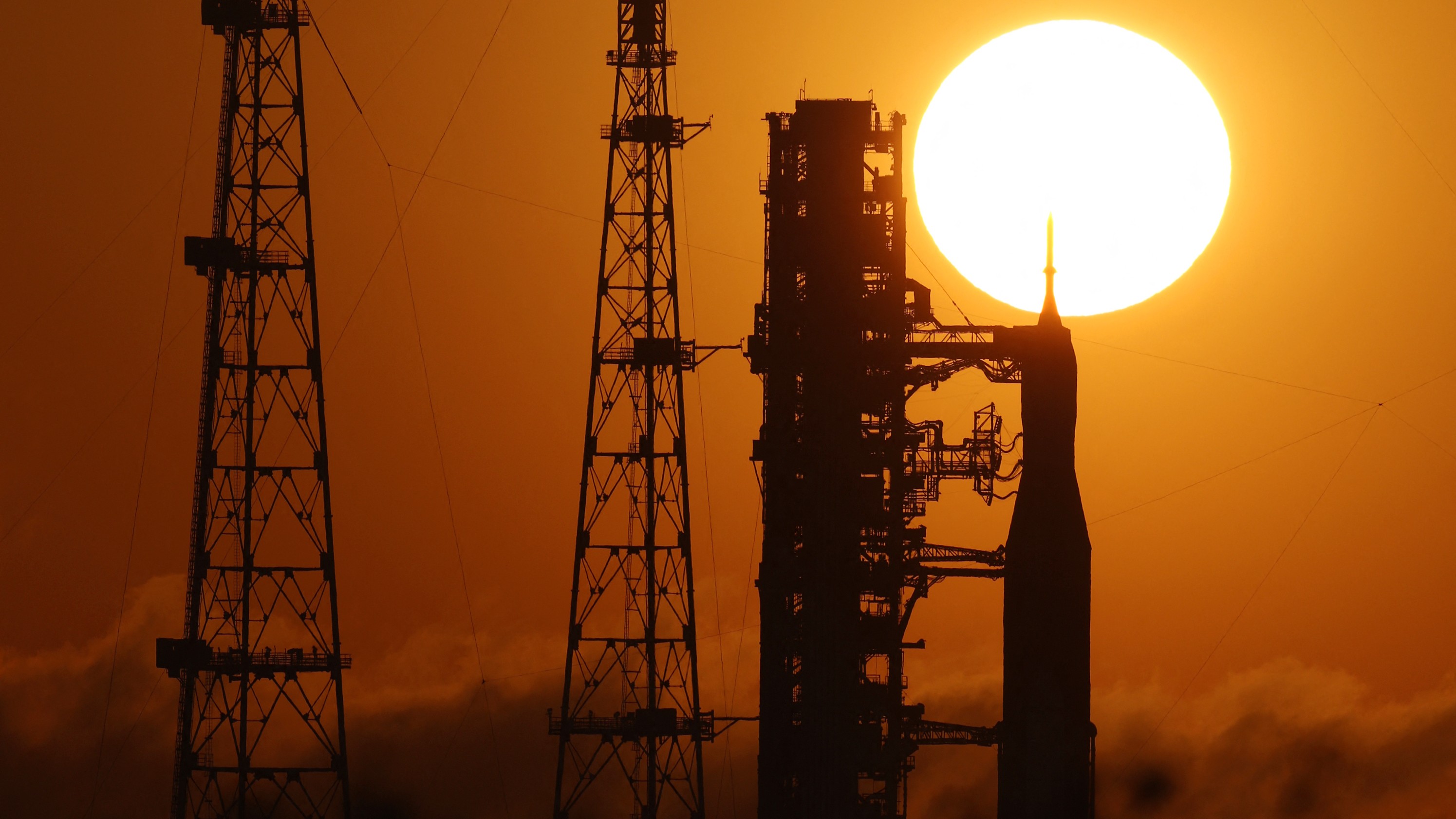
NASA’s Artemis II mission will carry its crew beyond Earth’s protective magnetic field on a record-breaking flight around the moon. Once outside that magnetic shield, the astronauts will be exposed to space weather in ways that simply don’t apply to crews aboard the International Space Station. And right now, the sun is near the peak of its activity cycle — a period when high-energy solar flares and radiation bursts are at their most frequent and most intense.
It’s a tension at the heart of one of the most ambitious human spaceflight missions in decades, and understanding it matters — not just for the four people on board, but for every future crewed mission to the moon, Mars, and beyond.
What Solar Radiation Actually Does to the Human Body in Space
Inside Earth’s magnetic field, astronauts are largely shielded from the worst of what the sun can throw at them. The magnetosphere deflects charged particles, and the atmosphere absorbs much of the remaining radiation. That protection essentially disappears once a spacecraft leaves low Earth orbit.
In deep space, the primary radiation threats come from two sources: galactic cosmic rays, which are a constant background presence, and solar energetic particle events — high-energy bursts of radiation from the sun, including solar flares and coronal mass ejections. These events can deliver radiation doses that, in severe cases, approach or exceed levels considered nearly lethal.
The concern isn’t just immediate health effects. Prolonged or intense radiation exposure in space is linked to increased cancer risk, damage to the central nervous system, and potential impacts on cardiovascular health. For a mission that pushes humans further into deep space than they’ve been in more than 50 years, these risks are very real and very carefully studied.
Why Artemis II Is Launching During Solar Maximum
The sun operates on roughly an 11-year cycle, moving between periods of low activity — solar minimum — and high activity, known as solar maximum. During solar maximum, sunspot activity increases and the sun produces more frequent and more powerful flares and particle events. Right now, the sun is near that peak.
So why not wait for a quieter period? The answer involves a mix of mission priorities, scientific opportunity, and the practical realities of spaceflight schedules. Artemis II represents a critical step in NASA’s broader lunar program, and delaying it by years to wait out the solar cycle would set back the entire Artemis timeline significantly.
There’s also a scientific argument for going now. Artemis II gives researchers a rare, direct opportunity to study how deep spaceflight affects the human body under realistic — and challenging — conditions. The data collected during this mission will be essential for planning longer future missions, including eventual crewed flights to Mars, where solar radiation exposure will be an even greater challenge.
The Risks by the Numbers — What the Mission Faces
| Factor | Details |
|---|---|
| Mission type | Crewed flight around the moon |
| Crew size | Four astronauts |
| Key radiation threat | Solar flares and high-energy particle events |
| Solar activity status | Near peak of 11-year solar cycle (solar maximum) |
| Primary risk factor | Loss of Earth’s protective magnetic field beyond low Earth orbit |
| Potential dose severity | Nearly lethal in worst-case solar particle events |
The worst-case scenario — a major solar energetic particle event during the mission — could expose the crew to radiation doses described as nearly lethal. Mission planners and scientists work to minimize that risk through careful monitoring, spacecraft shielding design, and protocols that give the crew options if a major solar event occurs during flight.
How NASA and the Crew Are Managing the Danger
Space agencies have been developing strategies to manage deep-space radiation risk for decades, and Artemis II benefits from that accumulated knowledge. The Orion spacecraft includes shielding designed to reduce radiation exposure, and mission planners monitor solar activity continuously in the lead-up to and during the flight.
One key tool is space weather forecasting. Scientists can often detect the warning signs of major solar particle events before they reach dangerous levels, giving crews time to shelter in more heavily shielded areas of the spacecraft. While forecasting isn’t perfect — and some events develop faster than others — it provides a meaningful layer of protection.
The Artemis II mission also serves as a data-collection opportunity. Instruments aboard the Orion spacecraft will measure the radiation environment throughout the flight, building a detailed picture of what deep-space crews actually experience. That data will directly inform the design of future missions and spacecraft.
What This Means for the Future of Human Deep Space Exploration
Artemis II isn’t just a mission — it’s a proof of concept for everything that comes after it. If NASA’s long-term goal is to send humans to Mars, crews will face radiation exposure that makes the Artemis II flight look relatively brief. A Mars mission would take months each way, with no quick return to Earth’s protective magnetic field if conditions deteriorate.
The lessons learned from flying humans through a period of high solar activity on a lunar mission will be invaluable. Every piece of data about how radiation affects crew health, how well shielding performs, and how accurately space weather can be predicted in real time helps build the foundation for safer deep-space exploration.
For the four astronauts aboard Artemis II, the risks are real and accepted with clear eyes. For the scientists and engineers supporting the mission, it represents an irreplaceable chance to learn what human bodies can endure — and what future spacecraft will need to protect them.
Frequently Asked Questions
Why are Artemis II astronauts at greater radiation risk than ISS crews?
Once beyond Earth’s magnetic field, the Artemis II crew loses the natural shielding that protects astronauts in low Earth orbit, leaving them directly exposed to solar radiation and cosmic rays.
What is a solar flare and why is it dangerous in space?
Solar flares are high-energy eruptions of radiation from the sun. In deep space, without Earth’s magnetic protection, they can deliver radiation doses severe enough to be nearly lethal in worst-case events.
Is the sun really at its most active right now?
According to
How many astronauts are on the Artemis II mission?
Artemis II will carry a four-person crew on its record-breaking flight around the moon.
Can NASA predict dangerous solar events before they happen?
Space weather forecasting can provide warnings of major solar particle events in many cases, allowing crews to shelter in more shielded areas of the spacecraft, though forecasting is not always precise.
Why not delay the mission until the sun is less active?
This has not been fully addressed in the available source material, but the mission is positioned as a critical step in NASA’s broader lunar program, and delaying by years to wait for solar minimum would significantly set back the Artemis timeline.


Leave a Reply