
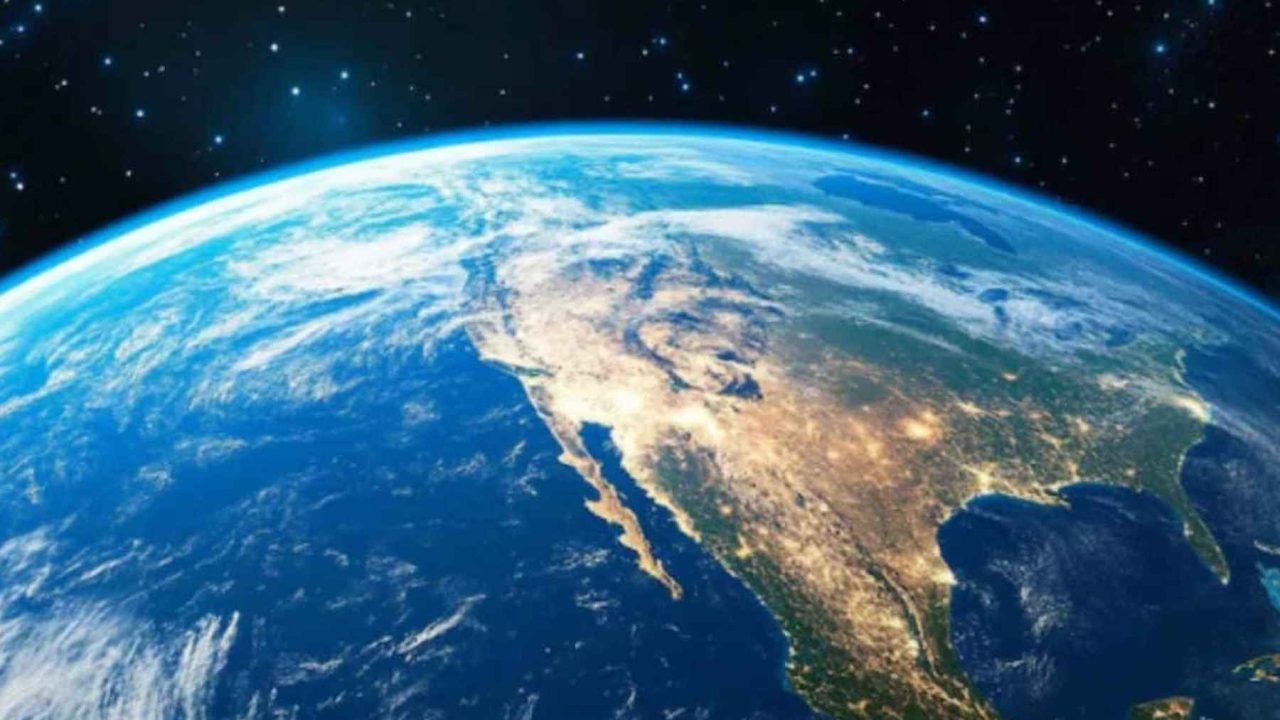
Earth will become uninhabitable for complex life in roughly one billion years — not from an asteroid strike, not from nuclear war, but from the slow, relentless brightening of the Sun itself. That timeline comes from an official NASA science overview, and while a billion years sounds impossibly distant, the mechanism behind it is already quietly in motion.
Most people picture the end of Earth as something sudden and violent. The reality scientists keep returning to is far more gradual — and in some ways, more unsettling for it.
The planet is not in immediate danger. But understanding what is coming, and why, changes how we think about the long-term future of life in the universe.
The Real Threat Isn’t What Most People Imagine
When researchers talk about Earth’s long-term habitability, the conversation almost always comes back to the Sun. Our star is currently a little less than halfway through its lifetime, and as it ages, it burns progressively hotter and brighter.
That extra heat, applied over vast stretches of time, is what puts complex life at risk — not the dramatic red giant expansion that most people have heard about. According to NASA’s own science overview, the Sun will expand into a red giant in approximately 5 billion years. That is the event that would physically engulf or scorch the planet.
But the trouble for complex life starts much earlier. The NASA overview places that threshold at just over 1 billion years from now — roughly 4 billion years before the planet is physically destroyed.
The gap between those two numbers is the part of this story most reports gloss over. Earth could be stripped of the conditions needed to support complex organisms while the planet itself continues orbiting the Sun for billions of years afterward.
Why Earth’s Atmosphere Is the Real Clock
The mechanism driving this countdown is a feedback loop rooted in basic atmospheric physics. As the Sun gradually warms the planet, more water evaporates from the oceans and surface. That extra water vapor in the atmosphere then traps additional heat — which causes more evaporation — which traps more heat still.
Over immense timescales, scientists warn this feedback process can push Earth toward what is called a runaway greenhouse effect. The same general process, taken to its extreme, is what turned Venus into the scorching, cloud-choked world it is today.
The change would not be visible from one decade to the next, or even across a human lifetime. This is deep time — geological and astronomical time — where the meaningful intervals are measured in tens of millions of years. But the direction of travel, researchers argue, is not in doubt.
The atmosphere is not a permanent feature of the planet. It is a dynamic system shaped by the energy input it receives. And that input is slowly, steadily rising.
Key Numbers from NASA’s Long-Range Timeline
| Event | Estimated Timeframe |
|---|---|
| Earth becomes uninhabitable for complex life | Approximately 1 billion years from now |
| Sun expands into a red giant | Approximately 5 billion years from now |
| Sun’s current position in its lifetime | Just under halfway through |
What these numbers illustrate is the scale of the gap between when life becomes untenable and when Earth is physically destroyed. The planet would effectively become a dead world — at least for complex organisms — billions of years before the Sun consumes it.
- The primary driver is increasing solar brightness over time, not a single catastrophic event
- Water vapor acts as an amplifying feedback, accelerating warming once a threshold is crossed
- The runaway greenhouse scenario is the long-range concern, not immediate solar expansion
- Simple microbial life could potentially persist longer than complex organisms under these conditions
What This Means for How We Think About Life Beyond Earth
For most readers, a billion-year timeline has no practical effect on daily life. But the science behind it carries real implications for how researchers think about the search for life elsewhere in the universe.
If a planet’s habitability window is finite — determined by the age and brightness of its host star — then the universe is full of worlds that have already passed their prime, and others that have not yet reached it. Earth sits in a relatively favorable window right now, but that window is not open indefinitely.
The research also reinforces why scientists studying exoplanets pay close attention to a star’s age and energy output, not just a planet’s distance from it. Distance alone does not determine whether a world can sustain complex life. The long-term trajectory of the star matters just as much.
For scientists working on questions of long-term human survival, the findings are a quiet reminder that Earth is not a permanent home in any cosmic sense. Whether that motivates thinking about other planets, or simply deepens appreciation for the current moment, depends on the reader.
A Slow Countdown, Not a Sudden Cliff
Nothing about this research signals an urgent crisis. The timescales involved are so vast they fall outside any meaningful human planning horizon. No policy, no technology, and no civilization currently operating on Earth will be around to witness even the early stages of this transition.
What the science does offer is perspective. The Earth that exists today — with breathable air, liquid oceans, and a climate capable of supporting billions of species — is not the default state of a rocky planet. It is a specific, time-limited condition produced by a particular arrangement of factors that will not hold forever.
The Sun is getting brighter. The atmosphere is sensitive to that change. And over deep time, those two facts together point toward a world that will eventually become unrecognizable to the life that currently calls it home.
Frequently Asked Questions
When does NASA say Earth will become uninhabitable for complex life?
According to an official NASA science overview, Earth will become uninhabitable for complex forms of life in just over 1 billion years.
When will the Sun expand into a red giant?
NASA’s long-range timeline places the Sun’s red giant expansion at approximately 5 billion years from now — well after complex life is expected to have already died out.
What causes the early loss of habitability, before the red giant phase?
Increasing solar brightness triggers a water vapor feedback loop that could push Earth toward a runaway greenhouse effect, making the atmosphere unable to support complex life long before the Sun physically expands.
Is the Sun currently past the midpoint of its lifetime?
No. According to the NASA overview referenced in
Would any life survive after complex organisms die out?
Does this research change anything about how scientists look for life on other planets?
The findings reinforce the importance of considering a host star’s age and energy output — not just a planet’s distance from its star — when assessing whether a world could support complex life.

Leave a Reply