
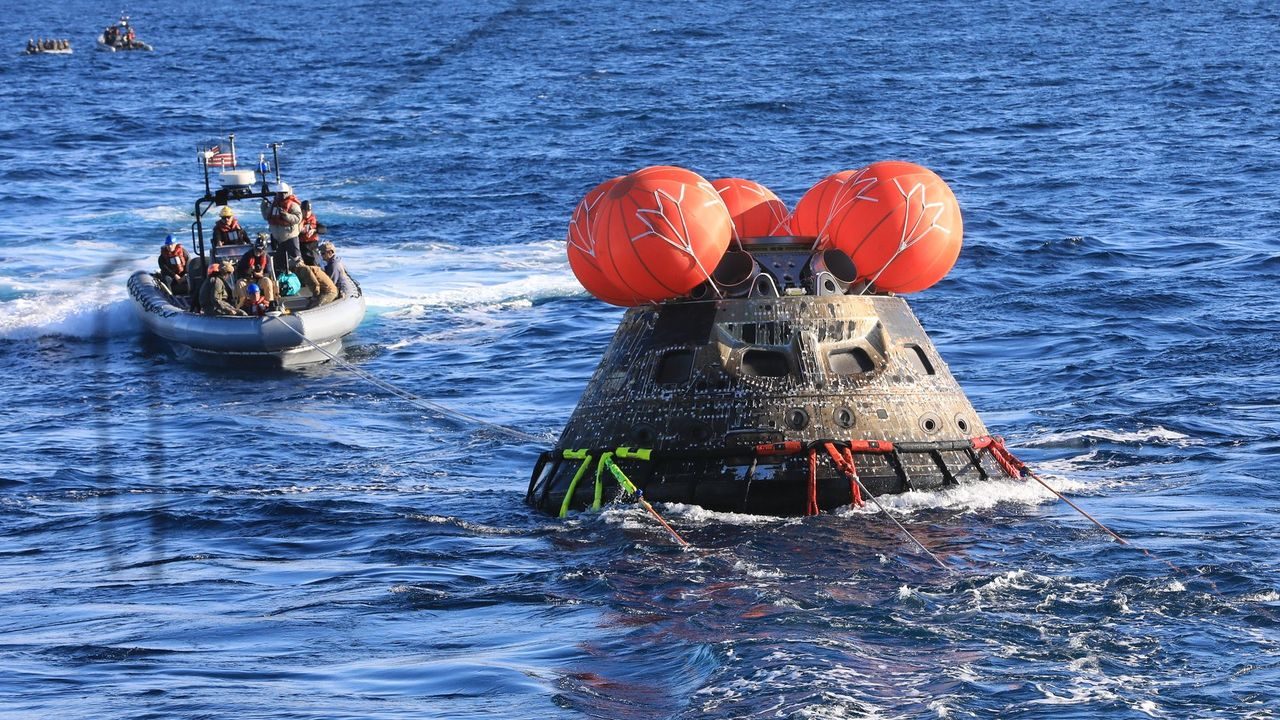
The most dangerous part of any moon mission isn’t the launch, the lunar flyby, or even the deep silence of space — it’s the final few minutes coming home. As the Artemis II Orion spacecraft prepares to splash down on April 10, all eyes are on a heat shield that has already shown it can crack under pressure.
The Artemis II mission has been celebrated as a historic success. It marks the first time astronauts have traveled to the vicinity of the moon since the Apollo era, and its crew has set records along the way. But the reentry phase — with the spacecraft hitting Earth’s atmosphere at roughly 25,000 mph — represents the most physically punishing test of the entire mission, and it involves a heat shield that is essentially the same design as one that suffered unexpected damage on its last flight.
That’s not a minor footnote. It’s the central question hanging over today’s splashdown.
What Went Wrong With the Artemis I Heat Shield
When the uncrewed Artemis I Orion spacecraft returned from its flight around the moon in 2022, engineers discovered the heat shield had sustained unexpected damage during reentry. The protective material — designed to absorb and shed the extreme heat generated by atmospheric friction — did not perform exactly as predicted.
The damage wasn’t catastrophic for Artemis I, which carried no crew. But it raised serious questions about what that same performance would mean for a crewed mission traveling at similar speeds through the same brutal reentry corridor.
The Artemis II heat shield is described as essentially the same design. That fact alone has kept engineers, mission planners, and outside observers watching closely as today’s splashdown approaches.
Why the Artemis II Reentry Is So Physically Extreme
Returning from the moon is fundamentally different from returning from the International Space Station. Spacecraft coming back from low Earth orbit typically reenter at around 17,500 mph. A vehicle returning from lunar distance hits the atmosphere significantly faster — in Artemis II’s case, at approximately 25,000 mph.
That difference in speed translates directly into a difference in heat. The faster the reentry, the more energy the heat shield must absorb, and the greater the stress on every component of the protective system.
The heat shield’s job is to protect the crew capsule — and the astronauts inside — from temperatures that can reach several thousand degrees Fahrenheit during peak heating. If it fails or degrades more than expected, the consequences are not theoretical.
| Mission | Crew Status | Reentry Speed (approx.) | Heat Shield Outcome |
|---|---|---|---|
| Artemis I (2022) | Uncrewed | ~25,000 mph | Unexpected damage observed post-splashdown |
| Artemis II (2025) | Crewed | ~25,000 mph | Same design — outcome pending as of April 10 |
The Case for Confidence — and the Reasons for Caution
Some space experts have argued there are legitimate reasons to feel confident about the heat shield’s performance despite its history. The Artemis I damage, while unexpected, did not result in a failed mission. Engineers have had years to study what happened, analyze the data, and assess whether the damage fell within acceptable margins for a crewed flight.
Supporters of the mission point out that NASA does not proceed with crewed flights without extensive review processes. The fact that Artemis II was approved to fly with the same heat shield design suggests the agency’s engineers concluded the risk profile was acceptable — not absent, but manageable.
Critics and outside observers, however, note that “acceptable risk” and “no risk” are very different things. The heat shield damage on Artemis I was described as unexpected, meaning the original models did not predict it. When a system behaves in ways engineers didn’t anticipate once, the question of whether it will do so again — or more severely — is a legitimate one.
- The Artemis II heat shield uses essentially the same design as the Artemis I shield
- The Artemis I shield suffered unexpected damage during the 2022 reentry
- Artemis II carries a live crew, raising the stakes considerably
- Reentry speed is approximately 25,000 mph — significantly faster than ISS returns
- NASA approved the mission after reviewing the Artemis I damage data
What This Means for the Crew and for NASA’s Lunar Ambitions
The Artemis II crew has already made history. Their journey to the vicinity of the moon represents a milestone not seen in decades, and the mission has been widely described as a tremendous success up to this point. The splashdown is the final chapter — and the most physically dangerous one.
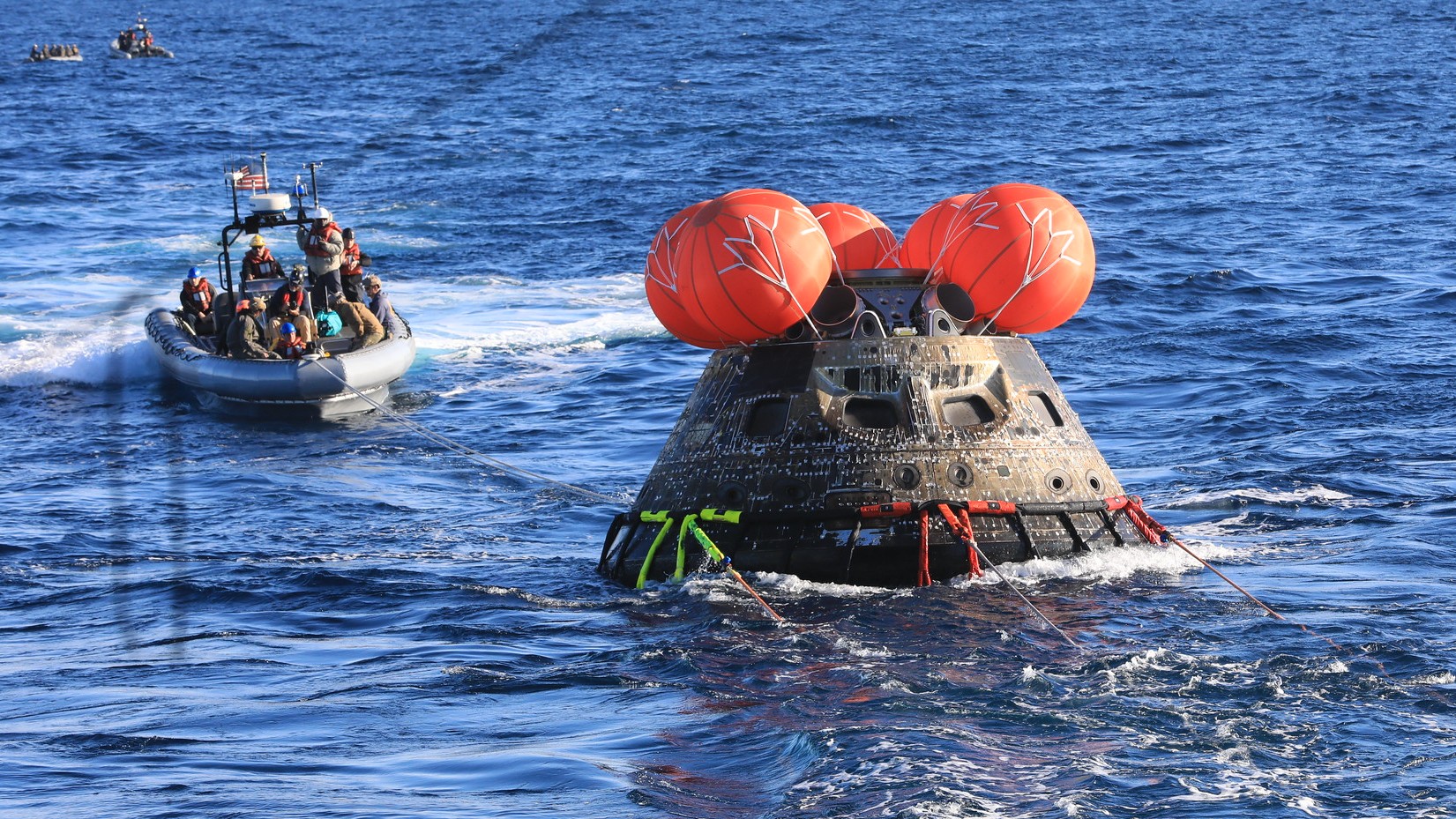
For NASA, the outcome of this reentry carries implications far beyond one mission. The Artemis program is the agency’s long-term framework for returning humans to the lunar surface. If the heat shield performs well, it validates the design and clears the path forward. If it sustains significant damage again — or worse — it forces a fundamental rethink of one of the most critical safety systems in the entire program.
The broader space community is watching closely, not just out of concern for this crew, but because the lessons learned today will shape every crewed lunar mission that follows.
What Happens After Splashdown
Once the Orion capsule is recovered from the ocean, engineers will conduct a detailed inspection of the heat shield. The condition of the protective material after a crewed lunar-return reentry will provide data that simply didn’t exist before today.
That inspection will either confirm that the design held up as hoped — offering reassurance for future Artemis missions — or it will reveal new anomalies that require further investigation and potentially redesign before the next crewed flight can proceed.
Either way, the data gathered from this splashdown will be among the most consequential technical information NASA has collected in years. The crew’s safe return is the immediate priority. What the heat shield looks like afterward is the question that will define what comes next.
Frequently Asked Questions
What is the Artemis II heat shield and why does it matter?
The heat shield protects the Orion crew capsule from extreme temperatures during reentry into Earth’s atmosphere. It is the last critical safety system between the crew and the heat generated at roughly 25,000 mph reentry speeds.
Was the Artemis I heat shield damaged?
Yes. When the uncrewed Artemis I Orion spacecraft returned from its lunar flight in 2022, engineers found unexpected damage to the heat shield after splashdown.
Is the Artemis II heat shield the same as the one on Artemis I?
According to the source reporting, the Artemis II heat shield is essentially the same design as the one used on Artemis I, which is why its performance during reentry has drawn concern.
How fast is the Artemis II spacecraft traveling during reentry?
The Orion spacecraft is expected to hit Earth’s atmosphere at approximately 25,000 mph during the reentry and splashdown phase.
When is the Artemis II splashdown expected?
The Artemis II Orion spacecraft was expected to splash down on April 10, 2025, according to the source reporting.
Will NASA know right away if the heat shield was damaged?
A detailed inspection of the heat shield will take place after the capsule is recovered, and those findings will inform the safety and design decisions for future Artemis crewed missions.



Leave a Reply