
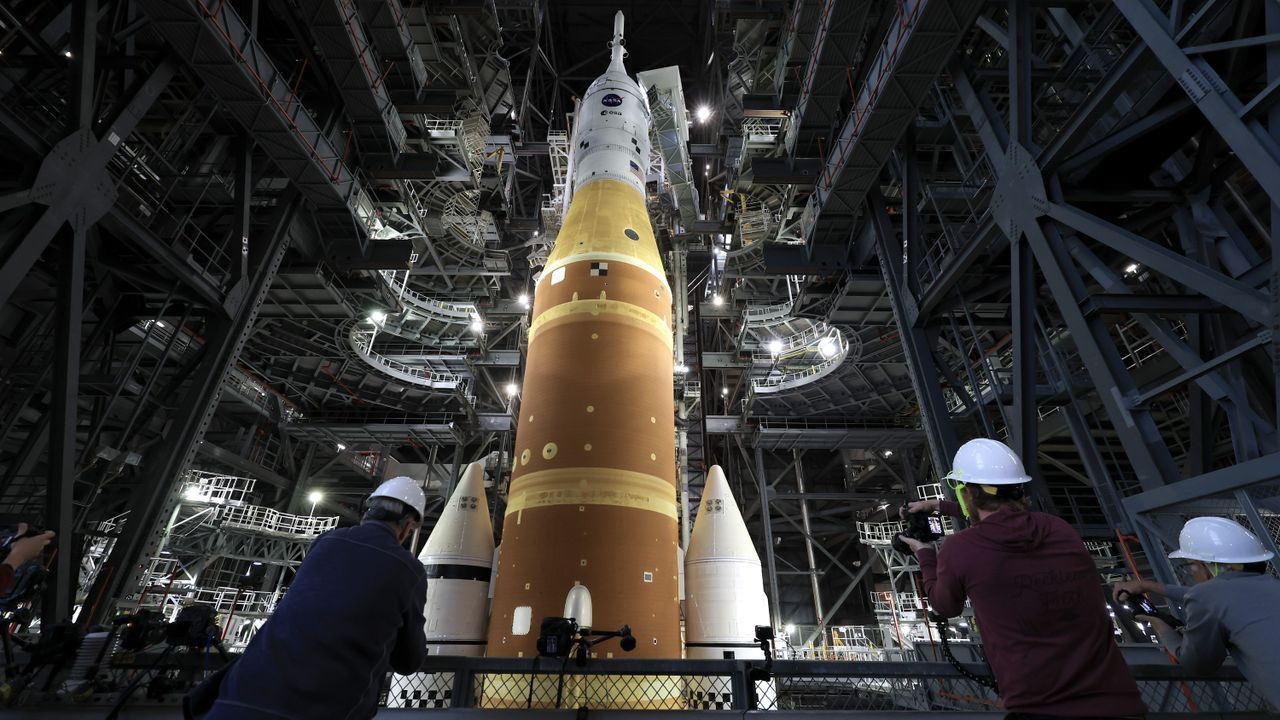
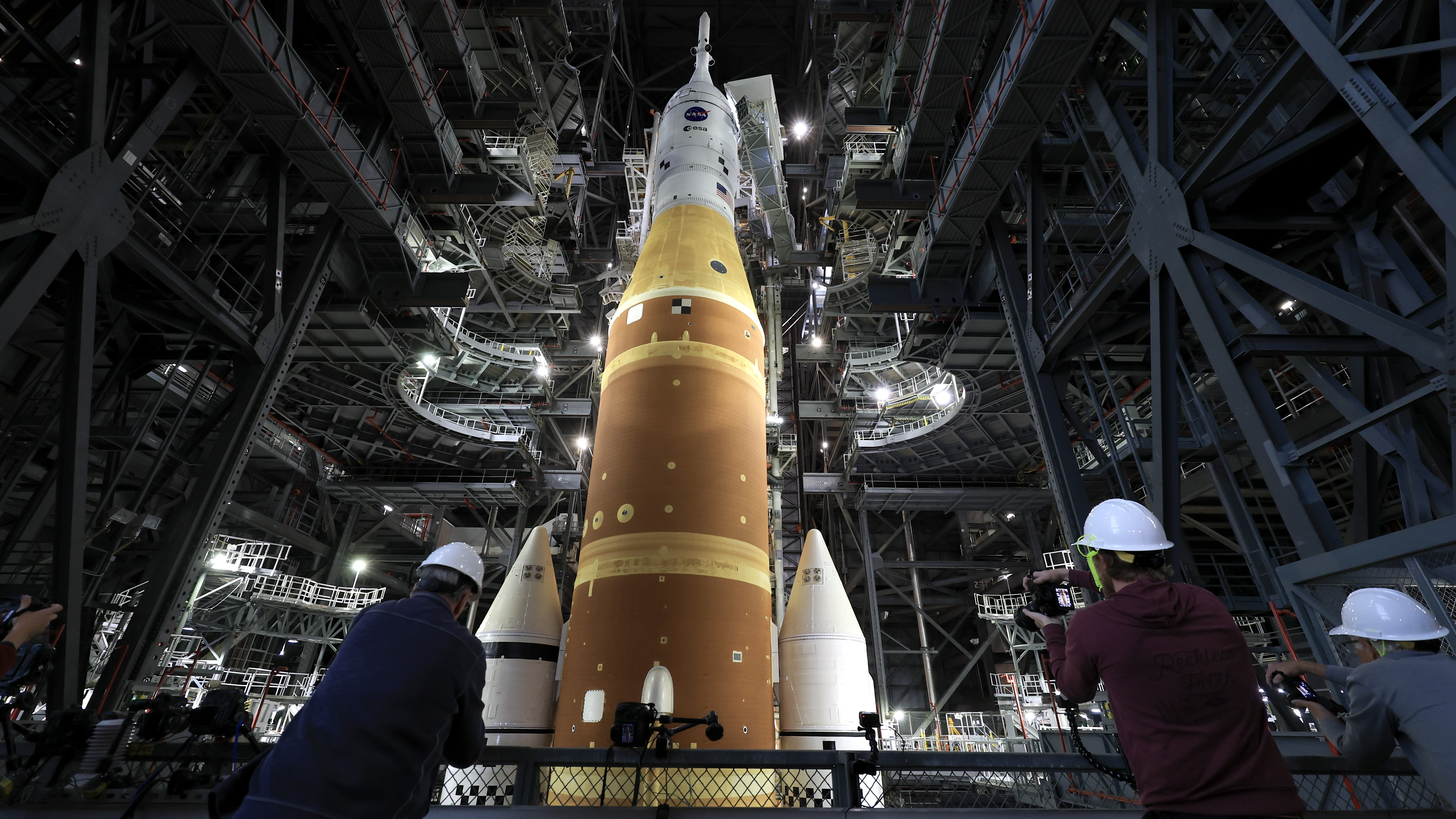
A 322-foot rocket is once again making its way to the launchpad in Florida — and for NASA, this second attempt carries enormous weight. The Artemis II Space Launch System and its Orion capsule have rolled out to the launch site at Kennedy Space Center for the second time this year, as the agency pushes to meet an April launch deadline that has been shadowed by setbacks since the mission’s first rollout in January.
This is not a routine milestone. The rollout comes after a difficult stretch that included two wet dress rehearsals and two separate fuel leaks — problems significant enough to force NASA to haul the entire stack back to the Vehicle Assembly Building for inspection and repairs. Getting the rocket back to the pad is a signal that engineers believe those issues have been addressed. Whether that confidence holds is the question everyone is watching.
For space exploration fans and anyone who has followed NASA’s Artemis program, this moment feels like a genuine turning point. The stakes are high, the deadline is close, and the history of this mission has already been longer and more complicated than anyone hoped.
What the Artemis II Mission Is Actually About
Artemis II is NASA’s first crewed mission under the Artemis program, the agency’s flagship effort to return humans to the Moon for the first time since the Apollo era. Unlike its predecessor, Artemis I — which was an uncrewed test flight that looped around the Moon in late 2022 — Artemis II will carry astronauts aboard the Orion capsule on a lunar flyby trajectory.
The mission is designed to prove that the Space Launch System and Orion capsule can safely carry a human crew through deep space, including through the intense radiation environment beyond low Earth orbit. It is a critical stepping stone before NASA attempts an actual lunar landing with Artemis III.
The sheer scale of the hardware involved makes every step of the process complex. The Space Launch System stands 322 feet tall — roughly the height of a 30-story building — and moving it from the Vehicle Assembly Building to the launchpad is itself a multi-hour operation involving a massive crawler-transporter.
Why the First Rollout Didn’t Stick
The rocket’s first trip to the launchpad happened on January 17 of this year. That rollout was intended to position the vehicle for wet dress rehearsal testing — a critical pre-launch procedure where the rocket’s propellant tanks are fully loaded and the countdown sequence is practiced without actually launching.
Two wet dress rehearsals were conducted, but both were accompanied by fuel leaks that raised enough concern to pause the process. Rather than attempt repairs at the exposed launchpad, NASA made the call to roll the entire stack back to the controlled environment of the Vehicle Assembly Building.
That decision reflects just how seriously engineers take propellant handling with liquid hydrogen and liquid oxygen systems, which are notoriously difficult to seal perfectly. Even minor leaks can be dangerous or disruptive to countdown timelines. Rolling back a fully assembled rocket is not a small decision — it costs time, money, and adds mechanical stress to the vehicle — but NASA judged it the right call.
Key Facts About the Artemis II Rollout
| Detail | Information |
|---|---|
| Rocket height | 322 feet (98 meters) |
| First rollout date | January 17, 2025 |
| Number of wet dress rehearsals conducted | Two |
| Number of leaks detected | Two |
| Launch deadline | April 2025 |
| Launch site | NASA’s Kennedy Space Center, Florida |
- The vehicle consists of the Space Launch System rocket and the Orion crew capsule stacked together
- This is the second time the stack has rolled to the launchpad in 2025
- The rollback to the Vehicle Assembly Building followed both leaks discovered during wet dress rehearsal testing
- Artemis II will be the first crewed flight of the Orion capsule
What This Means for Everyone Following the Moon Program
For the broader public, Artemis II represents something that hasn’t happened in more than half a century: human beings traveling to the vicinity of the Moon. If the mission succeeds, it reestablishes America’s capacity for deep space human exploration and sets the stage for an actual lunar landing in the years ahead.
The April deadline is not just an internal NASA target — it reflects real scheduling, budget, and political pressures on a program that has already faced years of delays and billions in cost overruns since the Space Launch System’s development began. Every month of delay carries a financial cost and adds uncertainty to the downstream missions that depend on Artemis II’s success.
For the astronauts assigned to the mission, the rollout is a concrete sign that launch is approaching. For NASA’s workforce at Kennedy Space Center and across its contractor network, it’s a moment of cautious optimism after a stretch of frustrating setbacks.
What Happens Between Now and Launch
With the rocket now back at the launchpad, NASA’s teams will conduct final preparations and checkouts ahead of any launch attempt. The agency will need to confirm that the issues that caused the earlier fuel leaks have been fully resolved — likely through additional testing at the pad before committing to a final countdown.
If everything proceeds on schedule, a launch before the end of April remains the goal. Missing that window would push the mission further into 2025 and add pressure to an already scrutinized program timeline.
The next few weeks will be telling. NASA has shown it is willing to make conservative calls — as the rollback demonstrated — but the clock is running, and the world is watching to see whether Artemis II can finally get off the ground.
Frequently Asked Questions
What is Artemis II?
Artemis II is NASA’s first crewed mission under the Artemis program, sending astronauts aboard the Orion capsule on a lunar flyby using the Space Launch System rocket.
Why did NASA roll the rocket back to the Vehicle Assembly Building?
After two wet dress rehearsals revealed two separate fuel leaks, NASA decided to return the rocket to the Vehicle Assembly Building for inspection and repairs rather than address the issues at the exposed launchpad.
How tall is the Artemis II rocket stack?
The Space Launch System and Orion capsule stack stands 322 feet tall, which is approximately 98 meters.
When is the Artemis II launch deadline?
NASA is working toward a launch before the end of April 2025, though whether that deadline will be met depends on how final preparations and testing proceed.
Has this rocket been to the launchpad before?
Yes. This second rollout follows an initial trip to the launchpad on January 17, 2025, which preceded the wet dress rehearsals that uncovered the fuel leaks.
Will Artemis II land on the Moon?
No. Artemis II is a crewed lunar flyby mission, not a landing. A lunar landing is planned for a later mission, Artemis III.



Leave a Reply