
How did liquid water survive on Mars for potentially millions of years when the planet’s atmosphere was far too thin and cold to keep it from freezing solid? That question has puzzled planetary scientists for decades — and a new climate study drawing on real data from NASA’s Curiosity rover may finally offer a credible answer.
The answer, it turns out, might have had less to do with warm air and more to do with ice itself. Ancient Martian lakes, researchers now suggest, may have survived beneath thin sheets of ice that acted as natural insulators — keeping the water below liquid even as temperatures above the surface plunged well below freezing.
The implications stretch back 3.6 billion years into Mars’s past, and they reshape how scientists think about the planet’s potential to have supported life.
The Long-Standing Puzzle About Water on Mars
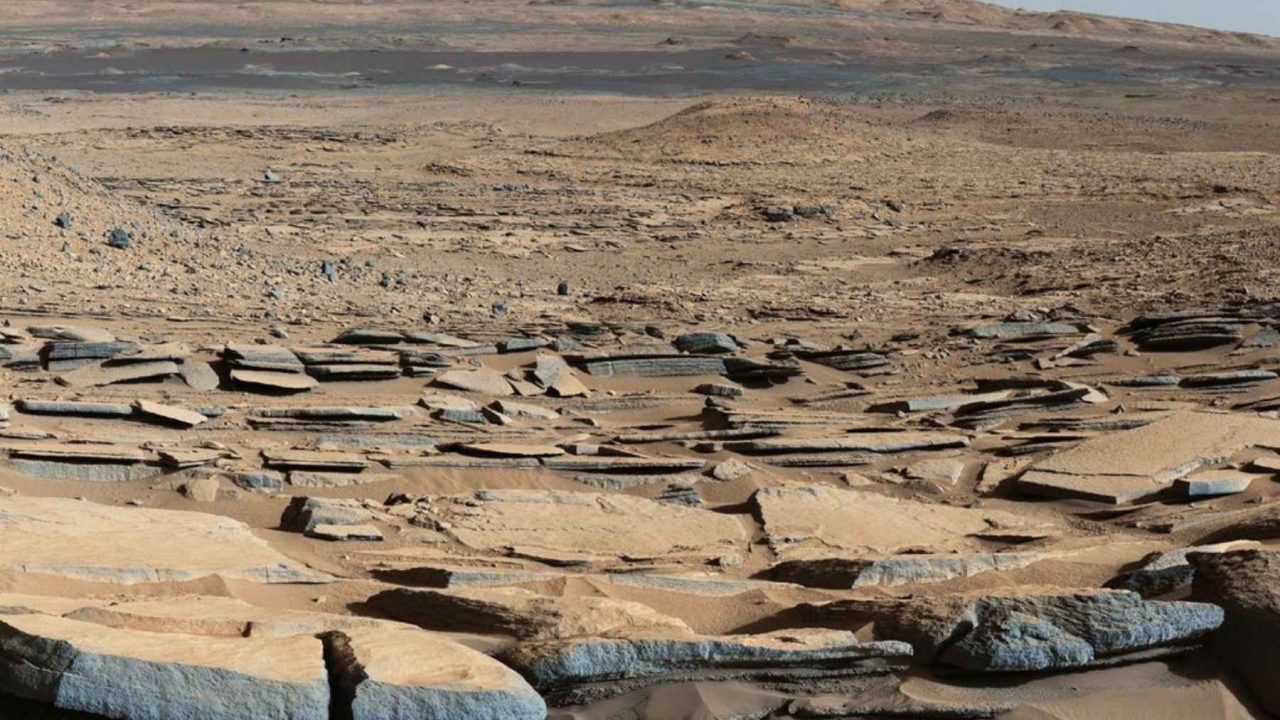
Mars today is a frozen, dusty world. But the surface tells a different story about its ancient past. Carved channels, old river deltas, and broad dried lake beds are etched into the landscape — particularly around Gale Crater, where NASA’s Curiosity rover has been conducting ground-level exploration for more than a decade.
The problem is that most climate models paint early Mars as a deeply cold place. The planet received weaker sunlight than Earth does today, and its atmosphere — composed primarily of carbon dioxide — was thin enough that it would have offered little warmth. Under those conditions, liquid water should not have been able to persist on the surface for any meaningful length of time.
Yet the geological evidence says otherwise. Something kept that water liquid. The new research offers a compelling mechanism for how that could have happened.
How Ice Sheets on Mars May Have Preserved Ancient Lakes
The study, led by Eleanor Moreland at Rice University, proposes that ancient Martian lakes did not require warm air above them to stay liquid. Instead, the lakes may have developed a thin sheet of ice across their surface during colder periods — and that ice layer would have functioned like a natural insulating blanket, trapping heat within the water below and preventing it from freezing all the way through.
The research uses an advanced lake model combined with real observational data collected by NASA’s Curiosity rover to run these simulations. The results suggest that this ice-lid mechanism could have allowed liquid water to persist for extended periods — potentially decades — even under the frigid atmospheric conditions that would have characterized early Mars.
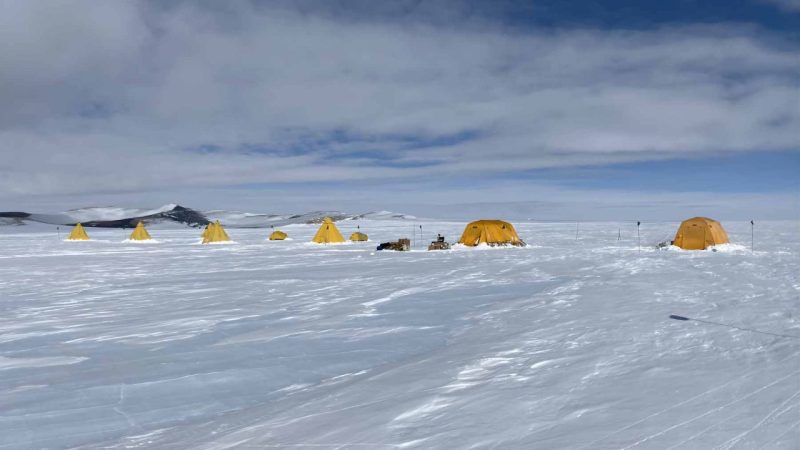
This is not a radical or exotic idea. On Earth, ice-covered lakes exist in Antarctica and survive in temperatures that would otherwise freeze standing water completely. The same physical principle, the researchers argue, could have applied on Mars billions of years ago.
What the Evidence From Gale Crater Actually Shows
Gale Crater has been central to the Mars water debate for years. Curiosity’s long-running mission there has produced a detailed record of sedimentary layers, mineral deposits, and chemical signatures that point to a long history of liquid water in that region.
The new climate study uses that rover data as a foundation, lending the simulations a degree of real-world grounding that purely theoretical models lack. By anchoring the lake model to conditions observed at Gale Crater, the researchers were able to test whether the ice-lid hypothesis holds up against actual Martian geology.
The findings suggest it does — and that the ice-covered lake scenario is not just theoretically possible, but consistent with what Curiosity has observed on the ground over more than a decade of exploration.
Key Facts at a Glance
| Detail | What the Research Confirms |
|---|---|
| Age of the water evidence | Approximately 3.6 billion years old |
| Lead researcher | Eleanor Moreland, Rice University |
| Data source used | NASA’s Curiosity rover observations at Gale Crater |
| Proposed survival mechanism | Thin ice sheets acting as insulating lids on lake surfaces |
| Estimated liquid water persistence | Potentially decades under ice cover |
| Atmospheric conditions at the time | Thin carbon dioxide atmosphere, weak sunlight, sub-freezing temperatures |
- Early Mars had a thin CO₂ atmosphere that offered little insulation from cold
- Surface temperatures were well below freezing for much of the Martian year
- Ice lids on lakes could have formed seasonally, preserving liquid water beneath
- Gale Crater contains visible evidence of ancient lake beds and water-carved features
- Curiosity has been exploring Gale Crater for over a decade, gathering ground-truth data
Why This Changes How We Think About Life on Mars
Liquid water is the foundational requirement for life as we understand it. If ancient Martian lakes could have sustained liquid water for decades — even under ice, even in a freezing atmosphere — then the window of time during which Mars could have supported microbial life becomes significantly wider.
It also shifts the search. If life ever existed on Mars, it may not have required a warm, Earth-like climate. It may have thrived in cold, ice-covered lake environments similar to those found in the most extreme regions of our own planet. That changes where future missions should look and what they should look for.
The research does not claim that life existed on Mars. But it does provide a physically plausible environment where the basic chemistry of life could have had time to develop — and that matters enormously for how the next generation of Mars missions will be designed and targeted.
What Comes Next in Mars Exploration
Curiosity continues its work in Gale Crater, and each new layer of sediment it examines adds to the picture of what early Mars looked like. The ice-lid hypothesis will likely prompt researchers to look more carefully at specific mineral and chemical signatures that would be consistent with long-term ice-covered lake environments.
Future Mars missions — both robotic and potentially crewed — will benefit from a clearer understanding of where ancient water persisted and in what form. The Moreland study at Rice University represents one piece of a much larger scientific effort to reconstruct the full environmental history of the Red Planet.
For now, the most striking takeaway is this: Mars may have been far more hospitable than its frozen surface suggests — not because it was warm, but because ice itself may have been the very thing that kept ancient water alive.
Frequently Asked Questions
How old are the ice sheet traces NASA found on Mars?
The evidence points to ancient lake activity dating back approximately 3.6 billion years, based on the new climate study using Curiosity rover data.
Who led the research into Mars ice-covered lakes?
The study was led by Eleanor Moreland at Rice University, using an advanced lake model combined with real data from NASA’s Curiosity rover.
How could liquid water survive on Mars if it was so cold?
Researchers suggest that thin sheets of ice forming on lake surfaces acted as natural insulating blankets, trapping heat in the water below and preventing it from freezing completely through.
Where on Mars is the evidence for ancient lakes most visible?
Gale Crater is one of the key locations, where Curiosity has spent more than a decade observing old lake beds, carved channels, and ancient deltas consistent with long-term liquid water presence.
Does this research confirm that life existed on Mars?
No — the study does not claim life existed on Mars, but it does establish a physically plausible environment where liquid water could have persisted long enough to potentially support microbial life.
What kind of data did the researchers use to build their model?
The team used an advanced lake model anchored to real observational data collected by NASA’s Curiosity rover at Gale Crater, giving the simulations a grounding in actual Martian geological conditions.

Leave a Reply