
“`html
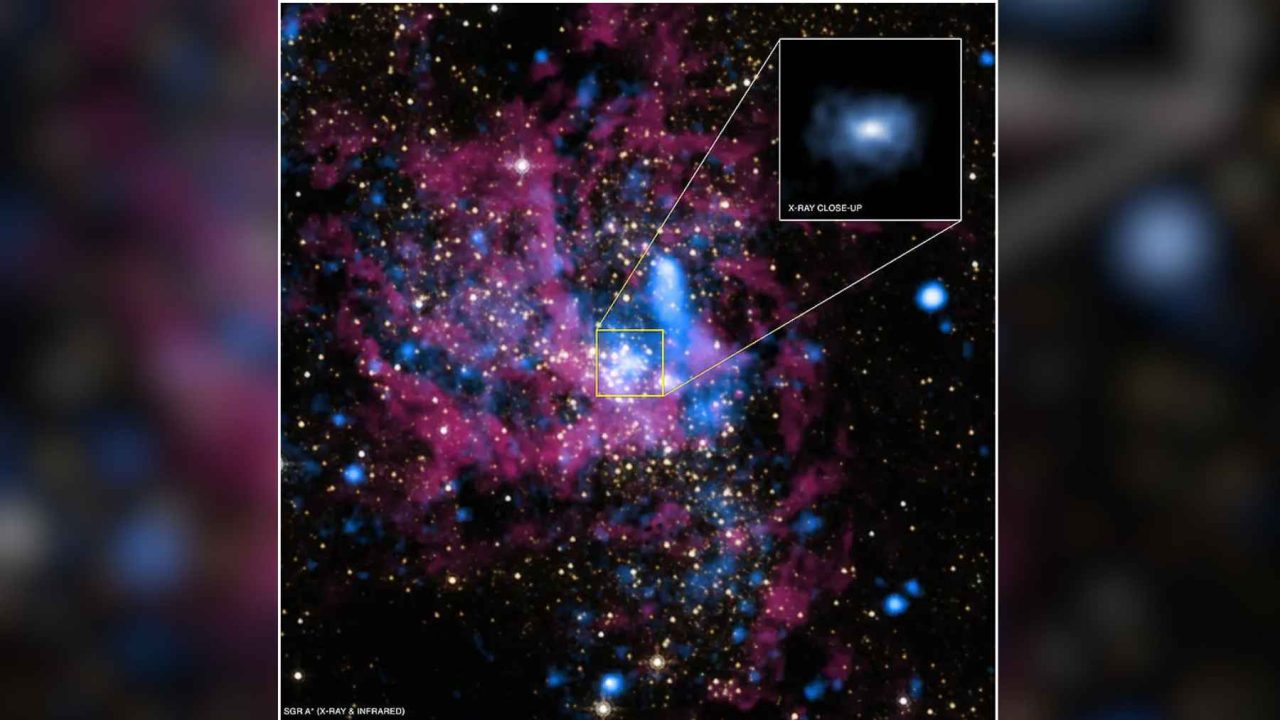
At the center of our galaxy, roughly 25,000 light-years from Earth, sits a sleeping monster. Sagittarius A* — the supermassive black hole at the heart of the Milky Way — packs approximately four million times the mass of our Sun into a compact region of space. And according to astronomers, it won’t stay quiet forever.
New research suggests this cosmic giant has something close to a scheduled wake-up call. When the Milky Way collides with a neighboring galaxy called the Large Magellanic Cloud — an event expected to occur in roughly two billion years — the resulting disruption could flood Sagittarius A* with fresh gas and reignite it as a blazing active galactic nucleus.
The good news? Scientists say Earth is unlikely to face any kind of doomsday scenario from the event. The bad news — if you can call it that — is that the universe is far less stable than the quiet night sky above us suggests.
What Is Sagittarius A* and Why Does It Matter
Sagittarius A* (pronounced “Sagittarius A-star”) is classified as a supermassive black hole. NASA describes it as our nearest known supermassive black hole, located in the constellation Sagittarius at the core of the Milky Way galaxy.
To put its mass in perspective: four million solar masses compressed into a region smaller than our solar system. Black holes of this scale are now believed to exist at the center of most large galaxies, and they play a significant role in how those galaxies evolve over billions of years.
Right now, Sagittarius A* is largely dormant. It isn’t actively consuming large amounts of material, which means it isn’t producing the intense radiation and energy jets associated with so-called active galactic nuclei — the brilliantly lit cores seen in other galaxies across the universe. But astronomers believe that state of quiet is temporary.
The Collision That Could Wake It Up
The Large Magellanic Cloud is a small satellite galaxy orbiting the Milky Way. It’s visible to the naked eye from the Southern Hemisphere and has long been considered a relatively stable companion to our galaxy. But research indicates it is on a slow collision course with us.
When that merger eventually happens — projected at approximately two billion years from now — the gravitational disruption is expected to send massive quantities of gas cascading toward the Milky Way’s center. That influx of material would give Sagittarius A* exactly what it needs to reactivate: fuel.
Once fed, the black hole could transform into an active galactic nucleus, meaning it would begin consuming surrounding matter at a high rate and releasing enormous amounts of energy in the process. These kinds of active cores are among the most luminous, energetic phenomena in the known universe.
Key Facts About Sagittarius A* at a Glance
| Feature | Detail |
|---|---|
| Type | Supermassive black hole |
| Location | Center of the Milky Way, constellation Sagittarius |
| Distance from Earth | More than 25,000 light-years |
| Mass | Approximately 4 million times the mass of the Sun |
| Current state | Dormant / low activity |
| Trigger for reactivation | Collision with the Large Magellanic Cloud |
| Projected timeline | Approximately 2 billion years from now |
- Sagittarius A* is the closest supermassive black hole to Earth that astronomers have confirmed
- The Large Magellanic Cloud is a small neighboring galaxy currently orbiting the Milky Way
- The merger is expected to deliver a surge of gas to the galactic center, reigniting the black hole
- When active, Sagittarius A* would likely become a bright active galactic nucleus
- Scientists do not consider this event a threat to life on Earth
Should Anyone Actually Be Worried?
The honest answer is no — at least not on any human timescale. Two billion years is an almost incomprehensibly long period of time. For context, complex multicellular life on Earth is only about 600 million years old. The entire history of our species fits into a fraction of a fraction of that window.
Beyond the timeline, the sheer distance involved offers another layer of separation. Sagittarius A* sits more than 25,000 light-years away. Even if it became one of the most energetic objects in the local universe, astronomers indicate Earth is unlikely to face a doomsday scenario as a result.
What makes the story significant isn’t the threat — it’s what it reveals about the life cycles of galaxies and the black holes at their cores. Most large galaxies are thought to have gone through active phases in their past, powered by central black holes consuming vast quantities of gas. Our galaxy appears to be no different. Its monster is simply in a quiet phase right now.
What This Tells Us About the Milky Way’s Future
The broader picture painted by this research is one of constant, slow-motion transformation. Galaxies are not static objects. They collide, merge, and reshape themselves over billions of years, and the black holes at their centers respond to those changes.
The Milky Way has likely been through violent periods before — eras when Sagittarius A* was far more active than it is today. The upcoming merger with the Large Magellanic Cloud, distant as it is, represents the next chapter in that long story.
For astronomers, events like this are valuable precisely because they help explain what we see when we look at other galaxies. Those distant, brilliantly glowing galactic cores — so energetic they outshine entire galaxies of stars — may simply be versions of our own Milky Way caught at a different moment in time.
Our galaxy’s sleeping giant will wake again. It just isn’t in any rush.
Frequently Asked Questions
What is Sagittarius A*?
Sagittarius A* is a supermassive black hole located at the center of the Milky Way galaxy, in the constellation Sagittarius. It is the nearest known supermassive black hole to Earth, situated more than 25,000 light-years away.
How massive is the black hole at the center of the Milky Way?
Sagittarius A* has a mass approximately four million times greater than that of our Sun, making it one of the most massive objects in our galaxy.
When will Sagittarius A* “wake up”?
Astronomers project the reactivation could occur in approximately two billion years, triggered by a collision between the Milky Way and the Large Magellanic Cloud.
What will cause the black hole to become active again?
The collision with the Large Magellanic Cloud is expected to drive large quantities of gas toward the galactic center, providing Sagittarius A* with the fuel it needs to reignite as an active galactic nucleus.
Is this event dangerous to Earth?
Experts say Earth is unlikely to face a doomsday scenario. The event is projected to occur roughly two billion years from now, and the black hole is more than 25,000 light-years away.
What is an active galactic nucleus?
An active galactic nucleus is the intensely bright, energetic core of a galaxy powered by a supermassive black hole actively consuming surrounding material. If Sagittarius A* reactivates, the Milky Way’s core could become one of these highly luminous structures.</p



Leave a Reply