
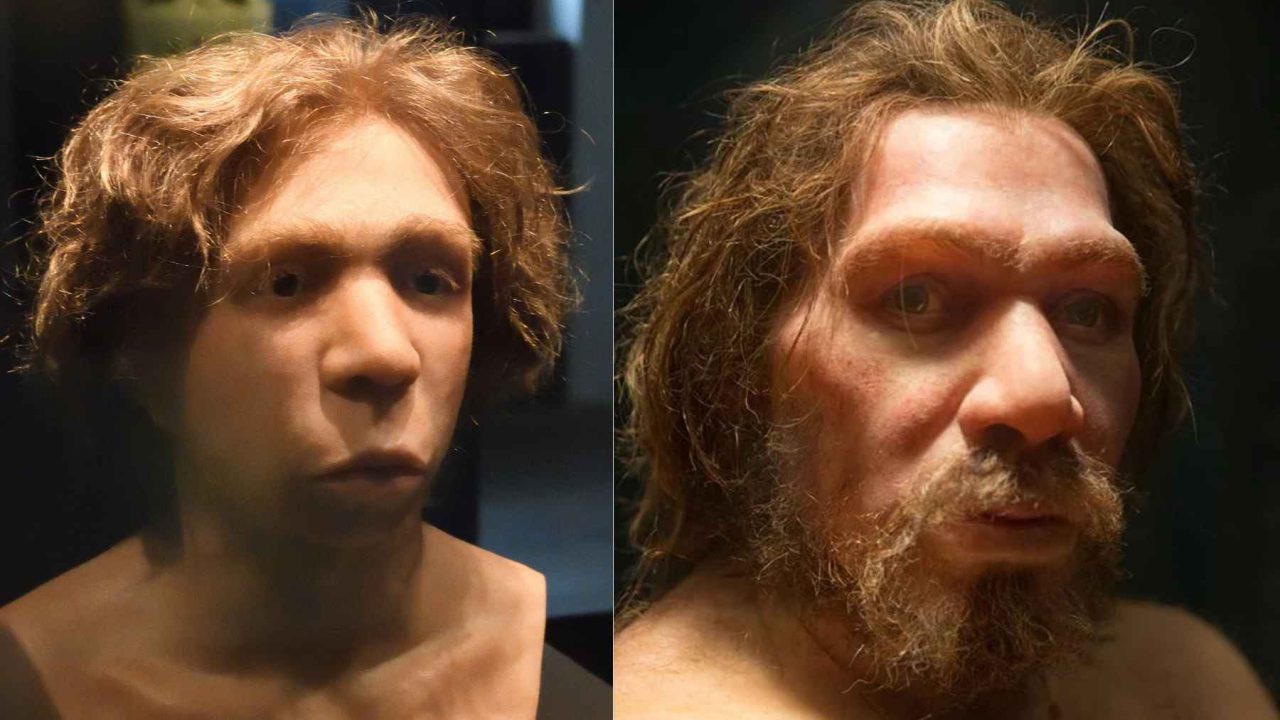
Most people with non-African ancestry carry a small percentage of Neanderthal DNA — but a landmark new study reveals that one part of the human genome is conspicuously, almost stubbornly, free of it. And the reason why tells a remarkable story about who was mixing with whom tens of thousands of years ago.
A peer-reviewed paper published on February 26, 2026, in the journal Science has found a 62% relative excess of modern human ancestry on Neanderthal X chromosomes compared with other Neanderthal chromosomes. That single number is reshaping how researchers understand the ancient encounters between Neanderthals and anatomically modern humans.
The finding isn’t just a curiosity for geneticists. It points to something specific and deeply human: who was crossing paths with whom, and how biology itself recorded the encounter — then quietly erased parts of it over time.
What the New Research Actually Found
When scientists analyze ancient and modern DNA, they can identify stretches of the genome that appear to have been inherited from Neanderthals. These segments are scattered across many chromosomes in people with non-African ancestry, typically appearing in the low single-digit percent range.
But not all chromosomes carry equal amounts. Researchers have long documented what they call “Neanderthal deserts” — regions of the genome where Neanderthal ancestry is unusually sparse or entirely absent. The X chromosome is one of the most extreme examples of this phenomenon.
The new study puts a precise number on that gap: a 62% relative excess of modern human ancestry on the X chromosome compared to the rest of the Neanderthal genome. That is a striking disparity, and researchers believe it carries a clear signal about how interbreeding between the two groups actually unfolded.
Their core conclusion is that the ancient mixing was strongly sex-biased — occurring predominantly between male Neanderthals and female anatomically modern humans. Later natural selection and demographic factors may have further shaped which segments of that inherited DNA survived into the present day.
Why the X Chromosome Holds the Key
To understand why this matters, it helps to know how the X chromosome is inherited differently from other chromosomes.
Females carry two X chromosomes — one from each parent. Males carry one X chromosome, inherited from their mother, and one Y chromosome, inherited from their father. This means the X chromosome has a distinct inheritance pattern that makes it a useful tracer for detecting sex-biased reproduction events deep in the past.
When researchers find that the X chromosome carries far less Neanderthal ancestry than autosomes — the non-sex chromosomes — it suggests something specific about the direction of interbreeding. If Neanderthal males were primarily the ones mating with modern human females, the genetic legacy would be distributed differently across the X chromosome compared to a scenario where both sexes mixed equally.
The 62% excess of modern human ancestry on Neanderthal X chromosomes is consistent with that sex-biased model, though researchers note that selection pressures and population dynamics over thousands of generations also played a role in shaping what survived.
What This Means for the Neanderthal DNA You Carry
If you have ever looked at a consumer DNA ancestry report and spotted a line noting your Neanderthal inheritance, this research adds important context to what that number means — and what it is missing.
- Neanderthal DNA in modern humans with non-African ancestry typically falls in the low single-digit percent range
- That ancestry is spread unevenly across the genome — not distributed at random
- The X chromosome frequently shows little to no Neanderthal ancestry, making it one of the clearest “deserts” in the human genome
- The new study suggests this pattern reflects ancient sex-biased interbreeding, primarily between male Neanderthals and female modern humans
- Subsequent natural selection and demographic changes likely further reduced Neanderthal DNA in certain regions over time
| Chromosome Type | Neanderthal Ancestry Pattern | Key Finding |
|---|---|---|
| Autosomes (non-sex chromosomes) | Small but detectable Neanderthal segments present | Baseline for comparison |
| X Chromosome | Significantly lower Neanderthal ancestry | 62% relative excess of modern human ancestry vs. other Neanderthal chromosomes |
The Broader Picture of Ancient Human Mixing
This research fits into a larger and still-evolving understanding of how modern humans and Neanderthals interacted during the tens of thousands of years they coexisted in Eurasia.
Scientists have known for over a decade that interbreeding occurred — the presence of Neanderthal DNA in living people is direct evidence of that. What has been harder to determine is the nature of those encounters: how frequent they were, whether they involved both sexes equally, and why certain parts of the genome retained Neanderthal ancestry while others did not.
The new findings suggest the answer is not simply random chance. The pattern on the X chromosome appears to reflect a structured, directional mixing — one where Neanderthal males and modern human females were the primary pairings. Whether that reflects social structure, migration patterns, or something else entirely remains an open area of research.
What is clear is that the human genome itself has been keeping a record of those ancient encounters, and scientists are only beginning to read it in full.
What Researchers Are Still Working to Understand
The study published in Science identifies the sex-biased interbreeding signal as the most likely explanation for the X chromosome pattern, but the authors acknowledge that later selection and demographic factors also contributed to shaping what survived in modern genomes.
Researchers continue to investigate which specific Neanderthal-inherited variants have been retained because they were beneficial to modern humans, and which were gradually removed by natural selection. Some Neanderthal DNA segments are associated with immune function and adaptation to new environments — traits that may have helped modern humans as they expanded out of Africa. Others appear to have been actively selected against over time, which is part of why the deserts exist at all.
The X chromosome, with its distinctive inheritance pattern and its striking absence of Neanderthal ancestry, remains one of the most informative windows into that ancient history.
Frequently Asked Questions
What did the new study published in Science find about Neanderthal DNA?
The study, published February 26, 2026, found a 62% relative excess of modern human ancestry on Neanderthal X chromosomes compared with other Neanderthal chromosomes, suggesting ancient interbreeding was strongly sex-biased.
What does “sex-biased interbreeding” mean in this context?
It means the mixing between Neanderthals and modern humans was not equal between the sexes — the research points primarily to male Neanderthals and female anatomically modern humans as the main pairing.
Why does the X chromosome show less Neanderthal DNA than other chromosomes?
The X chromosome is one of the most extreme “Neanderthal deserts” in the human genome, and the new findings suggest this reflects both the sex-biased nature of ancient interbreeding and the effects of later natural selection and demographic factors.
Do all modern humans carry Neanderthal DNA?
According to
What is a “Neanderthal desert”?
It is a stretch of the human genome where Neanderthal ancestry is unusually rare or absent. The X chromosome is described as one of the most extreme examples of this phenomenon.
Could later factors other than sex-biased interbreeding explain the X chromosome pattern?
Yes — the researchers note that natural selection and demographic factors after the initial interbreeding may have also shaped which Neanderthal DNA segments survived in modern genomes, alongside the sex-bias signal.



Leave a Reply