
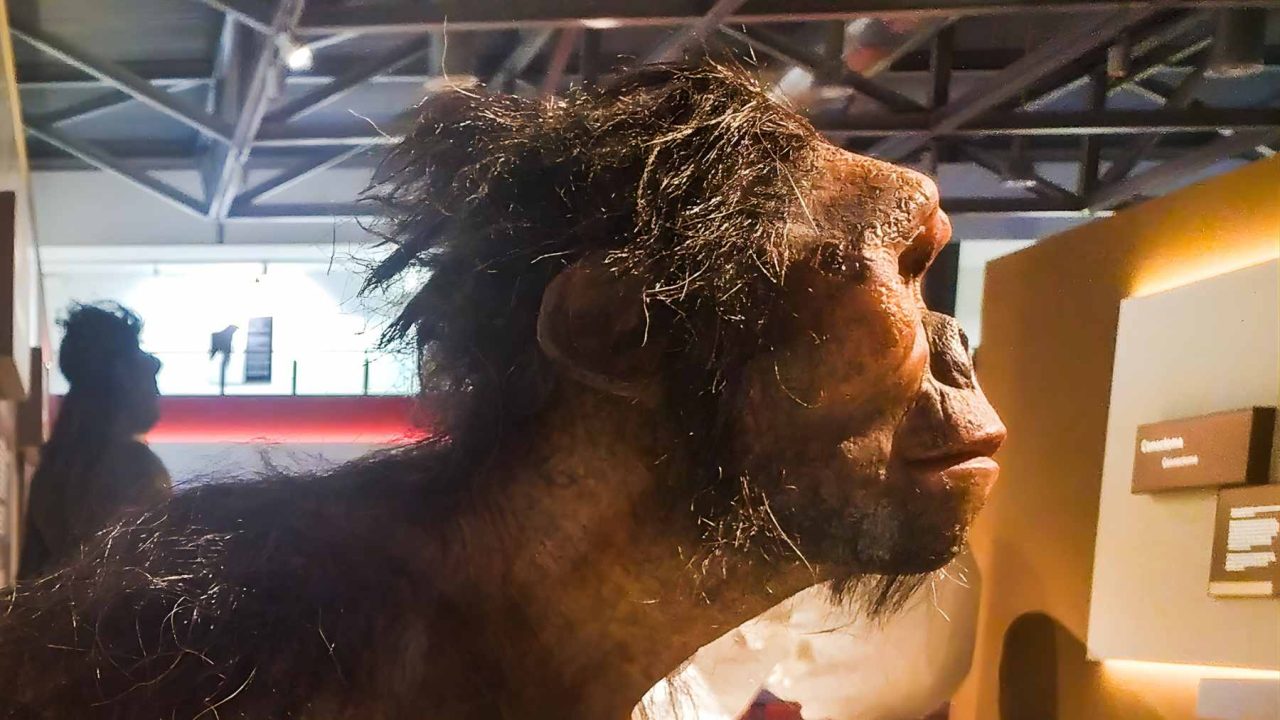
What if Neanderthals never actually went extinct — and instead, they simply dissolved into us? That is the provocative idea gaining new scientific traction, and it changes everything about how we think of human history.
A new mathematical study suggests that our closest ancient relatives did not vanish in some dramatic collapse. Instead, researchers propose, Neanderthals may have gradually blended into expanding populations of Homo sapiens, generation by generation, until they became genetically invisible. The implication is striking: traces of Neanderthal life may still exist inside billions of living humans today.
For anyone who has ever seen a small percentage of Neanderthal ancestry on a home DNA test, this finding feels unexpectedly personal. That number might not just be a curiosity. It could be the last faint signal of an entire human lineage that faded into ours rather than being wiped away.
The Math Behind a Quiet Disappearance
The study, led by researcher Andrea Amadei and colleagues, takes a different approach from most extinction theories. Rather than pointing to climate catastrophe, volcanic eruptions, or violent conflict with modern humans, the team built an analytical model focused on something far more mundane: interbreeding over long stretches of time.
The core of their model is simple but powerful. Neanderthal communities were small and scattered across Eurasia. Homo sapiens populations were larger and kept expanding. As modern humans moved through Neanderthal territory, small numbers of them repeatedly joined or interbred with local Neanderthal groups.
Over thousands of years, that slow and steady trickle of genetic exchange would have had a predictable mathematical effect. The Neanderthal genetic contribution would shrink with each generation — not because anyone was being killed or displaced, but simply because the incoming population was so much larger. Eventually, Neanderthal ancestry would become so diluted it would be nearly undetectable. The group would not die. It would disappear into the majority.
Researchers describe this as a process where Neanderthal communities essentially absorbed into a growing wave of Homo sapiens, leaving only a faint genetic echo behind.
What the Model Actually Shows
The Amadei team’s framework does not rely on dramatic events to explain the Neanderthal disappearance. Instead, it models what happens under ordinary, low-level contact between two populations of very different sizes over millennia.
| Factor | Neanderthals | Homo sapiens |
|---|---|---|
| Population size | Small, scattered groups | Larger, more numerous |
| Geographic range | Spread across Eurasia | Expanding into Eurasia |
| Interbreeding role | Receiving incoming individuals | Sending small numbers into Neanderthal groups |
| Outcome over time | Genetic signal diluted | Carry small percentage of Neanderthal DNA |
The model does not require extinction events. It requires only time, population imbalance, and repeated contact — all of which the archaeological and genetic record suggests actually occurred.
Why This Matters to Science — and to You
The question of how Neanderthals disappeared has never been fully settled. Competing theories have included climate change, disease, competition for food resources, and direct conflict with modern humans. Each explanation carries its own implications about who our ancestors were and how they behaved.
The blending hypothesis offers something different. It suggests that the end of the Neanderthals was not violent or sudden. It was gradual, intimate, and — in a biological sense — ongoing. The Neanderthal lineage did not terminate. It merged.
This reframing has real consequences for how scientists interpret the fossil and genetic record. If Neanderthals were absorbed rather than eliminated, researchers may need to rethink what counts as evidence of extinction versus assimilation. A population that leaves no distinct fossils after a certain point has not necessarily died — it may simply have become indistinguishable from its neighbors.
It also raises uncomfortable and fascinating questions about identity. At what point does a population cease to exist as a distinct group? If Neanderthal genes persist in modern humans, is “extinction” even the right word?
The Genetic Echo Still Living in Modern Humans
Modern genetic research has already confirmed that most people with ancestry outside of sub-Saharan Africa carry a small but measurable percentage of Neanderthal DNA. That finding, which emerged from ancient genome sequencing over the past two decades, established that interbreeding between Homo sapiens and Neanderthals definitely happened.
What the new mathematical model adds is a possible mechanism for why the Neanderthal contribution stayed so small — and why it faded in the direction it did. If Homo sapiens were consistently the larger population sending individuals into smaller Neanderthal communities, the math naturally produces the outcome we observe: a trace signal in modern humans, but no identifiable Neanderthal population left standing.
The researchers frame this not as a story of conquest or collapse, but as one of gradual demographic absorption — a slow fade rather than a sudden end.
What Researchers Are Still Working to Understand
The mathematical model proposed by Amadei and colleagues is analytical rather than based on new fossil or genetic discoveries. It offers a framework for interpreting existing evidence, not new physical data. That means it opens a line of inquiry rather than closing one.
Scientists will likely test the model’s predictions against the growing database of ancient DNA recovered from Neanderthal and early Homo sapiens remains across Europe and Asia. If the blending hypothesis holds, the genetic record at various sites and time periods should show patterns consistent with gradual dilution rather than sharp cutoffs.
The broader picture it paints — of two human populations slowly becoming one — is one that many researchers find more consistent with what the evidence already suggests than older narratives of sudden disappearance.
Frequently Asked Questions
Did Neanderthals really go extinct?
According to a new mathematical study, Neanderthals may not have gone extinct in the traditional sense. Researchers suggest they were gradually absorbed into larger Homo sapiens populations through repeated interbreeding over thousands of years.
Who led the new research on Neanderthal disappearance?
The study was led by Andrea Amadei and colleagues, who developed an analytical model to examine how population size differences and interbreeding could explain the Neanderthal disappearance.
Do modern humans still carry Neanderthal DNA?
Yes. Most people with ancestry outside sub-Saharan Africa carry a small percentage of Neanderthal DNA, which is consistent with the interbreeding model the researchers describe.
What made Neanderthal populations vulnerable to absorption?
According to the model, Neanderthal communities were small and scattered across Eurasia, while Homo sapiens populations were larger and expanding — a size imbalance that would naturally dilute Neanderthal genetics over generations.
Does this theory rule out climate change or conflict as factors?
The study does not claim to rule out other factors entirely. It demonstrates that gradual demographic absorption alone — without requiring violence or catastrophe — is mathematically sufficient to explain the outcome we observe in the fossil and genetic record.
Is this based on new fossil evidence?
No. The research presents an analytical mathematical model built on existing knowledge about population sizes and interbreeding patterns, rather than new fossil or genetic discoveries.


Leave a Reply