
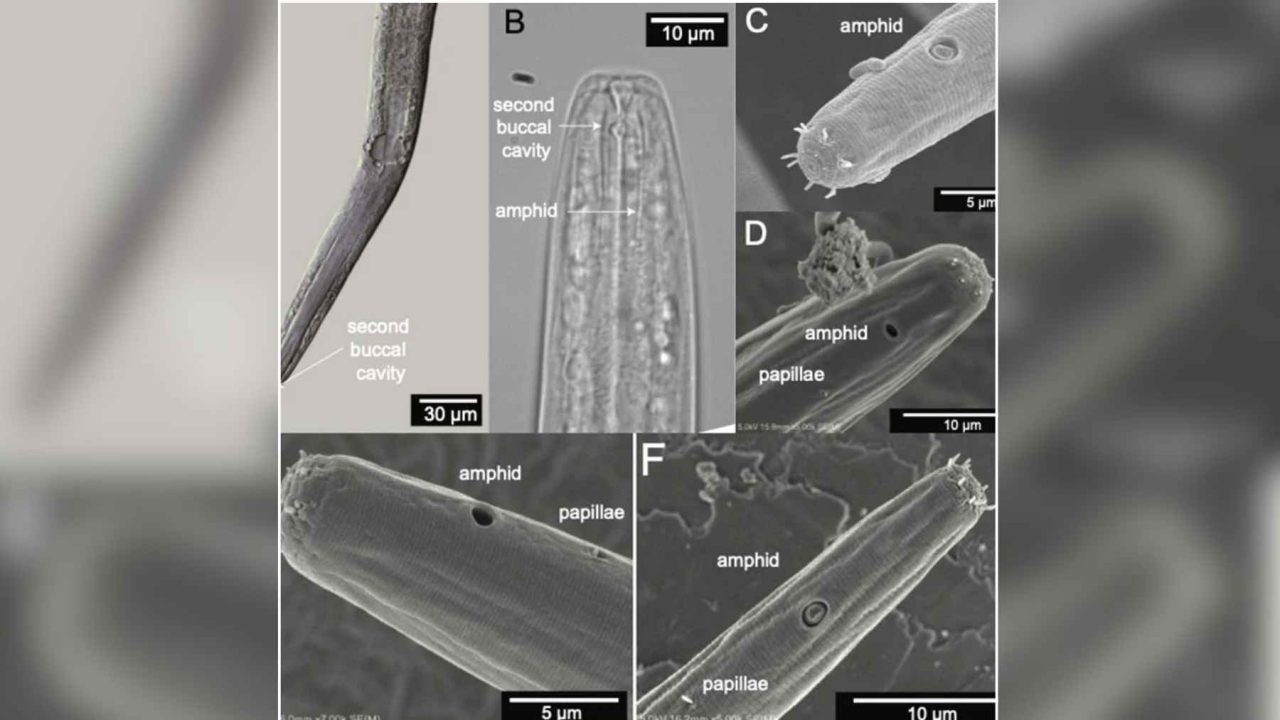
Utah’s Great Salt Lake is one of the most inhospitable bodies of water in North America — so salty that most animals cannot survive in it for more than a few minutes. So when researchers descended to the lakebed in 2022 and found a tiny roundworm living there as if nothing were out of the ordinary, the scientific community had a genuine puzzle on its hands.
That worm has now been officially described as a new species to science. Named Diplolaimelloides woaabi, it was announced by a research team led by biologist Julie Jung and her colleagues, with findings published in the Journal of Nematology. Its existence forces scientists to rethink what they thought they knew about life in one of the continent’s most extreme environments.
According to the textbooks, a worm like this simply should not be there. And yet, there it was.
A Lake That Almost Nothing Can Handle
Great Salt Lake, located in Utah, is not your average body of water. Depending on location and water level, its salinity can run three to seven times saltier than the ocean. That level of salt is enough to drive away fish and most other animals entirely.
For years, scientists believed the lake’s open water hosted only two obvious animal residents: brine shrimp and brine flies. Those two species support an enormous ecosystem of their own — the flies and shrimp feed millions of migratory birds that pass through the region — but the broader picture of animal life in the lake was considered remarkably thin.
The discovery of Diplolaimelloides woaabi changes that picture. A nematode — commonly called a roundworm — surviving on the lakebed in water that hostile is not something the existing scientific record would have predicted. Its presence suggests the lake may harbor a richer web of animal life than researchers had previously realized.
What the Discovery of Diplolaimelloides woaabi Actually Means
Nematodes as a group are extraordinarily resilient. They are among the most abundant animals on Earth, found in soils, oceans, and freshwater systems across the globe. But surviving in water as salty as Great Salt Lake is a different challenge entirely — one that requires specialized biological adaptations most animals simply do not possess.
The fact that this particular species was found living calmly on the lakebed, and that it is entirely new to science, raises important questions. How long has it been there? How did it come to be in a lake this extreme? And what else might be living in environments that scientists have historically written off as too harsh to support complex animal life?
The discovery was made during a 2022 expedition to the bottom of the lake — an environment that does not get much scientific attention precisely because it seems so unlikely to yield surprises. That assumption, it turns out, was wrong.
Key Facts About the New Species and Its Environment
- The species name is Diplolaimelloides woaabi
- It was discovered during a 2022 dive to the bottom of Utah’s Great Salt Lake
- The research was led by biologist Julie Jung and her colleagues
- Findings were published in the Journal of Nematology
- Great Salt Lake’s salinity ranges from three to seven times that of the ocean
- Prior to this discovery, brine shrimp and brine flies were considered the lake’s primary animal inhabitants
- The worm is a nematode — a type of roundworm
| Feature | Detail |
|---|---|
| Species name | Diplolaimelloides woaabi |
| Type of organism | Nematode (roundworm) |
| Discovery location | Lakebed of Utah’s Great Salt Lake |
| Year of discovery | 2022 |
| Lead researcher | Biologist Julie Jung |
| Published in | Journal of Nematology |
| Lake salinity | 3–7× saltier than the ocean |
| Previously known animal residents | Brine shrimp, brine flies |
Why This Finding Matters Beyond the Lake Itself
On the surface, a new worm species in a salty lake might sound like a narrow scientific footnote. But the broader implication is significant: it means that environments previously dismissed as biologically barren may be worth a much closer look.
Great Salt Lake is already under enormous pressure. The lake has been shrinking for decades due to water diversion and drought, exposing lakebed and concentrating its salinity even further. Understanding what actually lives in the lake — and how those organisms fit into the ecosystem — becomes more urgent as the lake continues to change.
Brine shrimp and brine flies support millions of migratory birds that depend on the lake as a critical stopover point. If nematodes like Diplolaimelloides woaabi play a role in the lakebed ecosystem — breaking down organic matter, cycling nutrients, feeding other organisms — then their presence matters for the health of the broader food web that those birds rely on.
The discovery also serves as a reminder that new species are still being found in places humans have studied for generations. Sometimes the most unexpected finds are hiding in plain sight, at the bottom of a lake everyone assumed held no surprises.
What Researchers Will Be Watching Next
The formal description of Diplolaimelloides woaabi is the beginning of the scientific conversation, not the end of it. Researchers will likely want to understand how the worm tolerates such extreme salinity, what role it plays in the lakebed ecosystem, and whether other undescribed species may be sharing its environment.
Given that the 2022 expedition produced a species entirely new to science, further exploration of the Great Salt Lake’s deeper zones seems warranted. The lake’s ongoing ecological crisis — driven by declining water levels — also means there may be a narrow window to study these organisms before their habitat changes further.
For now, one small worm has quietly rewritten what scientists thought was possible in one of North America’s most extreme lakes.
Frequently Asked Questions
What is Diplolaimelloides woaabi?
It is a newly described species of nematode — a type of roundworm — discovered living on the lakebed of Utah’s Great Salt Lake and officially new to science.
Who discovered the new species?
The discovery was made by a research team led by biologist Julie Jung and her colleagues, with findings published in the Journal of Nematology.
When was the worm found?
Researchers descended to the bottom of Great Salt Lake in 2022 and found the organism during that expedition.
Why is it surprising that a worm lives in Great Salt Lake?
The lake’s water is three to seven times saltier than the ocean, making it too harsh for most animals to survive — nematodes were not expected to be living there.
What other animals live in Great Salt Lake?
Prior to this discovery, brine shrimp and brine flies were considered the lake’s primary animal residents, and they support millions of migratory birds that pass through the region.
Does this discovery change how scientists view the lake?
Yes — the finding suggests Great Salt Lake may support a richer web of animal life than previously realized, and it raises questions about what else might be living in similarly extreme environments.




Leave a Reply