
A 172-metric-ton transformer — roughly the weight of 25 adult African elephants — was hauled through the New Zealand night on a 17-axle trailer, guided by three trucks and a convoy of pilot vehicles. It was a slow, awkward journey. But where it was heading, and what it will do when it gets there, tells a much bigger story about how countries are quietly rewiring their power grids for a future that runs on weather-dependent energy.
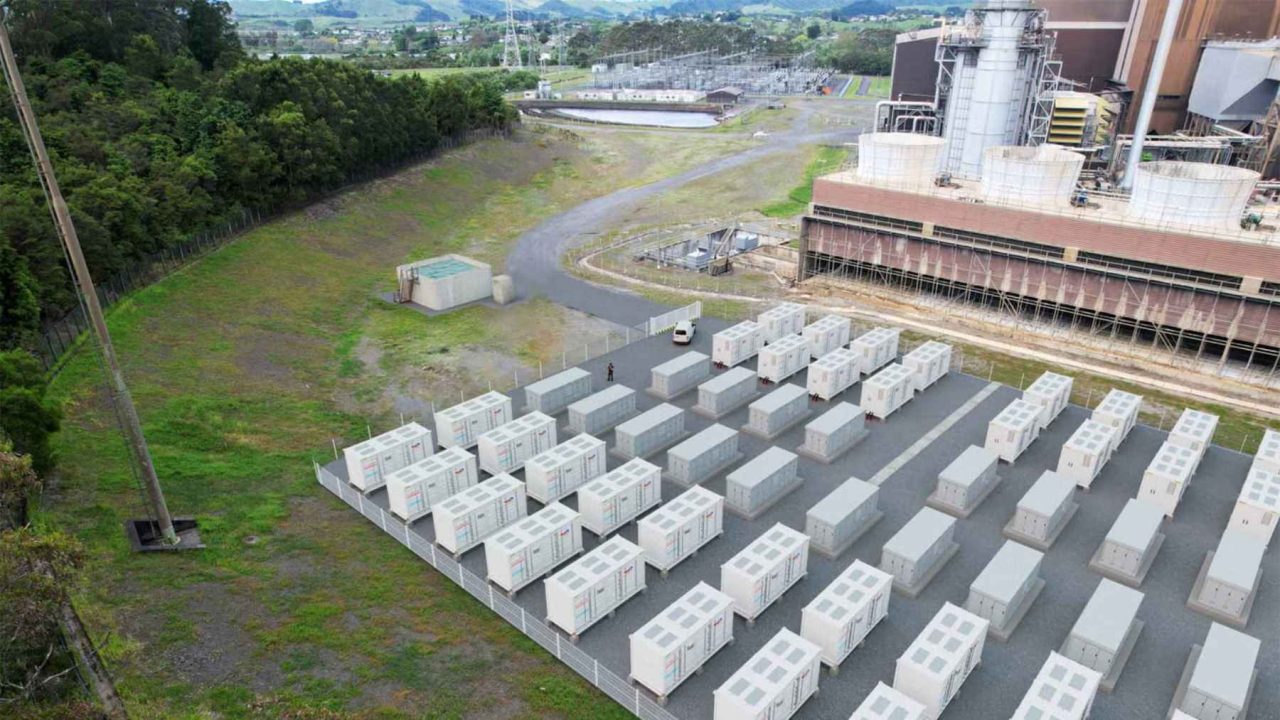
The destination was Huntly Power Station, one of New Zealand’s most well-known fossil fuel facilities. The mission wasn’t to keep it burning coal and gas. It was to transform the site into something the modern grid desperately needs: a large-scale battery storage hub capable of smoothing out the spikes and dips that come with renewable power.
Most people never think about what holds the lights on during a cold winter evening when demand surges and the wind isn’t blowing. This project is the answer to that question — and the transformer is the piece almost nobody talks about.
What Is Actually Happening at Huntly Power Station
Genesis Energy is installing a 100-megawatt grid-scale battery at the Huntly site, with a storage capacity of 200 megawatt-hours. To put that in terms most people understand: the battery can supply roughly 60,000 households with electricity for about two hours. That may not sound like forever, but in grid management terms, two hours of fast, reliable discharge can prevent blackouts, stabilize frequency, and buy time for other generation sources to respond.
The total project cost is NZ$135 million, which works out to approximately US$78 million at recent exchange rates. Genesis Energy says the first stage is scheduled to begin operating later in 2026.
The battery itself is only part of the story. A grid battery sitting on its own is essentially useless unless it can connect to the national transmission network — and that connection requires voltage conversion. The battery operates at 33 kilovolts, but the national grid runs at 220 kilovolts. The transformer that just made its slow, dramatic highway crossing is the device that bridges that gap, stepping voltage up so stored electricity can actually flow where it’s needed.
The Numbers Behind the Huntly Battery Project
| Detail | Specification |
|---|---|
| Transformer weight | 172 metric tons (approximately 379,000 pounds) |
| Transport setup | 17-axle trailer, three trucks, pilot vehicle fleet |
| Battery capacity | 100 megawatts / 200 megawatt-hours |
| Households supplied | ~60,000 for approximately two hours |
| Voltage step-up | 33 kilovolts to 220 kilovolts |
| Project cost (NZD) | NZ$135 million |
| Project cost (USD) | ~US$78 million |
| Expected first-stage operation | Later in 2026 |
These figures capture the scale of what Genesis Energy is committing to. A project at this cost and complexity isn’t a pilot program or a publicity move — it’s infrastructure designed to last decades and perform under real pressure.
Why Batteries Are Becoming the Backbone of Modern Grids
Renewable energy sources like wind and solar generate power when conditions allow — not necessarily when people need it most. Cold winter mornings and evenings, when demand peaks, are exactly the moments when solar output is lowest and wind can be unpredictable.
Grid-scale batteries solve this mismatch. They charge when supply is high and release stored energy when demand spikes. Officials and energy planners have noted that batteries are increasingly functioning as the shock absorbers of weather-dependent power systems — absorbing excess generation and discharging it precisely when the grid needs support.
Huntly’s history as a coal and gas facility makes its transformation particularly significant. Converting a legacy fossil fuel site into a battery storage hub doesn’t just add new capacity — it repurposes existing grid infrastructure, land, and transmission connections that would otherwise be expensive to replicate from scratch. That’s the part of this story most reports gloss over.
What This Means for Everyday Energy Reliability
For New Zealand households, the most direct impact of the Huntly battery project is the kind that rarely makes headlines: fewer voltage fluctuations, more stable pricing during peak demand windows, and a grid that can absorb renewable variability without resorting to expensive backup generation.
- The battery is specifically designed to respond to demand spikes on cold winter mornings and evenings — the highest-stress periods for the national grid.
- At 200 megawatt-hours of storage, it provides a meaningful buffer that gives grid operators time to balance supply and demand without emergency measures.
- Repurposing Huntly reduces the need to build entirely new transmission infrastructure elsewhere, which keeps long-term costs lower for the system as a whole.
For the broader energy sector, the project signals that large-scale battery storage is no longer an emerging technology being tested at the margins. It is now a core investment that major energy companies are making in real assets, at real scale, with real money behind it.
What Comes Next for the Huntly Battery
Genesis Energy has confirmed the first stage of the Huntly battery is targeted to come online later in 2026. The transformer’s arrival at the site marks a significant milestone in that timeline, as connecting the battery to the 220-kilovolt national grid is one of the most technically complex steps in the entire project.
Beyond Huntly, the project reflects a broader pattern playing out across grid systems worldwide. As countries retire fossil fuel plants and expand renewable generation, the question of where to store that energy — and how to move it efficiently — is becoming the central engineering and economic challenge of the energy transition.
The oversized trailer crawling through the New Zealand night wasn’t just moving a transformer. It was moving a piece of the answer.
Frequently Asked Questions
How much does the Huntly battery project cost?
Genesis Energy has put the total project cost at NZ$135 million, which is approximately US$78 million at recent exchange rates.
How much electricity can the Huntly battery store?
The battery has a capacity of 200 megawatt-hours, enough to supply around 60,000 households for approximately two hours.
Why did a transformer need to be transported to Huntly?
The transformer steps voltage up from 33 kilovolts to 220 kilovolts, allowing the battery’s stored electricity to connect to and flow through New Zealand’s national transmission grid.
When will the Huntly battery start operating?
Genesis Energy says the first stage is expected to begin operating later in 2026.
How heavy was the transformer that was transported?
The transformer weighs approximately 172 metric tons, or around 379,000 pounds, and required a 17-axle trailer and three trucks to move it.
Why is a former fossil fuel power station being used for battery storage?
Repurposing an existing site like Huntly allows the project to take advantage of land, infrastructure, and grid connections already in place, avoiding the cost of building those elements from scratch elsewhere.


Leave a Reply