
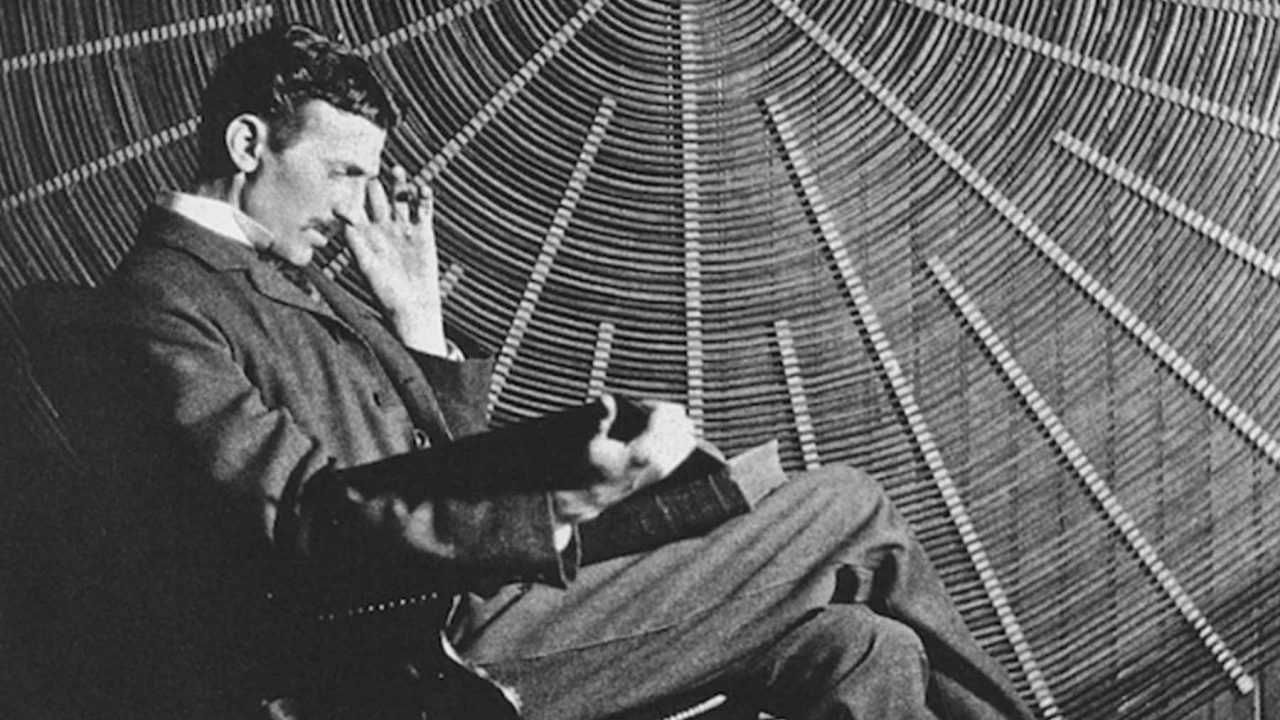
A quote widely attributed to Nikola Tesla has been circulating online for years, and it keeps finding new audiences: “Intelligent people tend to have fewer friends than the average person. The smarter you are, the more selective you become.” Whether or not Tesla actually said those exact words, the idea has struck a nerve — and modern research suggests there may be something real behind it.
The quote fits the popular image of Tesla perfectly: the solitary genius, working through the night, too consumed by ideas to bother with idle socializing. But the actual history of Tesla’s life is more complicated than that portrait suggests, and the science of intelligence and friendship turns out to be more nuanced than a single viral quote can capture.
So what do we actually know — about Tesla, about highly analytical people, and about why some individuals genuinely prefer fewer, deeper connections over a wide social circle?
The Tesla Behind the Quote
Nikola Tesla did write, in his autobiography, that he devoted almost all of his waking hours to thought. That much is documented. The image of a man entirely absorbed in his own mental world is not entirely wrong.
But historical accounts also place Tesla in notably lively social circles. He was connected to editor Robert Underwood Johnson, naturalist John Muir, and — perhaps most famously — Mark Twain. These were not casual acquaintances. They were meaningful relationships with some of the most intellectually engaged figures of his era.
That detail matters. Tesla wasn’t avoiding people. He was, it seems, choosing them carefully. There’s a meaningful difference between having few friends and being incapable of friendship — and Tesla’s life appears to illustrate the former, not the latter.
What the Research Actually Shows About Intelligence and Friendship
The viral quote may not have a confirmed origin in Tesla’s writings, but the underlying idea has attracted genuine scientific attention. A 2021 study tracking seven classes of adolescents found a pattern that cuts right to the heart of this debate.
Students with higher intelligence were, on average, liked more by their peers. That runs counter to the stereotype of the socially awkward genius. But here’s where it gets interesting: those same high-intelligence students liked fewer people themselves. And that pattern remained stable over time — it wasn’t a phase or a blip.
The takeaway isn’t that smarter people are unpopular. It’s that they tend to be more selective about who they invest in. The social dynamic isn’t rejection — it’s discretion.
| Finding | What the Study Found |
|---|---|
| Peer popularity of high-intelligence students | Generally liked more by peers |
| Number of peers high-intelligence students liked | Liked fewer people themselves |
| Stability of the pattern | Remained consistent over time across seven classes |
| Sample | Seven classes of adolescents (2021 study) |
Why Small Talk Feels Like Static to Some People
For people with strong analytical habits, small talk can feel like background noise — That’s not snobbery. It’s a genuine mismatch between what certain minds find stimulating and what casual social interaction typically offers.
What highly analytical people often seek instead are conversations with real substance — exchanges that go somewhere, challenge something, or connect on a level that feels worth the energy. When those conversations are hard to find, the natural response isn’t to fill the gap with more shallow contact. It’s to wait for something better.
This is selectivity, not isolation. And it’s worth distinguishing between the two, because they look similar from the outside but feel very different from the inside.
The Part of This Story Most People Miss
The Tesla quote resonates so widely partly because it offers a flattering explanation for something that can feel uncomfortable: having a small social circle. But the research adds an important layer that the quote alone doesn’t capture.
Being selective isn’t just about intelligence in the narrow, test-score sense. It’s about how a person processes social energy, what they find meaningful, and what they’re willing to spend their limited time on. For some people, a handful of deep relationships genuinely is more satisfying than a broad network of lighter ones.
Tesla’s own life reflects this. His documented friendships with Johnson, Muir, and Twain weren’t casual. They were connections built around shared intellectual passion. That’s a different kind of social life — not an absence of one.
What This Means If You Recognize Yourself in It
If you’ve ever left a crowded room feeling more drained than energized, or found yourself genuinely uninterested in maintaining a large number of friendships, this research suggests you’re not broken — and you’re not alone.
The pattern observed in the 2021 study points to something that many people experience but rarely see validated: the number of friends you have says very little about your social value or your capacity for connection. It may say more about what you actually need from the people around you.
- High-intelligence individuals in the study were well-liked — the social rejection narrative doesn’t hold up
- Their selectivity was stable and consistent, not situational or temporary
- Tesla himself maintained meaningful friendships, even while being intensely focused on his work
- The distinction between selectivity and isolation is real, and it matters
The quote attributed to Tesla — whatever its true origin — keeps circulating because it names something a lot of people feel but struggle to articulate. The science doesn’t fully prove it, but it doesn’t dismiss it either. It refines it.
Frequently Asked Questions
Did Nikola Tesla actually say “intelligent people tend to have fewer friends”?
The quote is widely attributed to Tesla online, but its confirmed origin in his writings is unclear. Tesla did write in his autobiography that he devoted nearly all his waking hours to thought, but the specific viral quote has not been definitively traced to a documented source.
Did Tesla have any close friends in real life?
Yes. Historical accounts place Tesla in social circles that included editor Robert Underwood Johnson, naturalist John Muir, and Mark Twain, suggesting he maintained meaningful relationships despite his intensely work-focused life.
What did the 2021 study on intelligence and friendship actually find?
The study, which followed seven classes of adolescents, found that students with higher intelligence were generally liked more by their peers — but those same students liked fewer people themselves, and the pattern remained stable over time.
Does being selective about friendships mean you’re more intelligent?
The research doesn’t support that direct conclusion. The study identified a pattern among high-intelligence students, but selectivity in friendship can stem from many factors beyond measured intelligence.
Is having fewer friends a sign of a problem?
Based on the research cited, having fewer friends does not appear to indicate social rejection or difficulty. The high-intelligence students in the study were well-liked — they simply chose to invest in fewer relationships themselves.
Why do highly analytical people often dislike small talk?
What they tend to seek instead are deeper, more substantive conversations.




Leave a Reply