
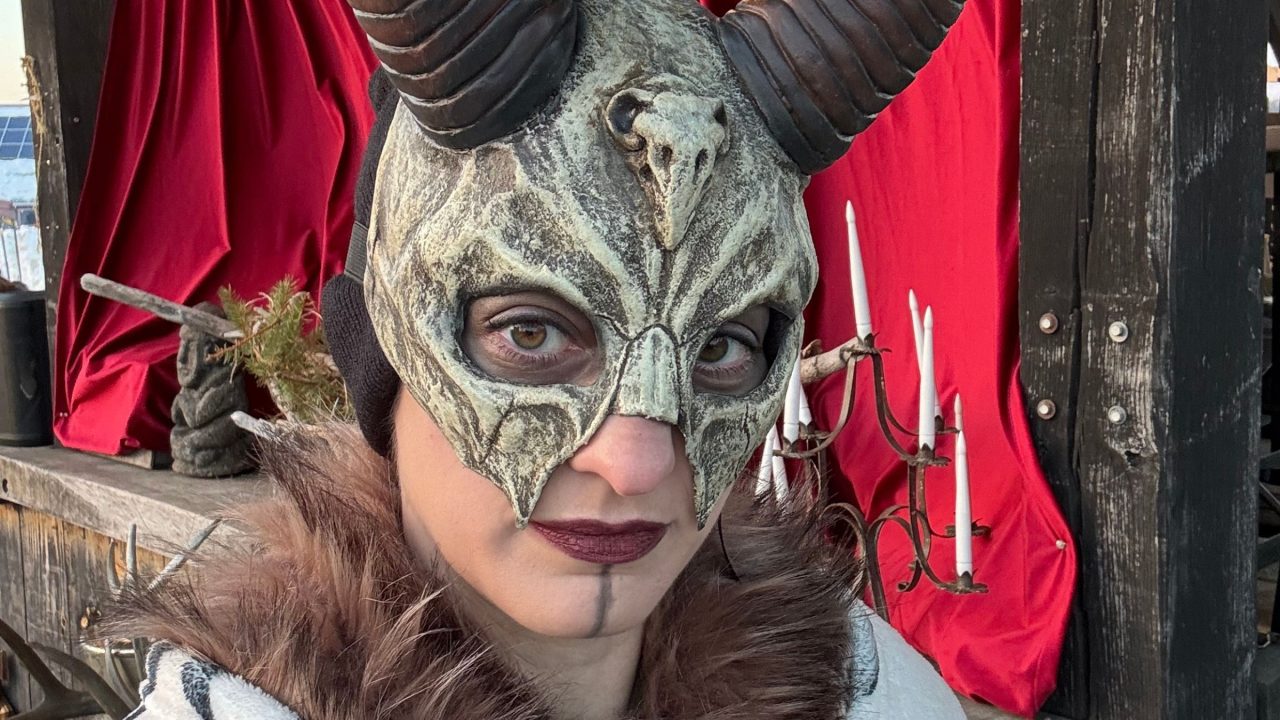
Imagine stepping through a gate on a cold February night in Massachusetts and finding yourself, somehow, in the Viking Age. That is exactly what visitors to Red Apple Farm experienced at the North Folk Night Market — a winter festival that blends history, myth, and live performance into something genuinely unlike a typical New England weekend outing.
Writer Kelly Broderick documented the experience for Medievalists.net, describing a landscape lit by a dozen campfires, filled with the sounds of ancestral music and throat singing, and populated by performers dressed in iron helmets, battle-gear, and round painted shields. The setting was Red Apple Farm, transformed for one winter night into something drawn directly from the pages of the Old English epic Beowulf.
For anyone curious about living history events, medieval festivals, or simply an unusual way to spend a winter weekend in the Northeast, this is worth knowing about.
What North Folk Night Market Actually Is
North Folk Night Market is not a standard Renaissance fair or a costume party with a loose historical theme. According to Broderick’s account, the event is built around a specific narrative framework — the world of Beowulf — and uses immersive theatrical performance to bring that world to life across the grounds of Red Apple Farm in Massachusetts.
Patrons don’t just observe. They walk through the event as participants, shopping by firelight, warming themselves inside a recreated Mead Hall, and witnessing live performances that unfold around them as the evening progresses.
The atmosphere Broderick describes is striking in its detail: the smell of burning wood, the flicker of campfires across hilly orchard fields, vendors selling goods made of fur, leather, and chainmail — all of it contributing to an environment that feels deliberately crafted rather than casually assembled.
Inside Heorot: The Heart of the Viking Age Festival
The centerpiece of the event is the Mead Hall Stage, named Heorot — the same great hall that stands at the center of the Beowulf legend. A large bonfire just inside the main gate acts as a beacon, drawing visitors toward it.
Inside Heorot, the storytelling comes alive in a structured way. Here is what Broderick observed taking place within the hall:
- King Hrothgar and Queen Wealtheow are seated upon thrones, presiding over the hall as they do in the original epic.
- Hildeburh performs live harp music, providing an authentic sonic backdrop drawn from the period.
- A coven of witches gathers around the fire, dancing in rhythm with the flames.
- The Norns — the Norse mythological figures who weave the threads of fate — arrive to foretell Beowulf’s coming and the events that will befall Heorot.
- Visitors are actively encouraged to enter the hall, warm themselves, and commune with other guests.
The blending of Old English and Norse mythological traditions here is intentional. The event draws from both worlds to create something that feels rooted in early medieval Northern European culture without being rigidly academic about it.
What You’ll Find at the Market Stalls
Beyond the theatrical performances, North Folk Night Market functions as a working artisan market — one where the goods on offer match the aesthetic of the event itself. Broderick describes vendors selling handcrafted wares that include fur, leather, and chainmail, all browsed by firelight as patrons move from tent to tent.
| Element of the Event | Details from the Source |
|---|---|
| Location | Red Apple Farm, Massachusetts |
| Time of Year | February (winter night event) |
| Narrative Framework | The world of Beowulf |
| Main Stage | Heorot, the Mead Hall Stage |
| Performers Noted | King Hrothgar, Queen Wealtheow, Hildeburh, the Norns, a coven of witches |
| Market Goods | Fur, leather, chainmail, handcrafted wares |
| Atmosphere | Campfires, throat singing, ancestral music, battle-gear costumes |
Why This Kind of Event Resonates Right Now
Living history events have grown steadily in popularity across the United States, but most lean toward Renaissance-era Europe or Colonial American settings. An event centered specifically on the Viking Age and the Beowulf tradition occupies a narrower, more distinctive niche — and that specificity appears to be part of what makes North Folk Night Market work.
There is something about the winter setting that amplifies the effect. A cold February night, open fires, fur-clad performers, and the sound of throat singing cutting through the dark — these are not incidental details. They are the point. The discomfort of the cold becomes part of the immersion rather than a drawback.
For attendees who arrive in period-appropriate dress — as Broderick did, in woven layers and warm furs — the experience crosses from observation into something closer to participation.
What to Expect If You Go
Based on Broderick’s account, here is a practical picture of what the North Folk Night Market experience involves:
- The event takes place at night, outdoors, in February — dress for genuine cold weather.
- Period-appropriate or Viking Age-inspired clothing is welcomed and common among attendees.
- The main gate leads to a bonfire and then to Heorot, the Mead Hall Stage.
- Live performances unfold throughout the evening in a narrative sequence drawn from Beowulf.
- Artisan vendors are present throughout the grounds, selling handcrafted goods.
- The atmosphere combines historical reenactment, fantasy, and live storytelling.
Specific ticketing details, pricing, and future dates were not included in Interested attendees should check directly with North Folk Night Market or Red Apple Farm for scheduling and admission information.
Frequently Asked Questions
Where does North Folk Night Market take place?
The event is held at Red Apple Farm in Massachusetts, according to Kelly Broderick’s firsthand account published by Medievalists.net.
What time of year does the event happen?
Based on
What is the theme of the festival?
The event is built around the world of Beowulf, the Old English epic, with characters including King Hrothgar, Queen Wealtheow, Hildeburh, and the Norns appearing as live performers.
Do attendees need to wear a costume?
Costume is not confirmed as a requirement, but period-appropriate dress is clearly common — the author attended in woven layers and warm furs, and many other patrons were dressed in Viking Age battle-gear.
What kinds of goods are sold at the market?
Vendors sell handcrafted wares including fur, leather, and chainmail items, all browsed by firelight as part of the immersive setting.
How much does it cost to attend?
Ticket pricing and admission details were not included in Prospective attendees should contact North Folk Night Market or Red Apple Farm directly for current information.

Leave a Reply