
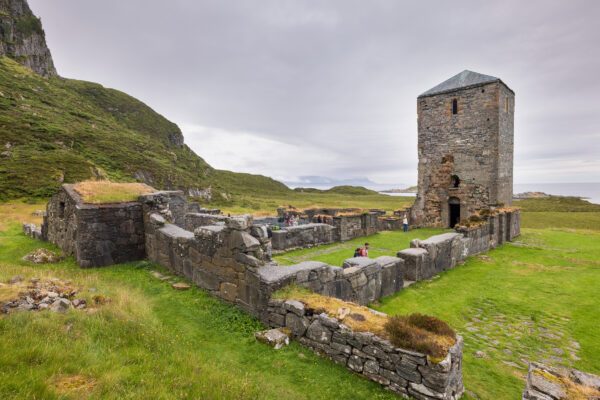
Norway is spending the equivalent of roughly $5 million US dollars to protect medieval ruins and centuries-old timber buildings before they are lost forever — and the scale of what is at risk makes the investment feel urgent.
The Norwegian government has allocated NOK 48.8 million through its latest round of cultural heritage grants, overseen by the Norwegian Directorate for Cultural Heritage. The funding covers conservation work across the entire country, from crumbling castle walls to privately owned medieval structures that have somehow survived for nearly a thousand years.
It is a serious commitment to a serious problem. Medieval buildings and ruins face constant pressure from weather, time, and neglect. Without active conservation, many of these sites would quietly deteriorate until there is nothing left to save.
Why Norway Is Prioritising Its Medieval Heritage Right Now
Norway holds some of Europe’s oldest surviving timber buildings — a remarkable fact given how vulnerable wood is to fire, rot, and the region’s harsh winters. Many of these structures date to the Middle Ages, and preserving them requires not just money but highly specialised craft knowledge that is itself becoming rare.
The funding push reflects a broader recognition that medieval sites serve multiple purposes. They are not simply tourist attractions or historical curiosities. As Norway’s Minister of Climate and Environment, Andreas Bjelland Eriksen, put it directly:
“The ruins from the Middle Ages are part of our common history. With these grants, we are strengthening the work that makes it possible to preserve them. Not only as historical traces, but also as living sources of knowledge for both researchers, craftsmen and local communities.”
That framing — ruins as living sources of knowledge — is significant. It positions conservation not as nostalgia but as an active, ongoing resource for people working in heritage crafts, academic research, and local identity.
How the NOK 48.8 Million Is Being Divided
The total grant package is broken down across several categories, with dedicated funding streams for medieval ruins and privately owned historic buildings.
| Funding Category | Amount (NOK) | Approximate USD |
|---|---|---|
| Total grants allocated | NOK 48.8 million | ~$5 million |
| Medieval ruins conservation | NOK 10.7 million | ~$1.04 million |
| Privately owned medieval buildings | NOK 7 million | ~$680,000 |
| Total applications submitted for medieval ruins | NOK 21.2 million | ~$2.06 million |
The gap between what was requested and what was granted tells its own story. Nine county municipalities and four historic towns submitted applications totalling NOK 21.2 million for medieval ruin conservation alone — meaning demand for this funding significantly outpaces the available budget.
The Sites at the Centre of This Effort
Two specific sites illustrate the range of what this funding is designed to protect.
Halsnøy Monastery, built in the 12th century and located in the municipality of Kvinnherad, is one of the medieval religious sites that forms part of Norway’s surviving heritage landscape. Monasteries like Halsnøy represent both architectural history and social history — they were centres of learning, agriculture, and community life during the medieval period.
Steinvikholm Castle, situated in Skatval in the municipality of Stjørdal, was among the recipients of grants in the previous funding round. Castle ruins like this one require ongoing stabilisation work to prevent further structural collapse — conservation that is painstaking, expensive, and never really finished.
These are not isolated examples. Across Norway, dozens of medieval sites require sustained attention, and the current funding round is part of a continuing national effort rather than a one-time intervention.
What This Means for Communities, Researchers, and Craftspeople
The practical impact of this funding extends well beyond the sites themselves. Medieval conservation work requires traditional building skills — stone masonry, timber joinery, lime mortaring — that have to be actively taught and practiced to survive. When these projects receive funding, they also sustain a pipeline of skilled craftspeople who carry that knowledge forward.
For local communities, medieval ruins and historic buildings are often central to regional identity and tourism. A stabilised castle or a restored monastery is an asset that draws visitors, supports local economies, and gives residents a tangible connection to their history.
For researchers, well-preserved medieval sites provide data that simply cannot be reconstructed once a structure is gone. Archaeological and architectural analysis of surviving buildings continues to generate new understanding of how people lived, built, and organised their societies centuries ago.
The inclusion of privately owned medieval buildings in the funding — with NOK 7 million set aside specifically for that category — is also notable. Private owners of historic properties often face significant financial burdens in maintaining structures they are legally obligated to preserve. Direct grant support helps bridge that gap and reduces the risk that private ownership becomes a pathway to deterioration.
What Comes Next for Norway’s Medieval Conservation Programme
The current grants represent one round of an ongoing national programme. The Norwegian Directorate for Cultural Heritage administers these funds on a continuing basis, meaning future rounds of applications are expected as part of the country’s long-term heritage strategy.
Given that the applications for medieval ruin conservation alone exceeded the available budget by nearly double, there is clear pressure on the government to sustain or increase funding levels in future cycles. The demand from county municipalities and historic towns signals that local authorities are actively engaged in identifying and prioritising conservation needs — but they need central government resources to act on them.
Norway’s approach — combining public funding for ruins with direct support for private owners — offers a model that other countries with significant medieval heritage are watching closely. The challenge of keeping ancient structures standing is universal, but the willingness to fund that work at scale is less common.
Frequently Asked Questions
How much money has Norway allocated for medieval heritage preservation?
The Norwegian government has allocated NOK 48.8 million, equivalent to approximately $5 million US dollars, through the latest round of grants overseen by the Norwegian Directorate for Cultural Heritage.
How much of the funding is specifically for medieval ruins?
NOK 10.7 million has been set aside specifically for the conservation of medieval ruins, while a separate NOK 7 million is designated for privately owned medieval buildings.
Which sites are connected to this funding?
Halsnøy Monastery, a 12th-century site in the municipality of Kvinnherad, and Steinvikholm Castle in the municipality of Stjørdal are among the medieval sites associated with this conservation effort.
Who submitted applications for the medieval ruins grants?
Nine county municipalities and four historic towns submitted applications totalling NOK 21.2 million for conservation work on medieval ruins — significantly more than the NOK 10.7 million available in this round.
Why does Norway fund conservation of privately owned medieval buildings?
Private owners of historic structures often face high maintenance costs for buildings they are legally required to preserve. The NOK 7 million allocation helps support those owners directly so that private ownership does not lead to deterioration of nationally significant sites.
Who oversees the distribution of these heritage grants?
The grants are administered by the Norwegian Directorate for Cultural Heritage, with the programme falling under the remit of the Ministry of Climate and Environment.




Leave a Reply