
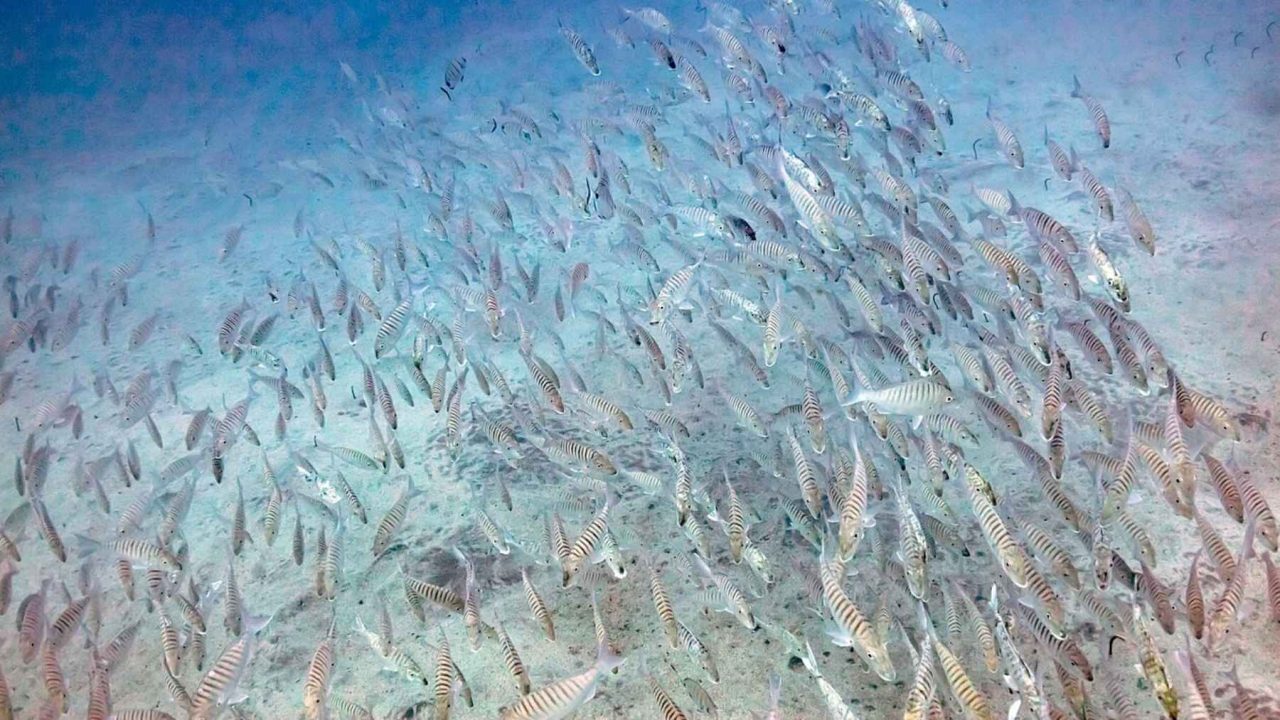
For every 0.1°C of ocean warming per decade, fish populations lose 7.2% of their total biomass. That number sounds almost manageable until you do the math — and realize how fast those fractions add up across decades of steadily rising sea temperatures.
A major new study tracking roughly 33,000 fish populations across the Northern Hemisphere between 1993 and 2021 has delivered what researchers are calling a “surprising and deeply worrying” finding. The slow, persistent warming of the ocean — not just the dramatic marine heatwaves that make headlines — is quietly draining the seas of life, year after year.
It’s the kind of finding that changes how scientists think about ocean health. Not as a crisis that arrives suddenly, but as one that has already been building for decades while most of the world’s attention was elsewhere.
What the Study Actually Found
The research was led by marine ecologist Shahar Chaikin at the National Museum of Natural Sciences, part of Spain’s National Research Council, alongside Juan David González-Trujillo of the National University of Colombia and Miguel B. Araújo.
Their dataset was sweeping in scope — nearly three decades of fish population data, covering thousands of species and populations spread across the Northern Hemisphere. What they were measuring was biomass: the total weight of fish living within a given population at any point in time. Biomass is one of the most reliable indicators scientists have for the overall health and abundance of marine life.
What they found was a clear, consistent pattern. As long-term ocean temperatures rose, fish biomass declined. The relationship wasn’t subtle or buried in the noise of the data. It was measurable, repeatable, and — according to the researchers — deeply concerning.
The key figure: for every 0.1°C increase in ocean temperature per decade, fish populations declined by 7.2% in biomass. Given that ocean temperatures have been rising steadily, the compounding effect over multiple decades represents a significant and ongoing loss of marine life.
Why Slow Warming May Be More Dangerous Than Heatwaves
One of the most important points this study raises is a distinction that often gets lost in public coverage of ocean health: the difference between acute marine heatwaves and long-term background warming.
Marine heatwaves — sudden, intense spikes in ocean temperature — do get attention. They bleach coral reefs, displace species, and generate alarming photographs. But the study’s findings suggest the slower, less dramatic warming trend may actually be doing more cumulative damage to fish populations over time.
That’s because long-term warming doesn’t give ecosystems a chance to recover between events. It’s a persistent pressure, not a temporary shock. Fish populations that might bounce back from a short-term disturbance have no equivalent recovery window when the baseline temperature itself keeps rising.
The researchers describe this as a process that steadily drains biomass — less life in the water with each passing year, even when nothing catastrophic appears to be happening on the surface.
The Numbers Behind the Warning
| Study Detail | Data |
|---|---|
| Study period | 1993 to 2021 |
| Fish populations tracked | Approximately 33,000 |
| Geographic scope | Northern Hemisphere |
| Biomass decline per 0.1°C warming per decade | 7.2% |
| Lead researcher | Shahar Chaikin, National Museum of Natural Sciences (Spain) |
| Co-researchers | Juan David González-Trujillo (National University of Colombia), Miguel B. Araújo |
| Researchers’ own characterization of findings | “Surprising and deeply worrying” |
The scale of the dataset is worth emphasizing. Tracking 33,000 populations over nearly 30 years gives this study a statistical weight that short-term or smaller-scale research simply cannot match. The signal the researchers identified isn’t a blip — it’s a trend embedded across thousands of species and ecosystems.
What This Means for the World’s Oceans — and the People Who Depend on Them
Fish biomass isn’t just a scientific metric. It represents food security for hundreds of millions of people globally, livelihoods for fishing communities, and the foundation of marine food webs that sustain ocean ecosystems far beyond fish alone.
When biomass declines, commercial fish stocks shrink. Catches become harder to maintain. Species that depend on fish as prey — seabirds, marine mammals, larger predatory fish — face pressure too. The ripple effects through ocean ecosystems can be profound and long-lasting.
For coastal communities and fishing industries, a 7.2% decline per 0.1°C of warming per decade is not an abstraction. Compounded across the temperature increases already recorded and those projected in coming decades, it points toward a measurably smaller, less productive ocean than the one previous generations relied on.
The study’s geographic focus on the Northern Hemisphere means the findings are directly relevant to some of the world’s most heavily fished waters — the North Atlantic, the North Pacific, and the seas surrounding Europe and North America.
What Comes Next for Ocean Warming Research
The study’s findings add significant weight to calls for treating long-term ocean warming as a primary threat to marine biodiversity — not a secondary concern behind more visible events like heatwaves or pollution episodes.
Researchers in this field have increasingly argued that monitoring programs and conservation strategies need to account for the cumulative effect of gradual warming, not just respond to acute crises. This study provides some of the clearest evidence yet that the slow burn is real, measurable, and already well underway.
Whether policymakers and fisheries managers will incorporate findings like these into long-term planning remains an open question. What the data makes harder to dispute is that the ocean’s baseline is shifting — and fish populations are already reflecting that change.
Frequently Asked Questions
How many fish populations were included in this study?
The study tracked approximately 33,000 fish populations across the Northern Hemisphere over a period spanning 1993 to 2021.
What does “biomass decline” actually mean in practice?
Biomass refers to the total weight of fish living in a population. A decline in biomass means there are fewer fish — or smaller fish — in the water over time, indicating a reduction in the overall abundance of marine life.
Who led this research?
The study was led by marine ecologist Shahar Chaikin at the National Museum of Natural Sciences, part of Spain’s National Research Council, alongside Juan David González-Trujillo of the National University of Colombia and Miguel B. Araújo.
Is long-term warming more damaging than marine heatwaves?
The study suggests that slow, persistent ocean warming may be doing more cumulative damage to fish populations than short-term heatwave events, because it provides no recovery window between temperature increases.
Does this study cover oceans worldwide?
The study focused on the Northern Hemisphere. Whether the same patterns hold with equal strength in Southern Hemisphere waters has not been confirmed by this research.
How did the researchers describe their own findings?
The researchers characterized the loss of fish biomass associated with ocean warming as “surprising and deeply worrying.”



Leave a Reply