
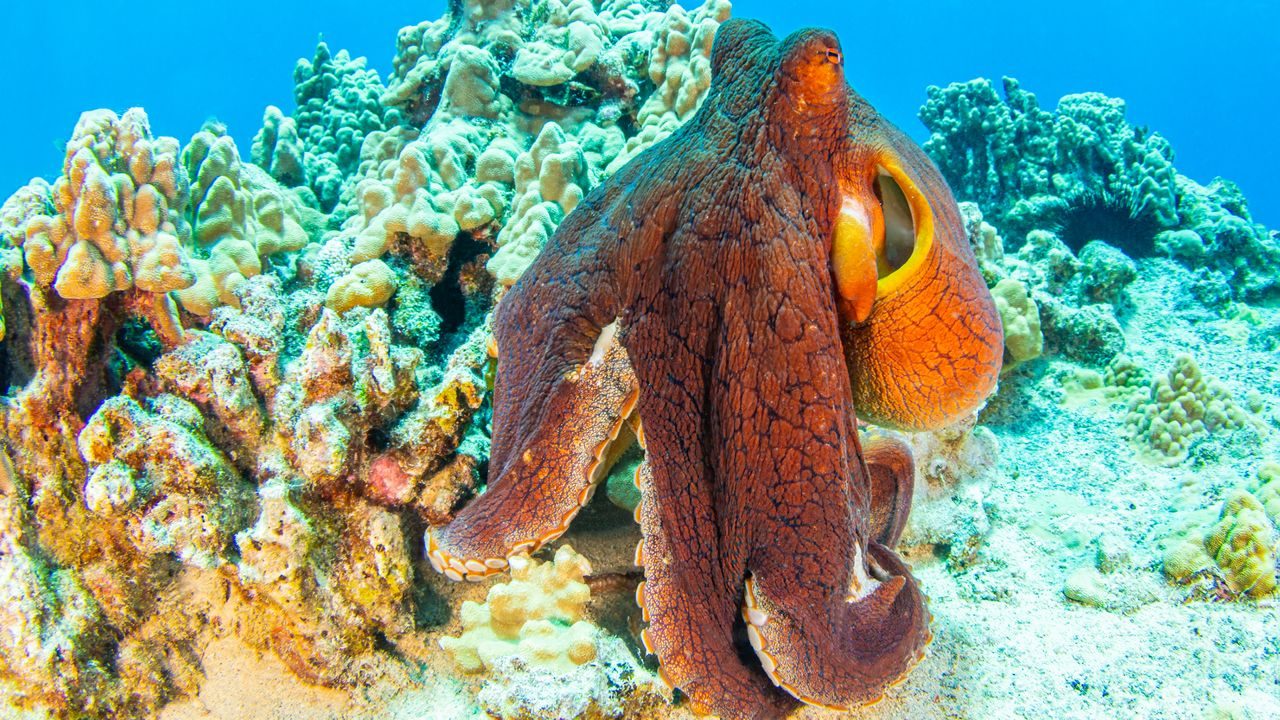
Imagine an animal with three hearts, blue blood, and the ability to change the color and texture of its skin in milliseconds. No, it’s not science fiction — it’s the octopus, one of the most genuinely alien creatures sharing our planet.
Octopuses are a living argument that complex, intelligent life doesn’t have to look anything like us. No backbone. No centralized brain in the traditional sense. Eight arms lined with suckers that can taste, touch, and grip with extraordinary precision. If you’ve ever wanted to test how much you actually know about these remarkable animals, now is a good time to find out.
Here’s a deep look at what makes octopuses so scientifically fascinating — and why cephalopod research continues to surprise even the experts who study them.
What Exactly Is a Cephalopod — and Why Does It Matter?
Octopuses belong to a class of animals called cephalopods, a group that also includes squid, cuttlefish, and nautiluses. The name comes from the Greek for “head-foot,” which is a fairly accurate description: their limbs extend directly from around their heads.
What sets cephalopods apart from most other invertebrates is their remarkable nervous system. Octopuses in particular have evolved a level of behavioral complexity that researchers consider genuinely unusual for animals without a vertebrate body plan.
Understanding what an octopus is — and isn’t — matters because it reframes assumptions about intelligence, biology, and evolution. Most of what we associate with “smart” animals involves mammals or birds. Octopuses challenge that framework entirely.
The Biology Behind the Brilliance
Several features of octopus anatomy set them apart from virtually every other creature on Earth:
- No backbone: Octopuses are invertebrates, meaning their body plan departs sharply from the vertebrate structures most people are familiar with.
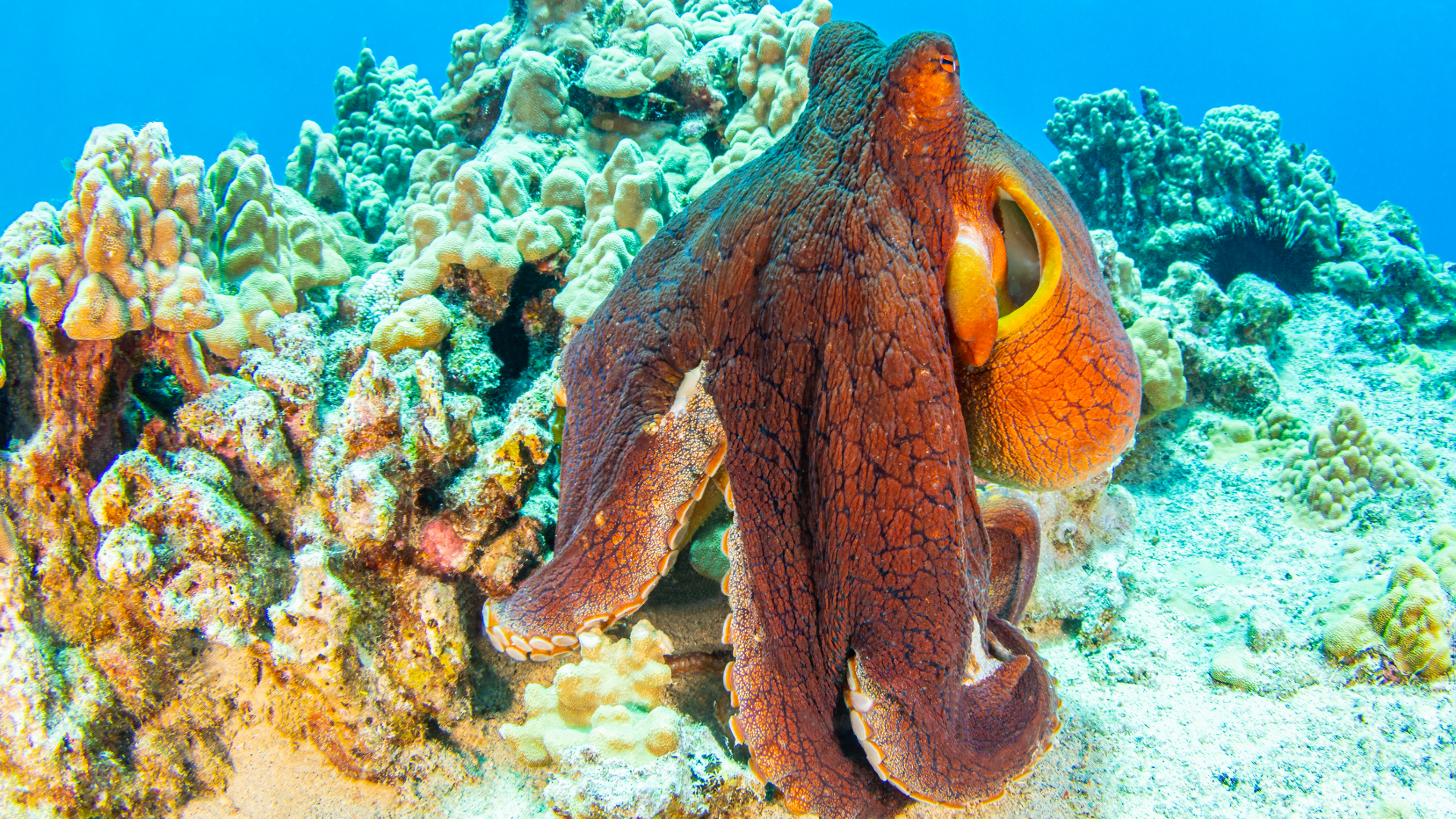
- Skin that thinks: They can rapidly change both the color and texture of their skin — not just for camouflage, but potentially for communication.
- Remarkable dexterity: Their arms allow them to manipulate objects with a level of precision that continues to impress researchers studying animal cognition.
- Environmental navigation: Octopuses can move through and adapt to complex environments, demonstrating problem-solving behaviors that suggest flexible thinking rather than fixed instinct.
What makes this especially striking is that these capabilities evolved independently from the intelligence seen in vertebrates. Octopuses and humans last shared a common ancestor hundreds of millions of years ago — yet both lineages arrived at forms of complex behavior through entirely different biological routes.
How Octopus Science Compares to What Most People Assume
| Common Assumption | What Science Actually Shows |
|---|---|
| Octopuses are simple sea creatures | They display complex problem-solving and behavioral flexibility |
| Intelligence requires a backbone | Octopuses are invertebrates with sophisticated nervous systems |
| Skin color change is just camouflage | Rapid changes in color and texture serve multiple potential functions |
| All cephalopods are basically the same | Squid, nautiluses, cuttlefish, and octopuses differ significantly in biology and behavior |
| Octopuses are solitary and simple | Their dexterity and navigation abilities point to active, adaptive behavior |
Why the Octopus Keeps Surprising Researchers
Part of what makes octopus science so compelling is that the animals keep defying expectations. Their body plan is so different from vertebrates that every new discovery tends to raise more questions than it answers.
Consider the skin alone. The ability to rapidly alter both color and texture isn’t just a passive defense mechanism — it requires the skin to receive and process information in ways that researchers are still working to fully understand. Some scientists have explored whether octopus skin may process light independently, separate from the eyes entirely.
Then there’s the question of their arms. Each arm contains a significant portion of an octopus’s total neurons, meaning that to some degree, the arms process information semi-independently. An octopus doesn’t just command its arms from a central brain — the arms themselves participate in decision-making.
This distributed intelligence is one of the reasons octopuses continue to attract serious scientific attention. They represent a genuinely different solution to the problem of how a complex organism can interact with a complicated world.
What Cephalopod Research Tells Us About Life Itself
Octopuses aren’t just interesting in isolation. They serve as a broader reminder that the diversity of life on Earth includes body plans, nervous systems, and forms of intelligence that humans are only beginning to document and understand.
Cephalopods as a group — from the ancient nautilus to the fast-moving squid — show how evolution can produce complexity through radically different paths. Studying octopuses forces researchers to think carefully about what intelligence actually means, what consciousness might require, and whether the frameworks developed to study vertebrate brains apply at all to animals like these.
For anyone curious about the natural world, octopuses are a useful entry point into some of the biggest open questions in biology. How does a nervous system produce behavior? What does it take for an animal to solve a novel problem? How much of what we call intelligence is tied to a specific body plan — and how much is something more universal?
The octopus doesn’t answer those questions. But it makes them impossible to ignore.
Frequently Asked Questions
What class of animals does the octopus belong to?
Octopuses are classified as cephalopods, a class that also includes squid, nautiluses, and cuttlefish.
Are octopuses vertebrates or invertebrates?
Octopuses are invertebrates — they have no backbone, which means their anatomy departs significantly from the body plans of vertebrate animals.
What makes octopus skin unusual?
Octopuses can rapidly change both the color and texture of their skin, a capability that serves functions beyond simple camouflage and is still being studied by researchers.
Why are octopuses considered intelligent?
Octopuses can manipulate objects with remarkable dexterity and navigate complex environments in ways that suggest flexible problem-solving rather than fixed instinct.
What other animals are related to octopuses?
Squid, cuttlefish, and nautiluses are all cephalopods, the same class of animals that octopuses belong to.
Why do scientists find octopuses scientifically significant?
Octopuses demonstrate that complex behavior and sophisticated nervous systems can evolve through a completely different biological route than vertebrates, challenging assumptions about how intelligence develops.




Leave a Reply