
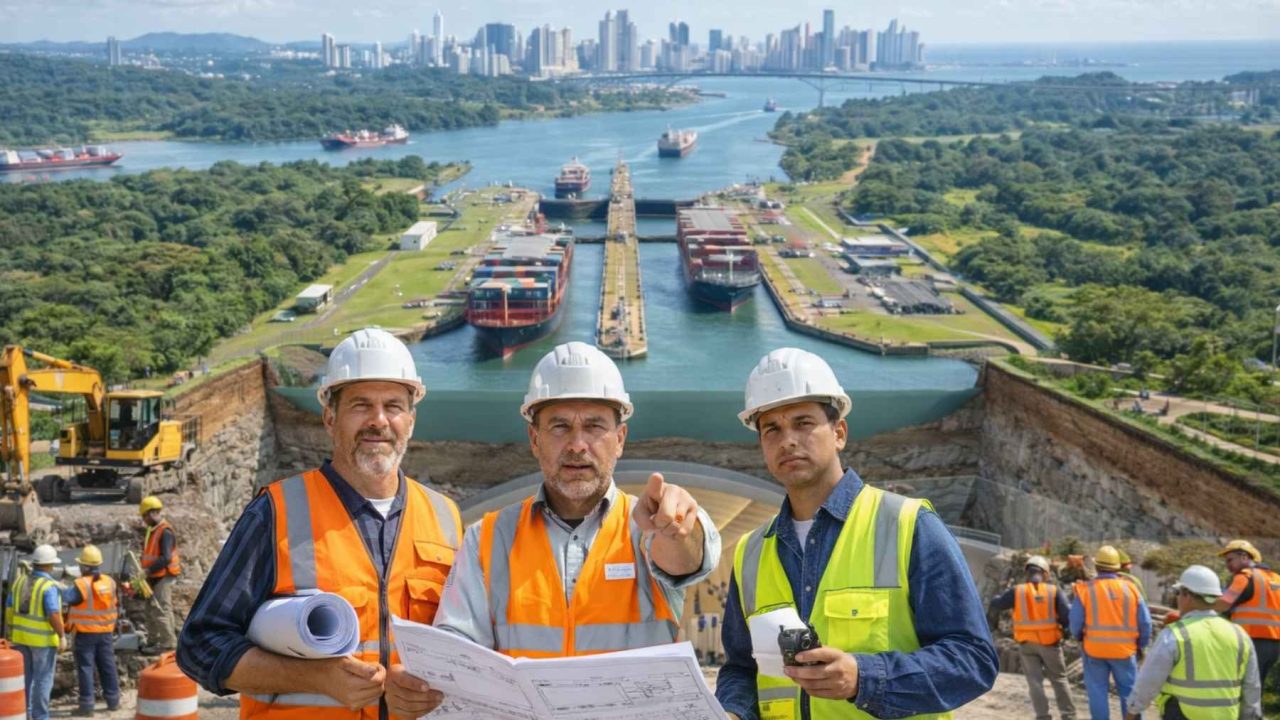
What if you could walk or bike across one of the most strategically important waterways on Earth — not on a bridge above the ships, but through a tunnel beneath them? That is exactly what Panama City’s “Canal Underline” project proposes, and despite falling short in a major international competition, the idea is very much still alive.
The Panama Canal has long divided the city it runs through. For the massive container ships that pass through it daily, the canal is a marvel of global logistics. For the people who live on either side of it, it is something far more mundane and frustrating: a barrier to getting around. The Canal Underline wants to change that — on foot, and on two wheels.
The project did not win the tunneling competition it was entered in, finalized in late March 2026. Three U.S. proposals took the top spots instead. But Panama City officials have signaled the concept could still move forward through further studies, independent of the contest. That alone makes this worth watching.
What the Canal Underline Actually Proposes
The Canal Underline is a proposed pedestrian and bicycle tunnel running roughly 0.6 miles beneath the Panama Canal. The passage would allow people to cross entirely on foot or by bike, with no cars and no traffic mixing into the route.
That might sound simple, but the context makes it remarkable. The Panama Canal is one of the most heavily trafficked shipping corridors on the planet. Crossing it by any means other than the existing road bridges means navigating infrastructure built around massive cargo vessels, not commuters or cyclists. A dedicated human-scale route beneath all of that would be something genuinely new.
The proposal also goes beyond just the tunnel itself. The concept reportedly includes parks and public spaces connected to the crossing, suggesting a broader vision for how the waterway’s edges could be transformed into livable, accessible urban space — not just a hard industrial boundary.
Panama City also distinguished itself as the only finalist outside the United States in the competition, which underscores just how unusual and ambitious the proposal is on a global scale.
Why This Matters Beyond Panama City
The Panama Canal is not just a local landmark. It handles a significant share of global maritime trade, connecting the Atlantic and Pacific oceans and cutting thousands of miles off shipping routes. That global importance has historically meant that infrastructure around the canal is built for industry, not for the people who live nearby.
Urban residents on both sides of the canal deal with real daily consequences: longer commutes, limited crossing options, and a waterway that functions as a physical wall through the middle of their city. A pedestrian and bicycle tunnel would directly address that, offering a car-free option for workers, students, tourists, and anyone else who simply needs to get from one side to the other.
There is also a broader urban planning argument here. Cities around the world are rethinking how major infrastructure — highways, rail lines, waterways — divides communities. The Canal Underline fits into that conversation, proposing that one of the world’s most famous trade routes could also serve the people who live alongside it.
Key Facts About the Canal Underline Project
| Detail | Information |
|---|---|
| Project name | The Canal Underline |
| Location | Panama City, Panama |
| Proposed tunnel length | Approximately 0.6 miles |
| Mode of transit | Pedestrian and bicycle only — no cars |
| Competition result | Finalist; three U.S. proposals selected instead |
| Competition finalized | Late March 2026 |
| Geographic distinction | Only non-U.S. finalist in the competition |
| Current status | Under consideration for further independent studies |
- The tunnel would sit beneath the canal, not above it — meaning no interference with ship traffic
- The broader concept includes parks and public spaces alongside the tunnel route
- City officials have not abandoned the project despite the competition result
- Further feasibility studies are being considered outside the competition framework
Who Would Actually Benefit From This Crossing
The most direct beneficiaries would be Panama City residents who currently rely on road bridges to cross the canal. A dedicated pedestrian and bicycle route would offer an alternative that is free from car traffic, potentially faster for short crossings, and more accessible for people who do not own vehicles.
Commuters and students who live on one side of the canal and work or study on the other would have a new option that does not depend on road congestion. Given that the canal acts as a hard dividing line through the city, that kind of connectivity has real everyday value.
Tourism could also benefit. The Panama Canal is one of the most visited attractions in Central America. A walkable, bikeable crossing beneath it — with connected parks and public spaces — would give visitors an experience unlike anything currently available: a human-scale encounter with one of the world’s great engineering landmarks.
Supporters of the project also argue it fits into a larger vision of making Panama City more sustainable and less car-dependent, giving residents genuine alternatives to driving across a waterway that was never designed with them in mind.
What Happens Next for the Canal Underline
The project’s immediate future depends on what Panama City officials decide to do outside the competition that originally brought it to wider attention. City leaders have indicated the concept could advance through further studies, even without the backing or structure of the contest it entered.
That next phase would likely involve deeper feasibility analysis — looking at engineering challenges, costs, timelines, and community impact. A tunnel beneath an active shipping canal is not a small undertaking, and moving from a competition finalist concept to an approved construction project requires considerably more groundwork.
No confirmed timeline has been announced for those studies or for any formal approval process. What is clear is that the idea has not been shelved. Panama City’s willingness to keep exploring the Canal Underline suggests that the question of how residents cross their own city’s most famous waterway is one officials take seriously — and one that may eventually get a very different kind of answer.
Tunnel Vision Challenge results!
We've been overwhelmed with the amazing submissions…so we are announcing three winners!
The Thrilling Three are:
– NOLA Loop (New Orleans, LA)
– Ravens Loop (Baltimore, MD)
– University Hills Loop (Dallas, TX)What happens next? TBC and the… https://t.co/cY2ULftfiK
— The Boring Company (@boringcompany) March 24, 2026
Frequently Asked Questions
What is the Canal Underline?
It is a proposed pedestrian and bicycle tunnel approximately 0.6 miles long that would run beneath the Panama Canal, allowing people to cross without cars or traffic.
Did the Canal Underline win the tunneling competition?
No. It was a finalist in a competition finalized in late March 2026, but three U.S. proposals were chosen over it.
Is the project still moving forward?
Panama City officials have indicated the concept could still advance through further independent studies, even outside the competition framework.
Would cars be allowed in the tunnel?
No. The proposal is specifically designed for pedestrians and cyclists only, with no car traffic included in the concept.
What makes Panama City’s proposal unusual?
It was the only finalist from outside the United States in the competition, and it targets one of the world’s most significant trade waterways for a human-scale crossing.
When could the tunnel be built?
No confirmed construction timeline has been announced. The project is still at the study and consideration stage, with no formal approval yet confirmed.




Leave a Reply