
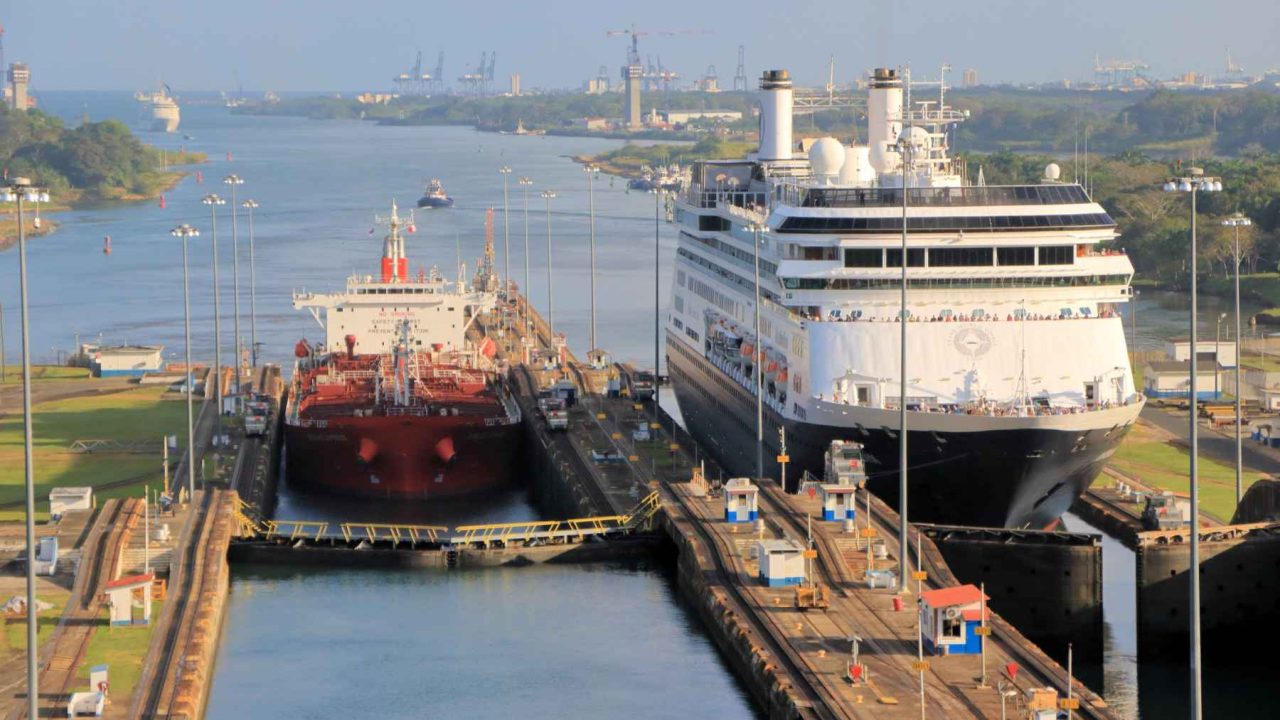
Up to 38 ships are now passing through the Panama Canal every single day — a figure that would have seemed impossible just two years ago, when a brutal drought forced officials to slash crossings to a fraction of normal capacity. The turnaround is striking, and the timing is no accident.
With the Strait of Hormuz closed amid the ongoing conflict involving Iran and the Suez Canal still being avoided by many ship owners due to regional instability, the Panama Canal has suddenly become the most critical chokepoint in global trade. Carriers are rerouting. Energy companies are scrambling. And the canal, for now, is handling the pressure.
But there is a detail embedded in this story that the shipping headlines tend to gloss over — one that could bring this traffic surge to an abrupt halt, just as it did before.
Why the Panama Canal Is Running at Full Throttle Right Now
The canal’s administrator, Ricaurte Vasquez, confirmed that daily passages are now running above the 34 transits per day that had been forecast in the canal’s own budget projections. The actual figure — between 36 and 38 transits daily — represents a significant operational push, and it reflects just how dramatically global shipping patterns have shifted.
When the Strait of Hormuz closes or becomes too dangerous to navigate, energy shipments that would normally flow through the Persian Gulf need an alternative. When the Suez Canal route through the Red Sea becomes a security risk, container ships and tankers that would ordinarily cut through the Mediterranean have to find another way around. Panama fills that gap.
Canal chief Vasquez has pointed specifically to liquefied natural gas as the biggest new pressure on the waterway. LNG cargoes loading at U.S. ports are now increasingly routed through Panama, with ship operators treating the canal as the fastest viable option to keep energy deliveries on schedule for buyers in Asia and Europe.
That is a significant shift. LNG carriers are large, time-sensitive, and expensive to reroute. The fact that they are now flowing through Panama in greater numbers tells you something about how few alternatives remain open right now.
The Numbers Behind the Surge
| Metric | Detail |
|---|---|
| Current daily transits | 36 to 38 vessels per day |
| Budgeted daily forecast | 34 transits per day |
| Primary new cargo type | Liquefied natural gas (LNG) |
| Key LNG origin point | U.S. ports |
| Previous disruption period | 2023–2024 drought restrictions |
| Cause of current surge | Hormuz closure, Suez Canal avoidance |
The gap between the budgeted forecast and actual traffic may look small on paper, but in canal operations, those extra transits represent real revenue, real scheduling complexity, and real strain on infrastructure that was not designed with unlimited capacity in mind.
The Part of This Story Most Reports Are Missing
Here is what gets buried in the traffic surge coverage: the Panama Canal does not run on fuel. It runs on freshwater.
The canal’s lock system uses enormous quantities of freshwater to raise and lower ships between the Atlantic and Pacific. That water comes from rainfall feeding the lakes and reservoirs that supply the locks. When rain is plentiful, the system works. When it is not, the canal has no backup plan — only restrictions.
Between 2023 and 2024, a severe drought forced canal authorities to reduce the number of daily transits significantly. Ships sat waiting. Cargo was delayed. Industries that depend on predictable delivery windows scrambled to find alternatives. The economic disruption was real and measurable.
Water levels have since improved, which is precisely why the canal can now handle 36 to 38 transits a day rather than the reduced numbers seen during the drought period. But the underlying vulnerability has not changed. The canal’s capacity is still tied directly to rainfall patterns — and those patterns are increasingly unpredictable.
Climate scientists and shipping analysts have noted that the 2023–2024 drought was not a one-off anomaly. It reflected broader shifts in regional weather patterns that could return. The canal is, in effect, a rain-fed shortcut for global trade — and right now, global trade needs it more than ever.
Who Feels This Most — and Why It Reaches Beyond the Shipping Industry
The immediate pressure falls on energy markets. LNG buyers in Asia and Europe who depend on American gas exports are watching Panama closely. A disruption to canal access — whether from drought, geopolitical pressure, or infrastructure constraints — would force those cargoes onto longer, more expensive routes, pushing up costs that eventually reach consumers.
Container shipping is also affected. Retailers and manufacturers who rely on goods moving between Asia and the U.S. East Coast use the Panama Canal as a primary route. When that route is constrained, delivery timelines stretch, inventory planning becomes harder, and prices can shift.
Beyond the logistics, there is a geopolitical dimension. The canal’s surge in importance comes directly from instability elsewhere — the Strait of Hormuz closure and the Suez Canal security situation. Panama is absorbing traffic not because it became more efficient, but because the alternatives became less viable. That makes it a pressure point in a way it has not been for years.
What Happens If the Water Runs Out Again
Canal authorities are clearly aware of the fragility here. The drought of 2023–2024 was a public demonstration of how quickly the waterway’s capacity can shrink when rainfall does not cooperate. Officials have been monitoring water levels carefully, and for now the situation is stable enough to sustain the current traffic volume.
But “for now” is doing a lot of work in that sentence. The climate question, as observers have noted, still hangs in the air. How long can a rain-fed corridor stay fully operational when weather patterns are shifting in ways that are difficult to predict? There is no easy answer, and the shipping industry does not have a reliable backup if Panama restricts transits again while Hormuz remains closed and the Suez route stays dangerous.
The canal is performing. The demand is real. The risk is also real — and it is the kind that does not announce itself until it is already a problem.
Frequently Asked Questions
How many ships are currently passing through the Panama Canal each day?
Between 36 and 38 vessels are transiting the canal daily, exceeding the budgeted forecast of 34 transits per day.
Why is the Panama Canal seeing a sudden surge in traffic?
The surge is driven by the closure of the Strait of Hormuz and many ship owners avoiding the Suez Canal due to regional instability, forcing vessels to reroute through Panama.
What type of cargo is creating the most new pressure on the canal?
Liquefied natural gas, particularly cargoes loading at U.S. ports, has been identified by canal administrator Ricaurte Vasquez as the biggest new pressure on the waterway.
Why did the Panama Canal restrict traffic between 2023 and 2024?
A severe drought reduced the freshwater levels needed to operate the canal’s lock system, forcing authorities to limit daily transits during that period.
Could a drought restrict the canal again?
Yes. The canal depends entirely on rainfall to supply the freshwater its locks require, and water levels can drop significantly during dry periods, as demonstrated in 2023–2024.
Is the canal currently operating at full capacity?
According to canal chief Ricaurte Vasquez, yes — the canal is operating at top capacity, with daily passages running above the level forecast in its budget.




Leave a Reply