
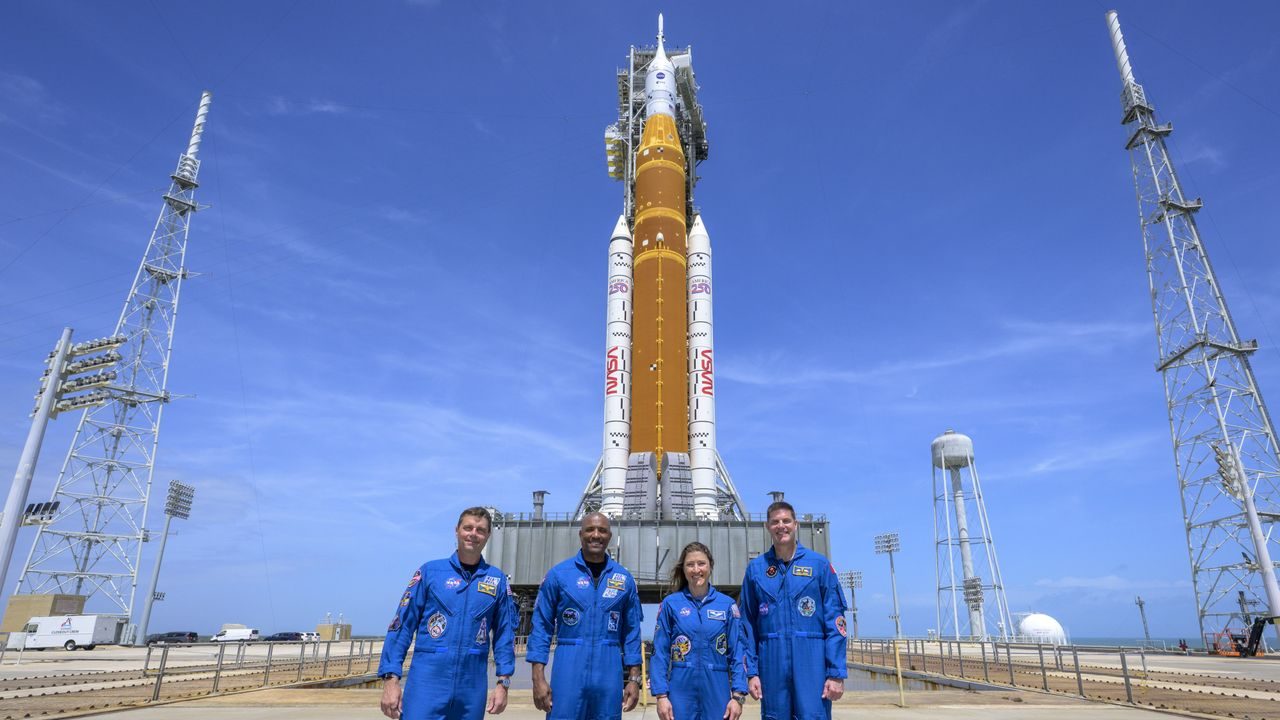
For the first time in more than half a century, NASA is preparing to send humans toward the Moon — and you can watch every second of it live. The Artemis II mission, the agency’s first crewed lunar mission since the Apollo era, is targeting a launch window that opens at 6:24 p.m. EDT, with a two-hour window available for liftoff.
This is not a drill, and it is not a robotic test run. Four real astronauts are strapped into the Orion capsule, sitting atop NASA’s massive Space Launch System rocket, ready to make history. If you have even a passing interest in space exploration, this is one of those moments you will want to witness in real time.
Here is everything you need to know about who is flying, what is launching them, and how to watch NASA’s Artemis II mission as it happens.
What Artemis II Actually Is — and Why It Matters
Artemis II is the first crewed mission under NASA’s Artemis program, which aims to return humans to the Moon for the first time since the Apollo program ended in the early 1970s. That is a gap of more than 50 years. No human being has traveled to the Moon in the lifetime of most people reading this article right now.
The mission will carry four astronauts aboard the Orion spacecraft, launched by NASA’s Space Launch System — commonly called the SLS. The SLS is one of the most powerful rockets ever built, designed specifically to carry humans beyond low Earth orbit and toward deep space destinations like the Moon.
Artemis II represents a critical step in NASA’s broader plan to eventually land astronauts back on the lunar surface. Before boots touch the Moon again, NASA needs to prove its crew systems work in deep space conditions with real people on board. That is precisely what this mission is designed to do.
Meet the Artemis II Crew
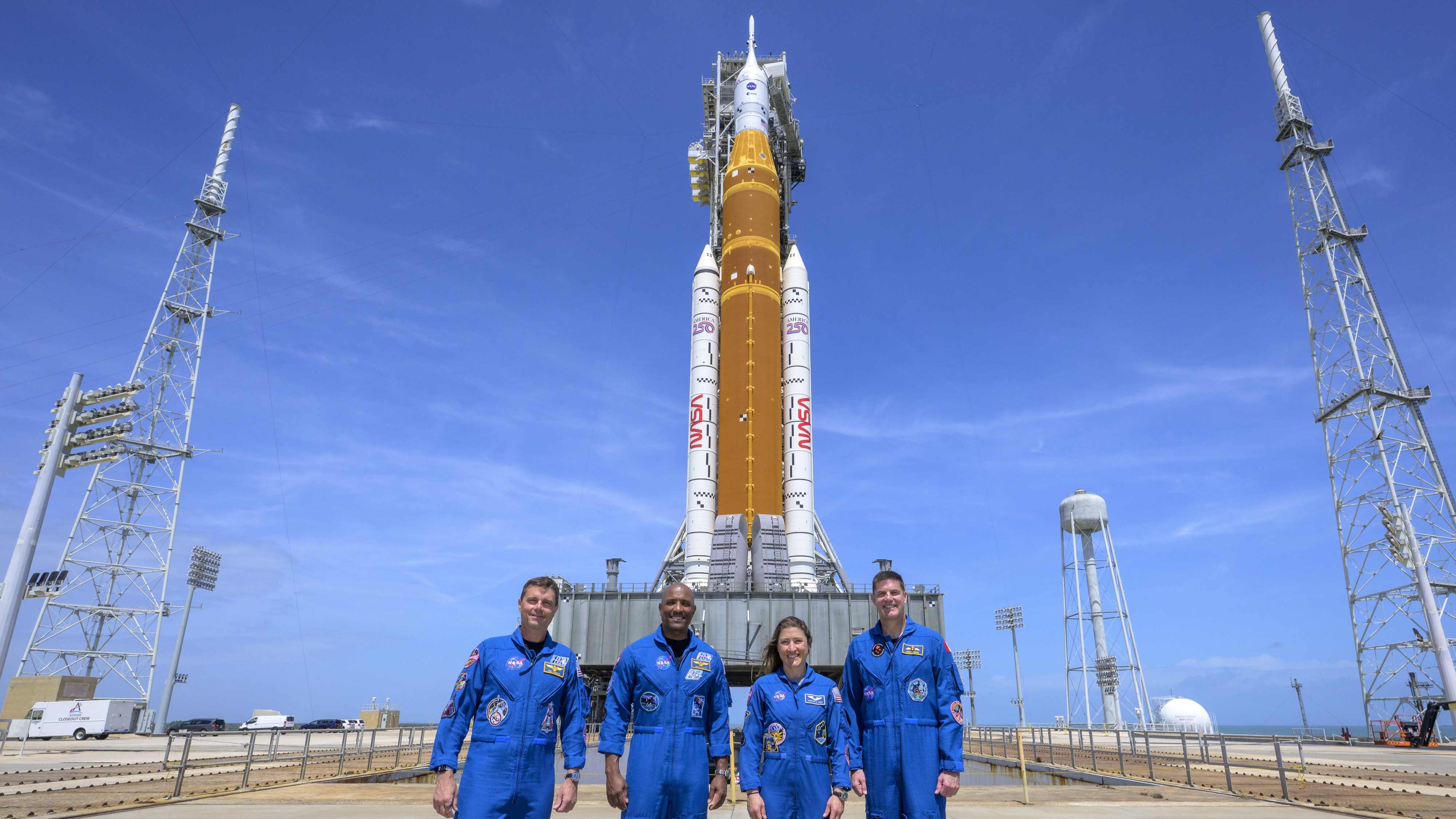
Four astronauts are making this historic flight. The crew brings together experienced NASA veterans and a milestone-making representative from an international partner agency.
| Astronaut | Agency | Role |
|---|---|---|
| Reid Wiseman | NASA | Commander |
| Victor Glover | NASA | Pilot |
| Christina Koch | NASA | Mission Specialist |
| Jeremy Hansen | Canadian Space Agency | Mission Specialist |
The inclusion of Jeremy Hansen from the Canadian Space Agency marks a significant moment for international space cooperation. Hansen will become the first Canadian to travel to lunar distance. The crew as a whole represents a diverse group of highly trained professionals, each bringing extensive experience to one of the most ambitious human spaceflight missions in modern history.
How to Watch NASA’s Artemis II Launch Live
NASA typically broadcasts major launches across multiple free platforms, making it easy for anyone with an internet connection or a television to tune in. Here is what to look for when finding a live stream:

- NASA TV: The agency’s official television channel streams all major launches live and for free, available through the NASA website and most major streaming platforms.
- NASA’s YouTube channel: NASA Live on YouTube is one of the most accessible options, requiring no subscription or sign-in.
- NASA’s official app: The NASA app for iOS and Android devices carries live streams and allows you to set launch reminders.
- Cable and satellite television: Major news networks typically carry live coverage of significant NASA launches, particularly one of this historical magnitude.
The launch window opens at 6:24 p.m. EDT and remains open for two hours. Coverage typically begins well before the actual launch window, so tuning in 30 to 60 minutes early is a good idea if you want to catch the pre-launch commentary and build-up.
What the Launch Window Actually Means
A two-hour launch window does not mean the rocket will necessarily lift off at 6:24 p.m. on the dot. Launch windows exist because of the precise orbital mechanics required to send a spacecraft toward the Moon. The rocket needs to launch at exactly the right moment to put Orion on the correct trajectory.
If technical issues, weather concerns, or range safety problems arise during the first attempt, NASA can try again at any point within that two-hour window. If the window closes without a launch, the team will assess conditions and set a new target date.
Space launches are inherently unpredictable. Scrubs — the term for a canceled launch attempt — are common even for well-prepared missions. If Artemis II does not launch on the first attempt, that is not cause for alarm. It is simply part of the process.
What Happens After Liftoff
If the SLS rocket lifts off successfully within the launch window, the Orion capsule will carry its four-person crew on a trajectory toward the Moon. The mission is designed to test the Orion spacecraft and its life support systems with a crew aboard, operating in the deep space environment beyond Earth’s protective magnetic field.
This is a critical proving ground for NASA’s longer-term ambitions. The data gathered during Artemis II will directly inform the planning and safety protocols for future missions, including those intended to actually land astronauts on the lunar surface.
The world has not seen humans travel toward the Moon in living memory for most people. Whatever happens on launch day, Artemis II is already a landmark moment in the story of human space exploration.
Frequently Asked Questions
What time does the Artemis II launch window open?
The launch window opens at 6:24 p.m. EDT, with a two-hour window available for liftoff.
Who is on the Artemis II crew?
The crew consists of NASA astronauts Reid Wiseman, Victor Glover, and Christina Koch, along with Canadian Space Agency astronaut Jeremy Hansen.
What rocket is launching Artemis II?
NASA’s Space Launch System, known as the SLS, will carry the Orion capsule and its four-person crew toward the Moon.
Is this the first crewed Moon mission in a long time?
Yes — Artemis II is NASA’s first crewed Moon mission in more than 50 years, marking a major milestone in human spaceflight history.
Where can I watch the Artemis II launch for free?
NASA TV and NASA’s official YouTube channel both offer free live coverage of the launch; no subscription is required for either platform.
What happens if the launch is scrubbed?
If a launch attempt is canceled within the two-hour window, NASA will assess conditions and announce a new target launch date; this has not yet been confirmed for Artemis II specifically.




Leave a Reply