
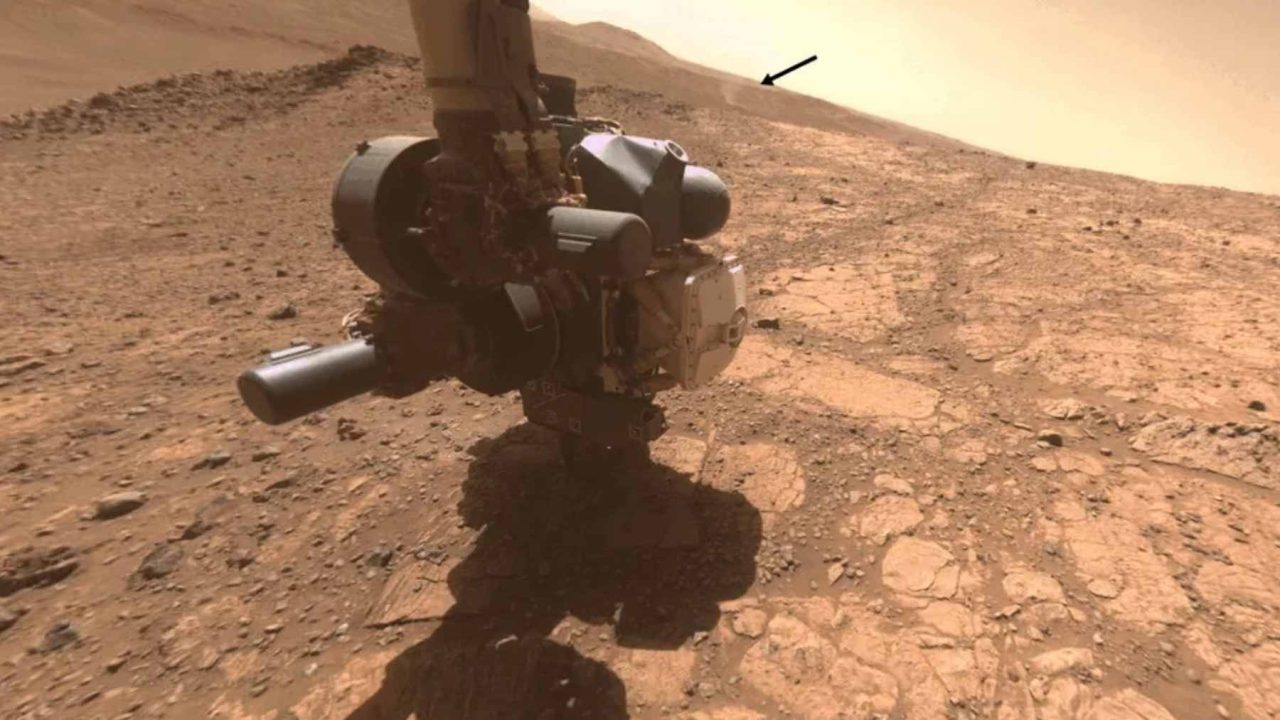
Fifty-five times over two Martian years, NASA’s Perseverance rover detected something scientists had long theorized but never directly confirmed: electrical discharge events in the atmosphere of Mars. The Red Planet, long thought too thin-aired and cold to generate meaningful electrical activity, has now produced the first direct evidence that its atmosphere can become electrically charged — and the implications stretch far beyond a scientific curiosity.
Published in the journal Nature, the findings reveal that Mars can produce spark-like discharges inside dust devils and during the turbulent fronts of regional dust storms. These aren’t the dramatic sky-splitting bolts you’d see during a thunderstorm on Earth. But they are real, measurable, and potentially consequential for everything from Martian chemistry to the safety of future human explorers.
This is one of those discoveries that sounds modest at first — tiny sparks in thin air — until you start pulling on the thread and realize how much it changes about what we thought we knew about Mars.
What Perseverance Actually Detected on Mars
The rover’s SuperCam instrument recorded the 55 electrical events across two Martian years. Of those, 16 were detected when dust devils passed directly over the rover, and 35 were linked to turbulent convective fronts during regional dust storms. The remaining events fall within related atmospheric disturbances.
In some recordings, scientists could hear a sharp “snap” — an audible signature of an electrical discharge captured by SuperCam’s microphone. That detail alone is striking. We are listening to electricity crackling in the atmosphere of another planet.
This was not passive observation from orbit. Perseverance was on the ground, inside these events, recording them in real time. That direct, surface-level detection is what makes this the first confirmed evidence of Martian electrical activity — previous studies had suggested it was possible, but no instrument had caught it happening until now.
Why Lightning on Mars Is More Complicated Than on Earth
On Earth, lightning forms when ice crystals and water droplets collide inside storm clouds, building up massive electrical charges that eventually discharge in a bolt. Mars has no liquid water clouds doing that work. What it has instead is dust — enormous quantities of it, constantly moving through an atmosphere that is roughly 100 times thinner than Earth’s.
The electrical discharges detected by Perseverance appear to be generated by dust particles colliding and separating charge as they swirl through dust devils and storm fronts. This process, known as triboelectric charging, is the same basic physics as rubbing a balloon on your hair. At Martian scale and in Martian conditions, it produces the spark-like events SuperCam recorded.
They are not dramatic bolts. But they are real electrical events, and that distinction matters enormously for what happens next on the surface of Mars.
The Numbers Behind the Discovery
| Event Type | Number of Events Detected | Trigger Condition |
|---|---|---|
| Dust devil electrical events | 16 | Dust devil passed directly over rover |
| Convective front electrical events | 35 | Turbulent fronts during regional dust storms |
| Total events recorded | 55 | Over two Martian years |
The instrument responsible for capturing all of this is SuperCam, a multi-function tool on Perseverance capable of recording sound, analyzing chemistry from a distance using lasers, and detecting atmospheric phenomena. Its microphone capability turned out to be essential — the audible “snap” of a discharge gave researchers a clear acoustic signature to analyze alongside other data.
What These Sparks Could Mean for Mars — and for Us
Here is where the discovery moves from interesting to genuinely important. According to the research, these electrical discharges may have several significant effects on the Martian environment:
- Creating highly oxidizing chemicals — electrical discharges can trigger chemical reactions in the atmosphere, potentially producing reactive compounds that alter the surface chemistry of Mars.
- Disturbing surface organics — scientists are searching Mars for signs of ancient organic molecules that could indicate past life. Electrical activity may degrade or alter those organics, complicating the search.
- Influencing dust movement — static charge affects how dust particles stick together and move through the air, which has implications for understanding Martian weather patterns and how dust accumulates on equipment.
- Raising safety concerns for robots and humans — any future mission involving astronauts or sensitive equipment will need to account for an environment that generates static electrical discharges, particularly during dust storms.
That last point is not a distant theoretical worry. NASA and other space agencies are actively planning crewed Mars missions. The more we understand about what the surface environment actually does — not just what we modeled it might do — the better those missions can be designed to survive it.
What This Changes About Our Picture of Mars
For a long time, Mars was treated as electrically inert. Its thin atmosphere, lack of liquid water, and relatively calm (by Earth standards) storm systems made it seem unlikely to generate meaningful electrical activity. This discovery revises that assumption directly.
Researchers also note that the sparks may influence how dust behaves across the planet. Mars is famous for its global dust storms — events capable of blanketing the entire planet for months. If electrical charging plays a role in how dust particles move, cluster, and settle, then understanding that process becomes essential for modeling Martian weather and for protecting solar-powered equipment that dust can disable.
The discovery also connects to a broader question scientists have been wrestling with: why does the Martian surface appear so chemically oxidized? Electrical discharges that produce reactive compounds could be one piece of that puzzle — a natural chemical factory running quietly inside every dust devil that crosses the plains.
What Comes Next in Martian Electrical Research
The 55 events recorded by Perseverance represent a starting point, not a complete picture. Future research will likely focus on measuring the strength and frequency of these discharges under different conditions, mapping which regions of Mars experience the most electrical activity, and determining exactly which chemical reactions these sparks are triggering.
For mission planners, the priority will be understanding how to shield equipment and eventually people from static discharge in dust-heavy environments. Dust storms on Mars are already a known hazard — they killed the Opportunity rover by blocking its solar panels. Adding electrical discharge to that threat profile makes preparation even more critical.
The Perseverance rover, still operating on the Martian surface, continues to collect data. Every dust devil it survives is now also a potential source of new electrical readings — and a reminder that Mars is a far more dynamic and electrically active world than scientists gave it credit for.
Frequently Asked Questions
Has lightning actually been detected on Mars before?
No. The 55 electrical discharge events recorded by NASA’s Perseverance rover represent the first direct evidence of electrical activity in the Martian atmosphere.
What instrument on Perseverance detected the electrical events?
SuperCam, a multi-function instrument on the rover, recorded the events — including audible “snap” sounds captured by its microphone during some discharges.
Are these the same as lightning bolts on Earth?
No. The events are described as spark-like discharges, not the dramatic sky-splitting bolts produced by Earth’s thunderstorms. They occur inside dust devils and storm fronts rather than in water-based clouds.
Why does electrical activity on Mars matter for future missions?
Electrical discharges raise safety concerns for both robotic equipment and future astronauts who would need to operate in dusty, statically charged environments, particularly during dust storms.
How many events were recorded, and over what period?
Perseverance recorded 55 electrical events over two Martian years, with 16 occurring during dust devils passing over the rover and 35 linked to convective fronts during regional dust storms.
Could these sparks affect the search for life on Mars?
Researchers note that the electrical discharges may disturb surface organics — the molecular traces scientists are searching for as potential signs of ancient life — which could complicate future analysis of Martian samples.


Leave a Reply