
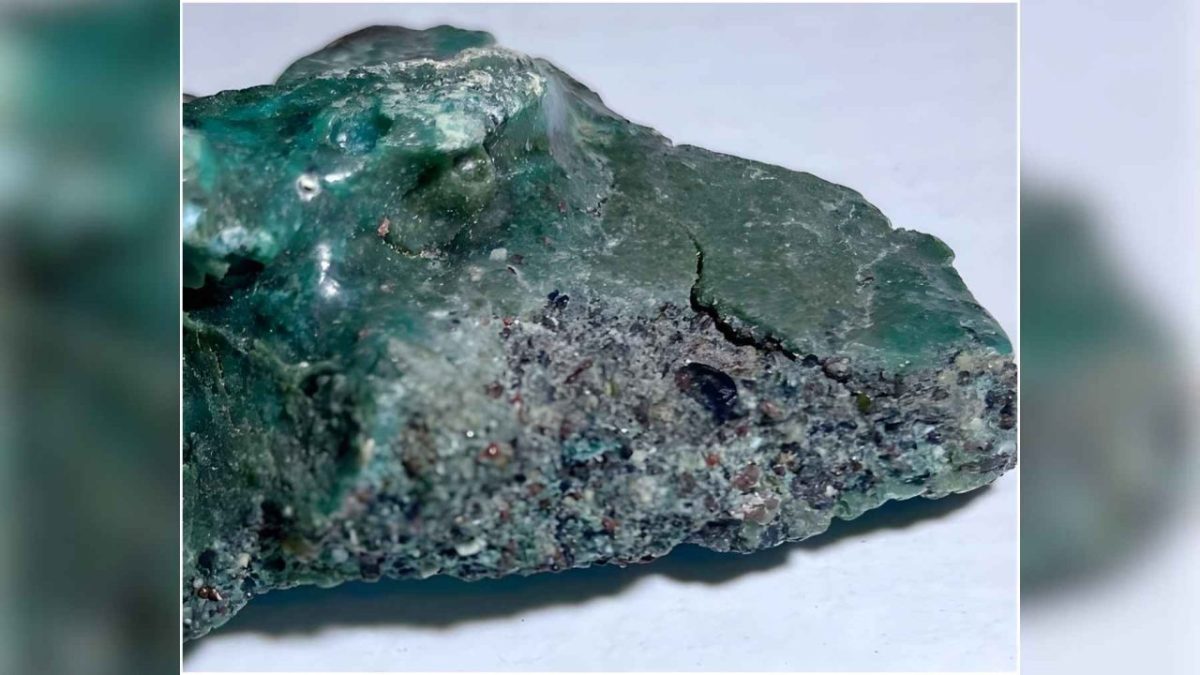
On a remote volcanic island in the South Atlantic — roughly 1,100 kilometers off the coast of Brazil, with no permanent civilian population — scientists have found something that shouldn’t exist: rocks made of plastic. Not plastic washed up on a beach. Not trash tangled in seaweed. Actual fused, solid formations where melted plastic has bonded with sand, shell fragments, and small stones to create structures that behave, geologically speaking, like natural rock.
The discovery at Trindade Island is striking on its own. But what makes it genuinely unsettling is how these plastic rocks are getting there — and what they might mean for the planet’s geological record thousands of years from now.
Green turtles nesting on the island are burying these formations in their egg chambers. In the process of digging nests, the turtles are locking plastic debris into the sediment itself, blending human waste with one of the most protected wildlife habitats on Earth.
What Plastic Rocks Actually Are — And Why Geologists Are Paying Attention
These aren’t just clumps of trash. The materials researchers found on Trindade belong to a category geologists call plastiglomerate and plastistone — hybrid substances where melted or fused plastic acts as a binding agent, essentially functioning as cement.
The result is a composite material: plastic fused with grains of sand, bits of shell, and small stones, hardened into a structure that mirrors how natural sedimentary rock forms. They look, in some descriptions, like something out of science fiction. But they are real, and they are forming right now.
Many geologists now view these formations as potential markers of the Anthropocene — the proposed geological epoch defined by the permanent impact of human activity on Earth’s systems. The idea is that future scientists, or whatever intelligence examines Earth’s rock layers millions of years from now, will find a distinct stratum of plastic-embedded rock that marks exactly when humans began mass-producing synthetic materials.
Plastic, unlike organic matter, does not biodegrade on any meaningful human timescale. Fused into rock-like formations and buried in sediment, it could theoretically persist for millions of years — making these plastic rocks, as researchers describe them, potential fossils of the future.
Trindade Island: A Supposed Paradise That Plastic Still Found
Trindade is about as remote as inhabited land gets. The island is a tiny volcanic outcrop in the South Atlantic with no permanent civilian population. Only a rotating team of roughly a few dozen Brazilian Navy personnel live there, stationed primarily to protect the nesting beaches of green turtles — one of the most significant nesting populations of the species in the region.
The irony is hard to miss. An island preserved specifically for the protection of an endangered species has become the site of a discovery that illustrates just how far plastic pollution has spread. Even here, far from cities, roads, and industry, the material has arrived — and it isn’t just sitting on the surface.
Researchers first spotted bright green plastic fused into the island’s geological formations. The source of the pollution is consistent with what oceanographers have documented for years: plastic debris carried by ocean currents accumulates even on the most isolated coastlines on Earth.
The Turtle Problem: A Double Layer of Harm
Green turtles have nested on Trindade’s beaches for generations. The nesting process involves females digging deep chambers in the sand to deposit their eggs — a behavior that, on Trindade, is now inadvertently interacting with plastic pollution in a troubling way.
According to the study, nesting turtles are burying plastic rocks in their egg chambers. This creates two distinct problems:
- Geological embedding: Plastic fragments fused with sand are being actively pressed into the sediment layer, accelerating the formation and burial of plastiglomerate materials.
- Added stress on an endangered species: The presence of plastic debris in nesting chambers introduces an additional threat to a species already under significant pressure from habitat loss, ocean pollution, and fishing bycatch.
The turtles are, in effect, unwitting participants in the geological transformation of their own habitat — turning a nesting beach into a future fossil record of the Anthropocene.
Key Facts at a Glance
| Detail | Information |
|---|---|
| Location of discovery | Trindade Island, South Atlantic Ocean |
| Distance from Brazil’s coast | Approximately 1,100 kilometers |
| Civilian population | None permanent; rotating Navy personnel only |
| Material type discovered | Plastiglomerate and plastistone |
| How plastic is being buried | Green turtles burying formations in egg chambers |
| Proposed geological significance | Potential Anthropocene marker in future rock record |
| Species affected | Green turtles (endangered) |
What This Means Beyond One Island
Trindade is not a unique case — it is a signal. If plastic rock formations are appearing on one of the most isolated and carefully monitored islands in the South Atlantic, researchers argue the phenomenon is almost certainly occurring across many remote coastlines that receive far less scientific attention.
The broader implication is that plastic pollution has moved beyond a surface-level environmental problem. It is now, in the most literal sense, becoming part of Earth’s geology. Plastiglomerate and plastistone formations are being documented in multiple locations globally, and scientists studying the Anthropocene consider them among the clearest physical evidence that human industrial activity has permanently altered the planet.
For green turtles specifically, the findings add yet another dimension to an already complicated conservation picture. The species faces threats across its entire life cycle — and now the very beaches where they have nested for millennia are being altered by the materials humans have produced and discarded.
What Researchers and Conservationists Are Watching For Next
The Trindade study raises questions that will likely drive future research. Scientists will want to understand how widespread plastic rock formation is across other remote nesting beaches, whether the presence of plastiglomerate in egg chambers measurably affects hatching success, and how quickly these formations are accumulating in the sediment record.
For the geological community, the focus will be on documenting these materials as formal markers of the Anthropocene — building the case that human plastic production has left a permanent, identifiable layer in Earth’s rock record that future geology will be forced to reckon with.
Whether that record is seen as a warning or simply a fact of history may depend on what happens to plastic pollution in the decades ahead.
Frequently Asked Questions
What is a plastiglomerate?
A plastiglomerate is a rock-like material formed when melted plastic fuses with natural materials such as sand, shell fragments, and small stones, creating a hybrid structure that behaves similarly to natural rock.
Where were these plastic rocks discovered?
Researchers found them on Trindade Island, a remote volcanic outcrop in the South Atlantic approximately 1,100 kilometers off the coast of Brazil.
How are green turtles connected to the plastic rock formations?
Nesting green turtles on Trindade are burying plastic rock formations in their egg chambers as they dig nests, which embeds the material into the sediment and adds an additional stress to an already endangered species.
Could these plastic rocks really become fossils?
Researchers suggest it is possible — because plastic does not biodegrade on meaningful timescales, fused plastic-rock formations buried in sediment could theoretically persist in the geological record for millions of years.
What is the Anthropocene and why does this matter to it?
The Anthropocene is a proposed geological epoch defined by the permanent impact of human activity on Earth. Plastiglomerate formations are considered by many geologists to be potential physical markers of this epoch in the future rock record.
Is Trindade Island a populated place?
No. Trindade has no permanent civilian population — only a small rotating team of Brazilian Navy personnel lives there, primarily to protect the island’s green turtle nesting beaches.



Leave a Reply