
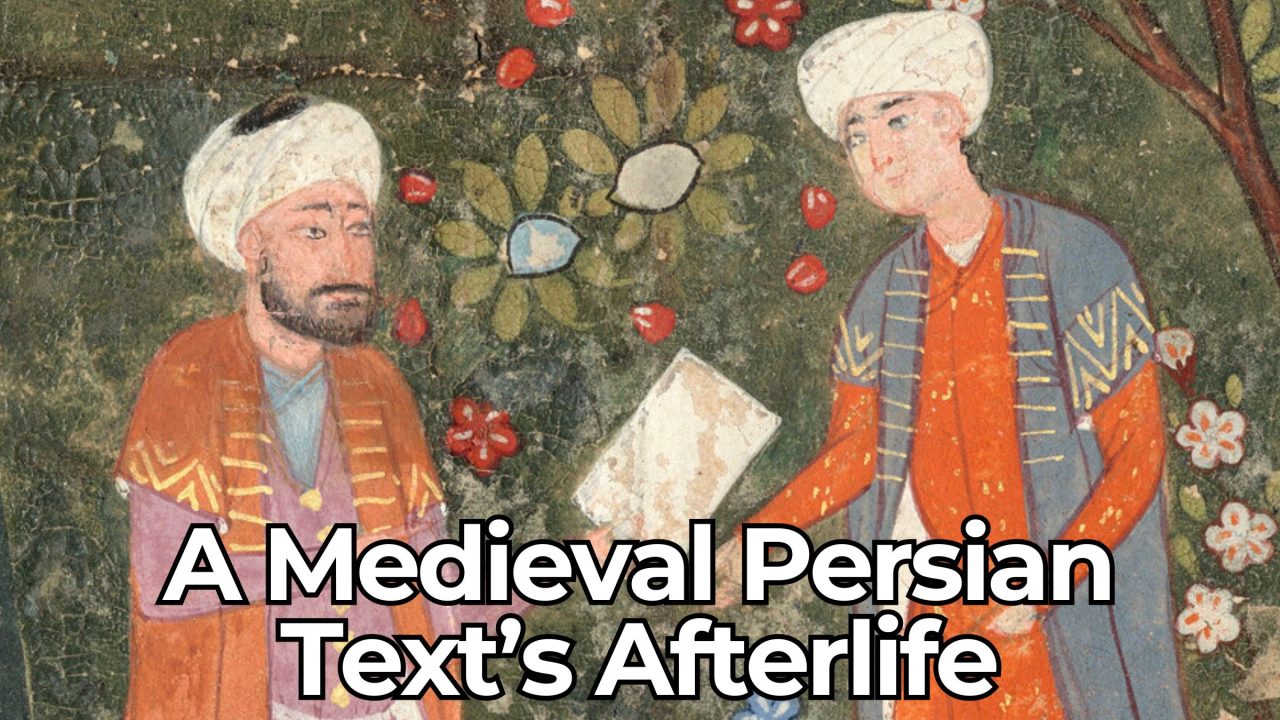
What is the real version of a book? It sounds like a simple question — but for scholars of the medieval world, it cuts to the heart of how history survives, gets distorted, and sometimes disappears entirely. When no original manuscript exists, when authorship is uncertain, and when centuries of copying have quietly reshaped a text, what exactly are we reading?
That puzzle sits at the center of a fascinating scholarly investigation into a short medieval Persian treatise known as the Qalandar-nama — or “Book of the Qalandar.” Written by Timur Khan and published via Medievalists.net, the study examines how this enigmatic text has traveled through time, changing shape along the way.
It’s a story about far more than one obscure manuscript. It’s about how knowledge gets made, preserved, and sometimes quietly reinvented — and why that matters for anyone who relies on historical sources to understand the past.
What the Qalandar-nama Actually Is
The Qalandar-nama takes its name from a distinctive figure in Persian literary tradition: the qalandar. There is, as The qalandar is broadly a figure who flouts social conventions through outrageous behavior — a kind of holy rebel, operating outside the boundaries of respectable society.
This figure appears across medieval Persian poetry and prose, representing spiritual freedom, defiance of orthodoxy, and a rejection of worldly pretension. The qalandar drinks, wanders, and refuses to conform — and in doing so, paradoxically, is seen in certain traditions as closer to divine truth than the pious rule-follower.
The Qalandar-nama is a short treatise built around this figure. Its authorship is uncertain, which is itself part of what makes it so interesting to scholars. Attribution in medieval Persian literature is rarely straightforward.
The Problem of Authorship in Medieval Persian Texts
For scholars of the medieval Persian-speaking world, questions of authorship and textual authenticity are constant companions. Sometimes manuscripts can be traced to documents written during an author’s lifetime — occasionally even in the author’s own hand. But that’s the exception, not the rule.
More often, the oldest surviving records of a text appear in manuscripts written centuries after the original composition. Scholars then have to authenticate these through indirect means:
- References and quotations found in older books
- Stylistic similarity to an author’s confirmed works
- Manuscript traditions that can be traced and compared
- Cross-referencing with other historical sources from the period
When none of these methods yield clear answers, the origins of a text remain genuinely murky. And the copying process itself adds another layer of complexity — each time a scribe reproduced a manuscript, small changes crept in. Over generations, those small changes accumulate into something that may look quite different from whatever the original author wrote.
The Qalandar-nama attributed to Abdullah Ansari sits squarely within this tradition of uncertain transmission. Pinning down a definitive text — let alone a definitive author — requires navigating these complicated layers.
Why Textual Transmission Matters Beyond Academic Circles
This might sound like a concern only for specialists, but the implications reach further than that. The same challenge applies to many foundational texts of Western civilization. As What we call “Plato” or “Aristotle” or “Homer” is, in every case, a manuscript tradition preserved and transmitted through the medieval period.
What scholars and wider society agree on as the “definitive version” of any ancient text is the result of complicated, sometimes contested, layers of transmission and editorial decision-making. The Qalandar-nama simply makes this process unusually visible.
| Aspect of the Text | What Is Known |
|---|---|
| Title | Qalandar-nama (“Book of the Qalandar”) |
| Attributed Author | Abdullah Ansari (uncertain) |
| Language | Medieval Persian |
| Length | Short treatise |
| Authorship Status | Uncertain — origins described as murky |
| Oldest Sources | Later manuscripts, potentially centuries after original |
| Authentication Methods | Cross-references in older texts; stylistic comparison |
The “Afterlife” of a Medieval Text
The phrase “afterlife of a text” captures something important. A book doesn’t end when its author sets down the pen. It continues to live — through copying, editing, misattribution, rediscovery, and reinterpretation. Each stage in that journey leaves marks.
For the Qalandar-nama, tracing that afterlife means asking hard questions: Which version of the text is closest to the original? How much have scribal changes altered the meaning? Does the attribution to Abdullah Ansari hold up under scrutiny, or was it added later to lend authority to a text of unknown origin?
These aren’t questions with easy answers. But the process of asking them — rigorously, with attention to manuscript evidence — is exactly how medieval scholarship advances. Each new study of a text like this one builds toward a clearer picture of what medieval Persian intellectual and literary culture actually looked like.
What This Research Adds to Our Understanding
Studies like this one matter because they push back against the assumption that old texts are simple, fixed objects. They’re not. They’re the products of long chains of human decision-making — who copied what, what got changed, what got lost, and what got invented.
The Qalandar-nama and its uncertain history are a reminder that every historical source carries a biography of its own. Understanding that biography is part of understanding the source itself. For readers of medieval Persian literature, and for anyone interested in how the past reaches us, that’s a lesson worth sitting with.
The qalandar — that unconventional, rule-breaking figure at the heart of the text — turns out to be a fitting symbol for the manuscript itself: hard to pin down, resistant to easy definition, and more complex than it first appears.
Frequently Asked Questions
What is the Qalandar-nama?
The Qalandar-nama, or “Book of the Qalandar,” is a short medieval Persian treatise of uncertain authorship, attributed to Abdullah Ansari, centered on the figure of the qalandar — a character in Persian literature known for flouting social conventions.
Who is the qalandar in Persian literature?
The qalandar is a figure in Persian literary tradition who defies social norms through outrageous behavior. There is no single satisfying translation of the word, according to
Why is the authorship of this text uncertain?
The oldest surviving manuscripts of many medieval Persian texts were written centuries after the original composition, making direct attribution difficult. Authentication relies on indirect methods like stylistic comparison and references in older works.
How do scholars authenticate medieval Persian manuscripts?
Scholars look for references and quotations in older books, stylistic similarities with an author’s confirmed works, and comparable manuscript traditions — though origins often remain unclear even after this analysis.
Does this problem of textual transmission apply to other ancient works?
Yes. As
Is there a definitive version of the Qalandar-nama?
This has not been confirmed.
Leave a Reply