
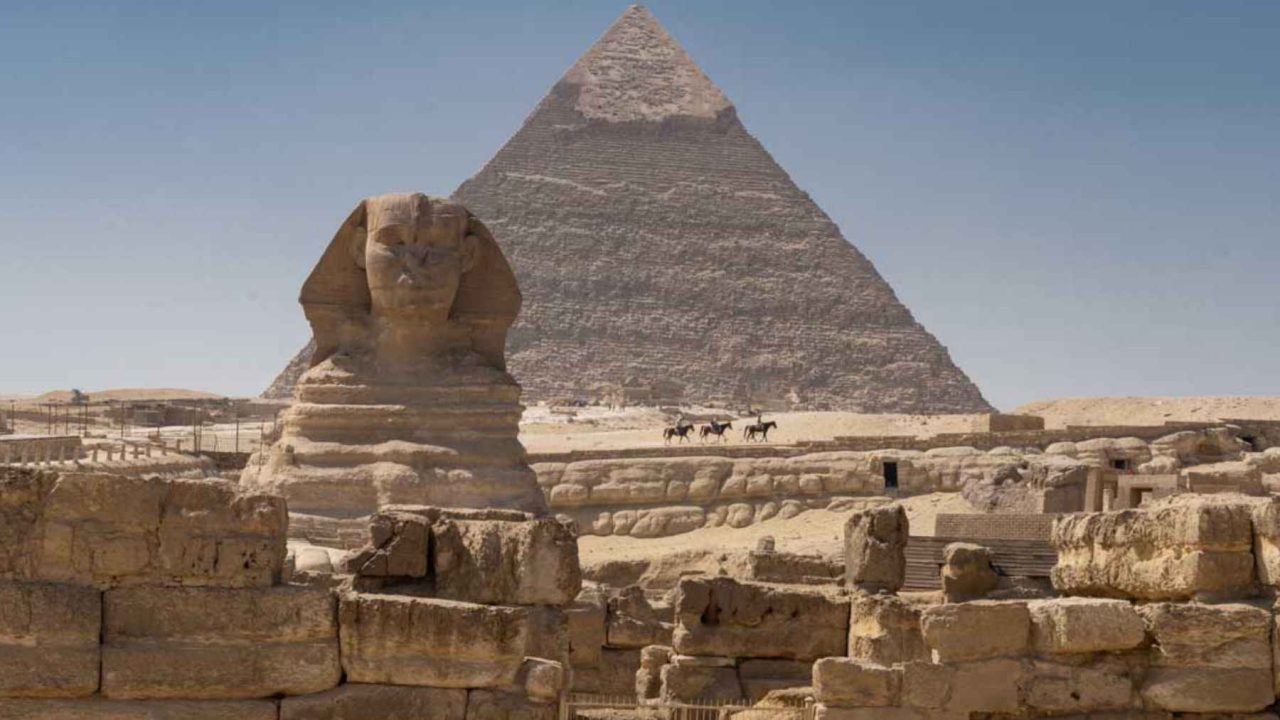
The Great Pyramid of Giza has been studied, measured, and debated for centuries — and yet, a recent radar-based claim suggests we may still not know everything that lies beneath it. Researchers say satellite data could point to buried chambers and deep shafts hidden below the stone, without a single shovel breaking the ground.
It sounds like the discovery of a lifetime. But the full story is considerably more complicated than the viral headlines suggest — and understanding what the science actually says matters more than ever when claims like these spread across the internet in hours.
Here is what researchers have actually found, what specialists are pushing back on, and why the distinction between two famous pyramids at Giza is at the center of this entire debate.
The Technology Behind the Claim
The method at the heart of this story is called synthetic aperture radar, or SAR. It works by sending out pulses of energy from a satellite and measuring what bounces back toward the sensor. By analyzing those return signals, researchers can attempt to build a picture of what lies beneath a surface — including, theoretically, the interior of an ancient stone structure.
The peer-reviewed paper most closely linked to this debate was produced by Corrado Malanga of the University of Pisa and Filippo Biondi, then listed with the University of Strathclyde. Their work used data from the COSMO-SkyMed satellite and argued that their SAR-based method could model parts of the pyramid’s interior and the nearby subsurface.
That framing — satellite data, peer review, named researchers from recognized universities — gave the claim a credibility that helped it travel fast across news sites and social media platforms.
What the Research Actually Claims — and Where It Gets Complicated
The boldest version of this story, circulating most widely in 2025, centers on claims about buried chambers and deep underground shafts. But specialists have raised a pointed concern: the images being discussed are interpretations of signal patterns, not a direct view of what lies underground.
SAR data does not work like an X-ray. It cannot simply photograph the inside of a pyramid. What it produces is a set of signal returns that researchers then interpret — and interpretation, by definition, involves assumptions, models, and the possibility of error.
There is also a significant geographic detail that many reports have quietly glossed over. The most dramatic 2025 presentation was focused not on the Great Pyramid of Khufu — the one most people picture when they think of Giza — but on the nearby Pyramid of Khafre. Some of the most widely shared retellings blurred this distinction entirely, which specialists say has contributed to public confusion about what was actually claimed and where.
Key Facts at a Glance
| Detail | What the Source Confirms |
|---|---|
| Technology used | Synthetic aperture radar (SAR) via COSMO-SkyMed satellite |
| Lead researchers named | Corrado Malanga (University of Pisa) and Filippo Biondi (University of Strathclyde) |
| What was claimed | Possible buried chambers and deep shafts beneath the pyramid subsurface |
| Primary pyramid in 2025 presentation | Pyramid of Khafre — not the Great Pyramid of Khufu |
| Specialist concern | Images are signal pattern interpretations, not direct underground views |
| Publication status | Peer-reviewed paper linked to the debate |
- SAR sends energy pulses and measures what bounces back — it does not photograph interiors directly
- The data requires interpretation, which introduces the possibility of error or overreach
- Viral retellings have frequently conflated the Pyramid of Khafre with the Great Pyramid of Khufu
- Specialists have urged caution about treating signal pattern analysis as confirmed structural discovery
Why This Story Keeps Spreading — and Why That Matters
The Great Pyramid of Giza is the only surviving wonder of the ancient world. That status alone guarantees that any claim about hidden chambers or secret shafts will travel at extraordinary speed. The combination of satellite imagery, university-affiliated researchers, and peer-reviewed publication gives stories like this a surface credibility that makes them very easy to share and very hard to quietly correct.
But the gap between “a radar signal pattern has been interpreted as possibly suggesting subsurface features” and “researchers have discovered giant underground structures beneath the Great Pyramid” is enormous. That gap is exactly where misinformation takes hold.
For readers, the practical consequence is straightforward: when a headline about a 4,500-year-old pyramid promises to “change everything we thought we knew,” it is worth asking which pyramid is actually being discussed, what the technology can and cannot show, and whether specialists outside the research team have weighed in.
In this case, the answers to all three questions complicate the story significantly.
What Would It Take to Confirm Any of This
Remote sensing and satellite radar can raise genuinely interesting questions about subsurface geology and structure. What they cannot do, on their own, is confirm the existence of chambers, shafts, or any specific architectural feature. That would require follow-up investigation — whether through physical excavation, ground-penetrating radar deployed at close range, or other non-invasive methods conducted directly at the site.
Egypt’s antiquities authorities have historically been cautious about claims of hidden chambers, particularly those generated remotely. Any physical investigation at Giza would require formal approval and coordination with Egyptian officials — a process that takes time and does not follow the pace of viral news cycles.
For now, the claim remains exactly that: a claim, built on an interpretation of satellite signal data, awaiting the kind of independent verification that would turn it into something more definitive.
Frequently Asked Questions
What technology did researchers use to make this claim about the pyramids?
Researchers used synthetic aperture radar (SAR), specifically data from the COSMO-SkyMed satellite, to analyze signal patterns around the pyramid structures at Giza.
Who are the researchers behind this study?
The peer-reviewed paper most linked to this debate was produced by Corrado Malanga of the University of Pisa and Filippo Biondi, then listed with the University of Strathclyde.
Was this discovery about the Great Pyramid of Khufu?
Not exactly — the boldest 2025 presentation was focused on the nearby Pyramid of Khafre, though many viral retellings blurred this distinction and referenced the Great Pyramid of Khufu instead.
Have specialists confirmed the findings?
No. Specialists have cautioned that the images represent interpretations of signal patterns, not a direct underground view, and the findings have not been independently confirmed.
Does SAR technology actually show the inside of a pyramid?
No. SAR measures reflected energy pulses and produces data that researchers then interpret — it does not directly photograph or map interior structures the way an X-ray or scan would.</p


Leave a Reply