
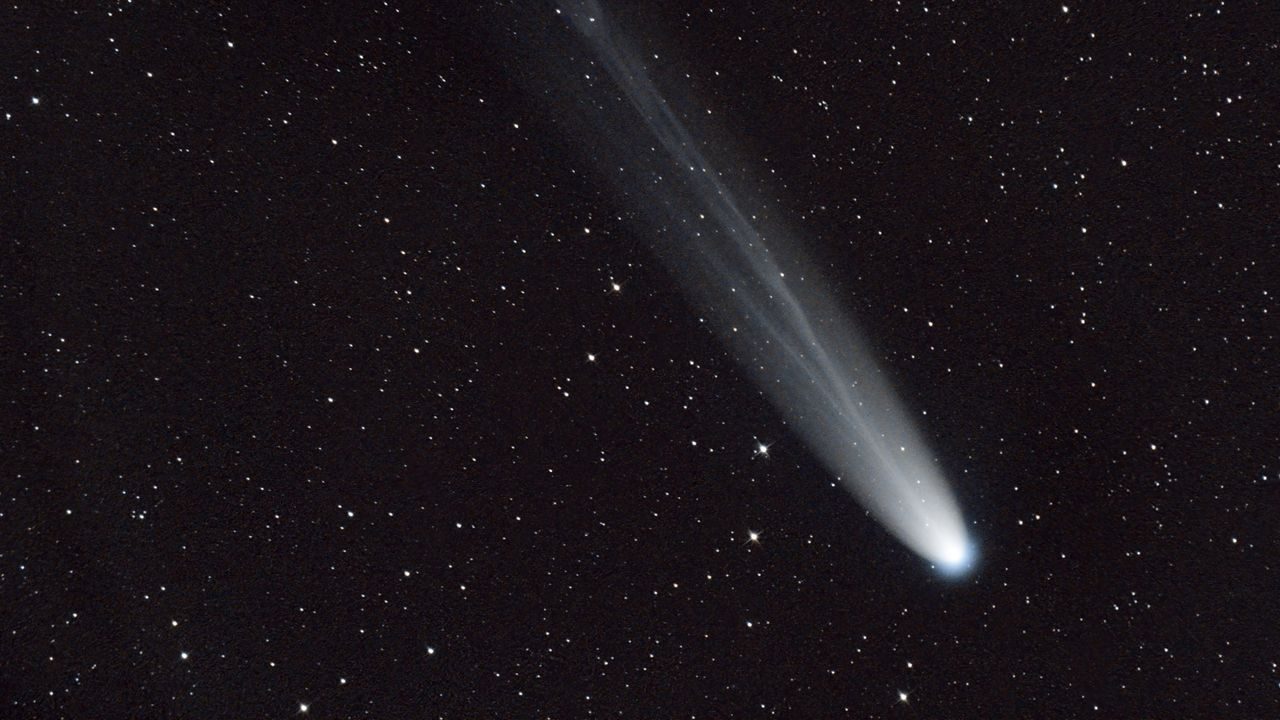
A comet discovered just months ago is now hurtling toward the sun at extraordinary speed — and this Saturday, April 4, it will make its closest approach in what astronomers are calling a genuinely rare and potentially spectacular celestial event. The catch? It might not survive the journey.
Comet C/2026 A1 (MAPS) is what scientists classify as a sungrazer — a comet that passes extremely close to our star. These encounters are dramatic by nature. The intense heat and gravitational forces near the sun can either cause a comet to blaze brilliantly, potentially becoming visible even in daylight, or tear it apart entirely before it ever gets the chance to shine.
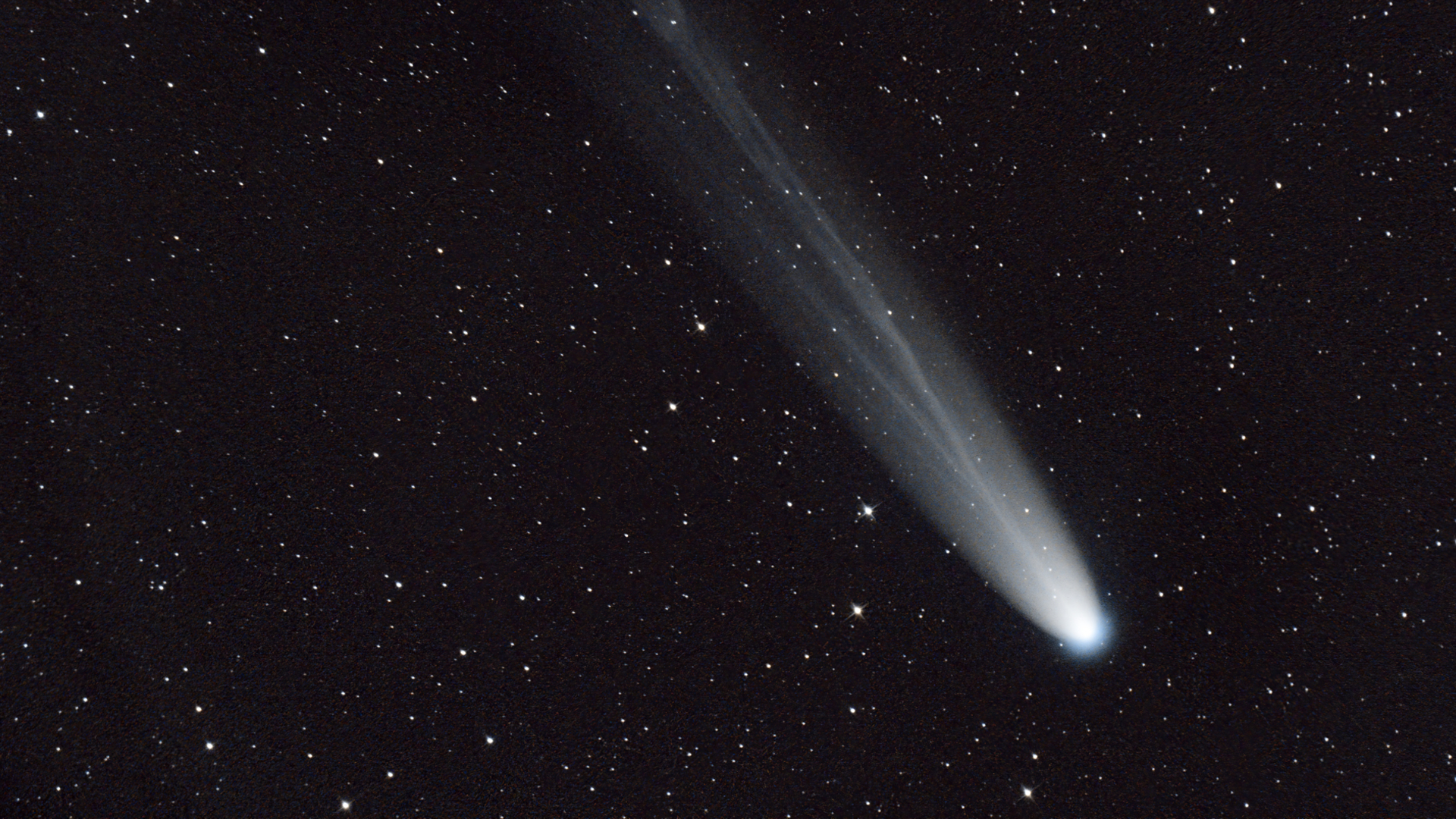
Either outcome is worth watching. Even if the comet breaks up, the debris trail it leaves behind could produce a striking tail visible in the night sky in the days surrounding the encounter.
What Is Comet MAPS and Where Did It Come From?
Comet C/2026 A1 was discovered on January 13 by French astronomers working at the AMACS1 Observatory in Chile. That’s a remarkably short lead time before a close solar approach — less than three months between discovery and the moment of perihelion, the point of closest distance to the sun.
The comet carries the designation MAPS, which reflects the team and observatory involved in its detection. Its discovery in the Southern Hemisphere is fitting, given that observatories in Chile benefit from some of the clearest, darkest skies on Earth — ideal for spotting faint incoming objects like new comets.
Sungrazer comets are not common. Most comets pass at a relatively safe distance from the sun. Sungrazers, by contrast, come close enough that solar radiation and tidal forces push them to their physical limits. Some survive and become some of the brightest comets in recorded history. Others disintegrate completely, leaving only a glowing smear of gas and dust across the sky.
The Key Facts About Saturday’s Close Approach
| Detail | Information |
|---|---|
| Comet name | C/2026 A1 (MAPS) |
| Date of closest solar approach | April 4 (Saturday) |
| Discovery date | January 13 |
| Discovered by | French astronomers at AMACS1 Observatory, Chile |
| Comet classification | Sungrazer |
| Potential visibility | Daylight (if it survives) or tail visible in night sky |
The two scenarios playing out in real time are almost opposites of each other. If the comet’s nucleus is large and structurally strong enough to survive the sun’s punishment, it could brighten dramatically — potentially reaching naked-eye visibility, or even becoming bright enough to spot during the day near the sun. If it breaks apart, the resulting debris cloud and tail could still put on a show after dark.
Why Sungrazers Are So Unpredictable — and So Exciting
The history of sungrazer comets is a story of extreme highs and lows. Some of the most famous comets ever recorded were sungrazers. The Great Comet of 1680, Comet Ikeya-Seki in 1965, and more recently Comet Lovejoy in 2011 all made extraordinarily close passes near the sun — and all survived to become memorable naked-eye objects.
But for every survivor, there are comets that simply vanish. Comet ISON in 2013 was hyped as a potential “comet of the century” before its solar encounter. It did not survive perihelion and faded into nothing, leaving astronomers and sky watchers disappointed.
The fundamental uncertainty is what makes events like this one so compelling to follow in real time. No model can perfectly predict whether a comet nucleus will hold together under solar stress. The size of the nucleus matters enormously — and according to reporting on MAPS, early estimates of its size have already been revised since its January discovery, adding to the uncertainty about how it will behave.
What Skywatchers Should Actually Expect This Week
Whether or not Comet MAPS survives Saturday’s solar encounter, there are reasons to keep an eye on the sky in the days surrounding April 4.
- If the comet survives intact: It could brighten sharply and potentially be visible near the sun — though looking near the sun always requires extreme caution and proper equipment. Never look directly at or near the sun without certified solar filters.
- If the comet partially breaks up: A bright, extended tail of gas and dust could remain visible in the night sky, possibly stretching across a significant portion of the horizon.
- If the comet fully disintegrates: The event may still produce a visible smear or diffuse glow, though a complete breakup would likely end the show quickly.
Sky conditions, your location, and light pollution will all affect what you can personally see. Those in the Southern Hemisphere, where the comet was discovered, may have a viewing advantage depending on its trajectory after perihelion.
What Happens After April 4
The days immediately following Saturday’s close approach will be critical. Astronomers around the world will be monitoring Comet MAPS closely to determine whether the nucleus survived and how its brightness is evolving.
If the comet holds together and begins moving away from the sun, it could continue brightening as it recedes and becomes easier to observe against a darker sky background. The tail — always the most visually dramatic feature of any comet — typically becomes most prominent after perihelion, as solar wind continues to push material away from the nucleus.
Space agencies and amateur astronomers alike will be sharing images and updates rapidly. Given the compressed timeline between discovery and this encounter, every new observation adds meaningful data about a comet that was virtually unknown just three months ago.
Frequently Asked Questions
What is Comet C/2026 A1 (MAPS)?
It is a sungrazer comet discovered on January 13 by French astronomers at the AMACS1 Observatory in Chile, now making its closest approach to the sun on April 4.
When will Comet MAPS be closest to the sun?
The comet reaches its closest solar approach — known as perihelion — on Saturday, April 4.
Could Comet MAPS be visible to the naked eye?
If the comet survives its close encounter with the sun, it could potentially become bright enough to see in daylight. A visible tail in the night sky is also possible around the time of the encounter.
What happens if the comet breaks apart?
A full disintegration would likely end the spectacle quickly, though a partial breakup could still leave a glowing tail or debris trail visible in the sky for a short period.
Who discovered Comet MAPS?
It was discovered by French astronomers working at the AMACS1 Observatory in Chile on January 13.
Is it safe to look for the comet near the sun?
Never look directly at or near the sun without certified solar filters — serious and permanent eye damage can result from unprotected viewing.



Leave a Reply