

A fridge-size space rock exploded above the eastern United States in broad daylight on March 17, triggering a powerful sonic boom and leaving a dramatic smoke trail visible across multiple states — and even from space. It’s the kind of event that sounds like science fiction, but witnesses on the ground had the photos to prove it.

Described by experts as an extremely rare “daytime fireball,” the meteor streaked across sunny blue skies over Ohio shortly after entering Earth’s atmosphere. A photograph taken from Pennsylvania captured the ghostly white smoke trail the space rock left behind as it tore through the air at extraordinary speed. Events like this one don’t happen every day — or even every year — which is part of what made this sighting so striking.
The latest GLM imagery (1301Z) does suggest that the boom was a result of a meteor. pic.twitter.com/CH7oJ4Q1OY
— NWS Cleveland (@NWSCLE) March 17, 2026
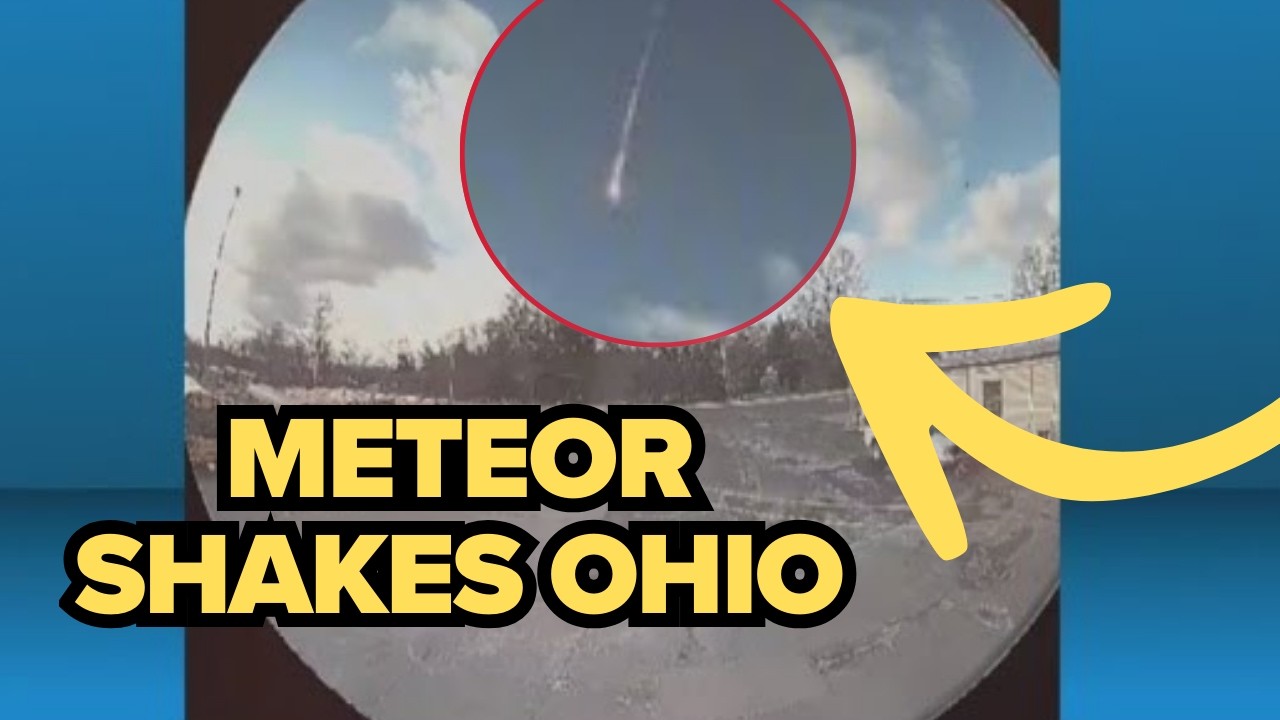
According to reporting by Live Science, the space rock was approximately 6 feet wide and weighed roughly 7 tons. That’s a substantial chunk of material arriving from deep space, and the energy released when it broke apart was enough to send shockwaves — literally — across the region below.
What Made This Fireball So Unusual
Fireballs — meteors bright enough to outshine the planet Venus — are not especially rare on their own. Earth gets pelted by space debris constantly, most of it burning up harmlessly in the upper atmosphere overnight when no one is watching. What made the March 17 event remarkable was the timing and the scale.
Daytime fireballs are far less commonly observed simply because the bright sky makes them much harder to see. When one is vivid enough to stand out against full sunlight, that tells you something significant: the object was large, fast, and releasing an enormous amount of energy as it disintegrated.
This one was visible not just from the ground but from space — a detail that underscores just how much energy was involved in the explosion. The sonic boom it generated was powerful enough to be felt and heard across a wide area, rattling windows and startling residents who had no idea what they were experiencing.
The Science Behind a Fireball Explosion
When a space rock enters Earth’s atmosphere, it doesn’t just drift down gently. It arrives at tremendous velocity — typically tens of thousands of miles per hour — and the friction with the air causes it to heat up almost instantly. Smaller objects burn up completely. Larger ones, like this 7-ton rock, can survive long enough to build up enormous pressure before the stress tears them apart in a mid-air explosion called an airburst.
That airburst is what creates the sonic boom. The shockwave radiates outward from the point of explosion and can travel hundreds of miles, arriving at ground level as a deep, rolling boom — or in some cases, a sharp crack — that many people initially mistake for an earthquake or an industrial accident.
The smoke trail visible in the Pennsylvania photograph is a byproduct of the superheated material the meteor shed as it broke apart. These trails, sometimes called “meteor trains,” can linger in the upper atmosphere for several minutes after the event.
Key Facts About the March 17 Fireball
| Detail | Confirmed Information |
|---|---|
| Date of event | March 17 |
| Location | Eastern United States, primarily over Ohio |
| Size of space rock | Approximately 6 feet wide |
| Estimated weight | Approximately 7 tons |
| Time of day | Daytime |
| Notable effects | Sonic boom, visible smoke trail, visible from space |
| Possible aftermath | Meteorite fragments may have reached the ground |
- The fireball was described as extremely rare due to its daytime visibility
- A smoke trail was photographed from Pennsylvania
- The event was reported to the American Meteor Society (AMS)
- Experts say small meteorite fragments may have rained down on the local area
- The explosion was powerful enough to be detected from space
Could Meteorite Fragments Have Landed Near You?
This is the part of the story that tends to get people searching their backyards. According to experts cited in the original reporting, the explosion may have rained tiny meteorite fragments across the local area. When a space rock of this size breaks apart in an airburst, pieces don’t simply vanish — some of the denser fragments can survive the descent and reach the ground.
These fragments, called meteorites, are scientifically valuable. They represent material from the early solar system, often billions of years old, preserved in space until the moment they arrive on Earth. Fresh meteorites — ones recovered shortly after a fall — are especially prized because they haven’t had time to be contaminated by weathering or handling.
If you live in the Ohio region or nearby areas of the eastern U.S. and noticed the boom on March 17, it may be worth keeping an eye out. Freshly fallen meteorites often have a dark, fusion-crusted exterior from the heat of entry, and they tend to be denser and heavier than ordinary rocks of the same size.
What Happens After an Event Like This
In the hours and days following a significant fireball, several things typically unfold. Meteor monitoring organizations like the American Meteor Society collect eyewitness reports to help triangulate the object’s trajectory and estimate where any surviving fragments may have landed. Researchers may use radar and infrasound data — low-frequency sound waves that travel enormous distances — to refine those estimates further.
The visibility of this event from space also means satellite imagery could potentially be used to study the explosion in more detail. For scientists, events like this one are natural experiments — rare opportunities to study how space rocks behave when they encounter Earth’s atmosphere at scale.
For everyone else, it’s a reminder that the solar system is still very much an active place, and that Earth occasionally receives unannounced visitors from the void.
Frequently Asked Questions
What is a daytime fireball?
A daytime fireball is a meteor bright and large enough to be visible against the sunlit sky — an extremely rare occurrence compared to the more common nighttime meteor sightings.
How big was the space rock that exploded over Ohio?
According to experts, the meteor was approximately 6 feet wide and weighed around 7 tons — roughly the size of a household refrigerator.
What caused the sonic boom?
The sonic boom was caused by the space rock exploding in the atmosphere in what scientists call an airburst, releasing a powerful shockwave that radiated outward and reached the ground.
Could meteorite fragments have landed on the ground?
Experts say it is possible that small meteorite fragments rained down across the local area following the explosion, though confirmed recovery locations have not been specified in the available reporting.
Where was the fireball visible?
The fireball was primarily observed over Ohio but was visible across a wider area of the eastern United States, with a smoke trail photographed as far away as Pennsylvania. It was also reportedly visible from space.
How often do daytime fireballs like this happen?
Daytime fireballs of this magnitude are described as extremely rare. While Earth is struck by small space debris constantly, objects large enough to produce a visible daytime explosion and sonic boom are far less common.




Leave a Reply