
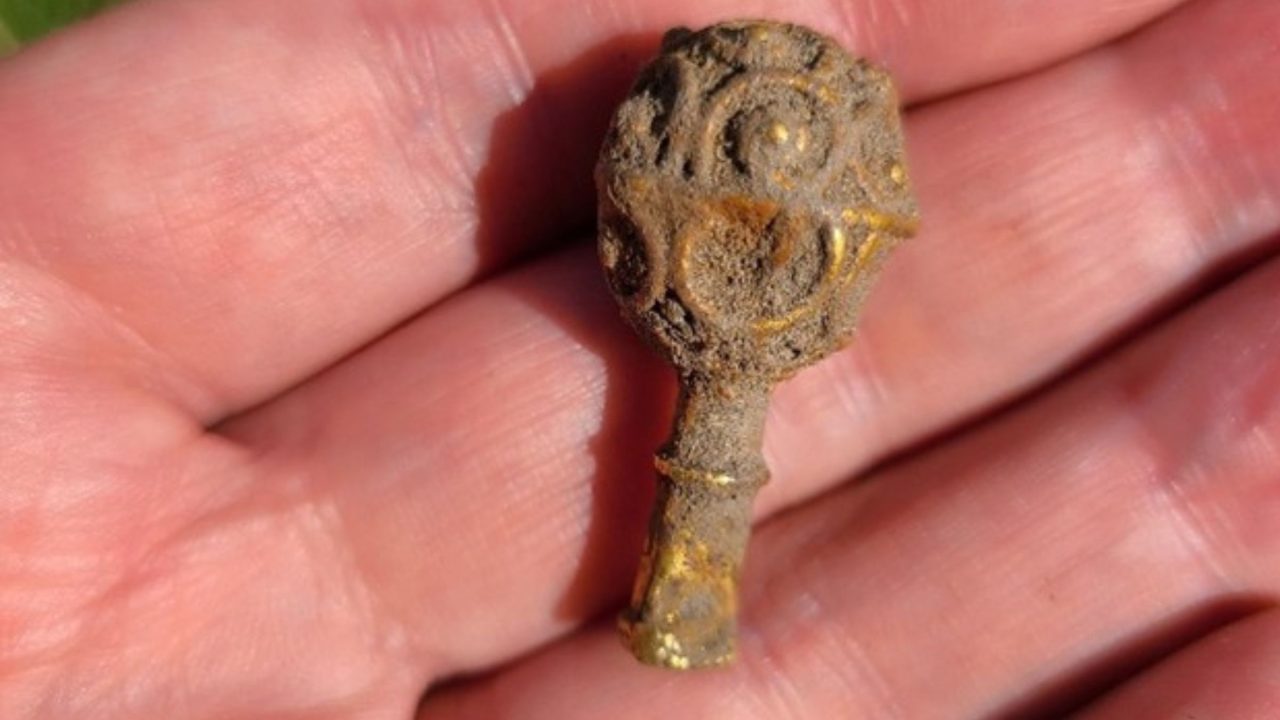
Within 90 minutes of picking up a trowel for the first time on a professional dig, a university student unearthed something that hadn’t been seen by human eyes in over a thousand years — a rare piece of early medieval gold buried in the Northumberland countryside.
That discovery, made in 2025 by Newcastle University student Yara Souza during a training excavation in Redesdale, Northumberland, is now one of the centrepiece artefacts of a major new exhibition at the Great North Museum: Hancock in Newcastle. The find dates to the 9th century, placing it firmly in the Anglo-Saxon era — a period of extraordinary cultural and artistic richness in northern England.
https://www.instagram.com/reel/DWQ7m7MiBXw/
https://www.instagram.com/reel/DWbB5NiNsBj/
The story of how it was found is almost as remarkable as the object itself. Souza was participating in a student field excavation alongside fellow students and professional archaeologists when she made the discovery. Less than two hours into the dig, she had already pulled one of the most significant gold objects found in the region in recent memory from the ground.
What the Exhibition Actually Shows
The gold object forms part of Treasure: Hidden, Lost, Found, a new exhibition that opened last month at the Great North Museum: Hancock. The show brings together archaeological finds from across Northern Britain, spanning thousands of years of human history in a single space.
It is a rare opportunity. These objects are typically scattered across different institutions and collections, and reuniting them — even temporarily — gives visitors a sweep of the region’s buried past that is genuinely hard to find elsewhere.
“We are delighted to unite these incredible archaeological finds from across the North for our latest exhibition. From Roman silver discovered along Hadrian’s Wall to 9th-century gold found by a Newcastle University student, this is a rare opportunity to see these scattered treasures displayed alongside one another. We can’t wait for people to experience the thrill of these finds and the fascinating stories they reveal about our shared past.” — Malavika Anderson, Museum Manager, Great North Museum: Hancock
That range — from Roman occupation through to the Tudor period — reflects just how layered the history of Northern Britain really is. The region was a frontier zone for the Roman Empire, a contested territory during the early medieval period, and a site of significant wealth and power during the Anglo-Saxon age. The exhibition puts all of that in one room.
Key Facts About the Redesdale Medieval Gold Discovery
| Detail | Information |
|---|---|
| Year of discovery | 2025 |
| Location | Redesdale, Northumberland |
| Discovered by | Yara Souza, Newcastle University student |
| Time into dig when found | Within 90 minutes |
| Estimated date of artefact | 9th century (early medieval / Anglo-Saxon) |
| Now on display at | Great North Museum: Hancock, Newcastle |
| Exhibition name | Treasure: Hidden, Lost, Found |
The exhibition does not focus solely on the Redesdale find. It draws together a wide range of significant objects, including:
- Roman silver discovered along Hadrian’s Wall
- Tudor coins
- Anglo-Saxon gold, including Souza’s 9th-century discovery
Each of these objects tells a different story about who lived in northern England, what they valued, and what they left behind — deliberately or otherwise.
Why This Kind of Find Still Matters
It is easy to assume that the ground has given up most of its secrets by now. It hasn’t. Northern England, and Northumberland in particular, remains one of the most archaeologically active regions in the country. The landscape that was once the frontier of the Roman Empire, and later the heartland of the Anglo-Saxon kingdom of Northumbria, still holds objects that have never been catalogued or studied.
Training excavations like the one Souza participated in serve a double purpose. They give archaeology students hands-on experience in real fieldwork conditions — skills that cannot be learned in a lecture hall. And they extend the reach of professional archaeological surveys, covering ground that might otherwise go unexcavated for years.
The fact that a student made this particular find within her first hour and a half on site is not just a good story. It is a reminder that significant discoveries are not reserved for seasoned professionals with decades of experience. Sometimes, the ground simply gives something up — and the person holding the trowel happens to be there.
What Visiting the Exhibition Looks Like
The Great North Museum: Hancock is an established cultural institution in Newcastle, with collections covering natural history, archaeology, and the ancient world. Treasure: Hidden, Lost, Found is described as a major new exhibition, and the Redesdale gold object is confirmed as one of its highlights.
For anyone interested in the archaeology of Northern Britain — whether that’s the Roman period, the early medieval era, or the Tudor age — this exhibition offers a rare concentrated view of objects that are usually spread across different institutions or held in storage.
The exhibition opened last month, according to Visitors to Newcastle now have the chance to see the 9th-century gold object in person, alongside the Roman and Tudor finds that round out the broader story the exhibition tells.
What Comes Next for the Artefact
In the United Kingdom, early medieval gold objects discovered during excavations are typically subject to the Treasure Act 1996, which governs how such finds are assessed, valued, and ultimately allocated — often to a regional museum. Whether a permanent acquisition has been confirmed for this particular artefact has not yet been reported.
What is confirmed is that the object is publicly visible now, as part of an exhibition that places it in the company of some of the most significant archaeological finds from across the North of England. For the student who found it, that is likely a remarkable outcome from what began as a training exercise on a cold Northumberland hillside.
Frequently Asked Questions
Who discovered the medieval gold object?
It was discovered by Yara Souza, a Newcastle University student, during a training excavation in Redesdale, Northumberland in 2025.
How quickly was the gold found during the dig?
Yara Souza made the discovery within 90 minutes of beginning work on the excavation site.
Where can I see the medieval gold object?
The artefact is currently on display at the Great North Museum: Hancock in Newcastle, as part of the exhibition Treasure: Hidden, Lost, Found.
What else is in the Treasure: Hidden, Lost, Found exhibition?
The exhibition includes Roman silver found along Hadrian’s Wall, Tudor coins, and Anglo-Saxon gold, spanning thousands of years of Northern British history.
How old is the gold artefact found in Redesdale?
The object dates to the 9th century, placing it in the early medieval Anglo-Saxon period.
Has the long-term location of the artefact been confirmed?
This has not yet been confirmed in the available source material. Its current display at the Great North Museum: Hancock is confirmed, but its permanent home beyond the exhibition has not been reported.



Leave a Reply