
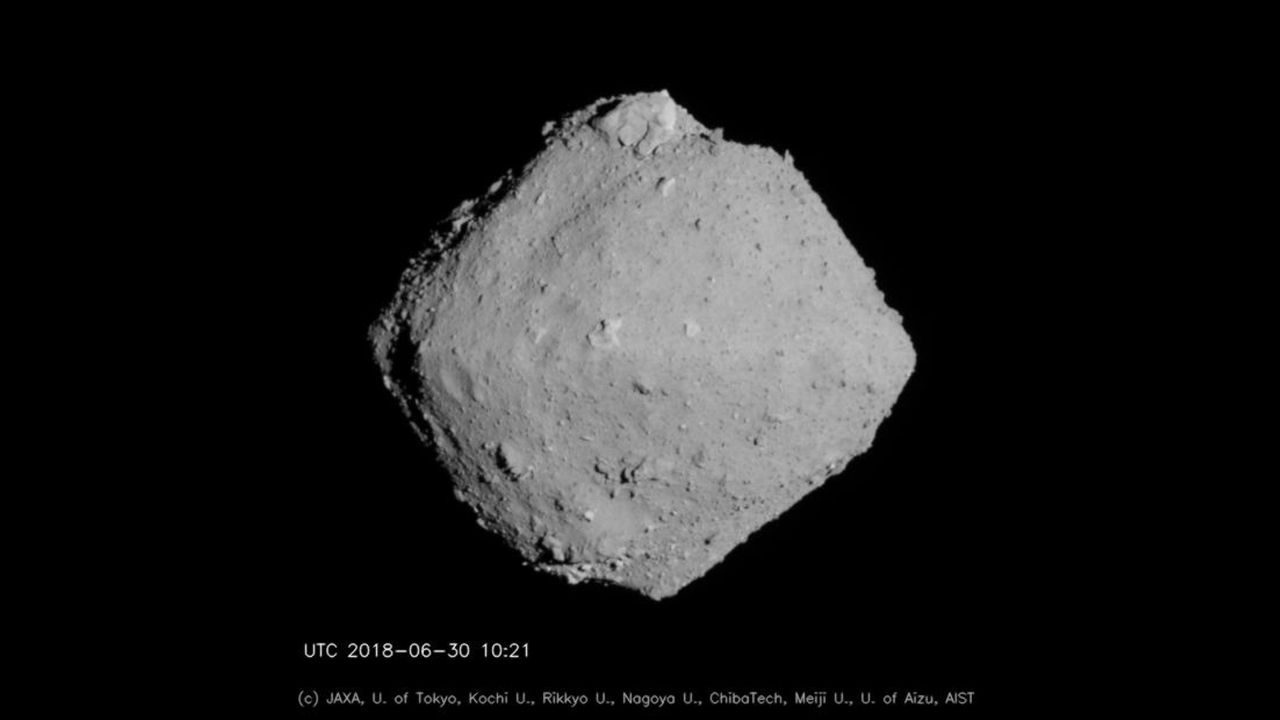
A space rock hurtling through our solar system has just handed scientists one of the most remarkable clues yet about where life on Earth might have come from. Researchers analyzing samples collected from asteroid Ryugu — a roughly 3,000-foot-wide (900 meters) chunk of rock classified as “potentially hazardous” — have detected all five chemical “letters” that make up DNA.
That finding is significant in ways that stretch far beyond asteroid science. It suggests that the raw molecular ingredients for life as we know it may not be rare at all. They may be scattered across the solar system, hitching rides on space rocks that have been drifting through the cosmos for billions of years.
The discovery adds serious weight to a long-standing scientific idea: that the chemistry behind life on Earth may have arrived here from space.
What the DNA “Letters” on Asteroid Ryugu Actually Are
To understand why this matters, it helps to know what scientists mean when they talk about the “letters” of DNA. DNA is built from four chemical bases — adenine, thymine, cytosine, and guanine — which pair together to store genetic information. RNA, DNA’s close molecular cousin, uses a fifth base called uracil instead of thymine. Together, these five nucleobases form the complete alphabet of genetic life on Earth.
Finding all five of these bases in a single asteroid sample is extraordinary. It means that Ryugu, a rock with no biology, no oceans, and no atmosphere, somehow assembled or preserved every one of the core chemical components needed to eventually write the code of living things.
Scientists have long known that meteorites — asteroids that reach Earth’s surface — can contain organic molecules. But samples collected directly from an asteroid, without any risk of contamination from Earth’s environment, offer a much cleaner and more reliable picture of what’s actually out there in space.
How Scientists Got Their Hands on Ryugu
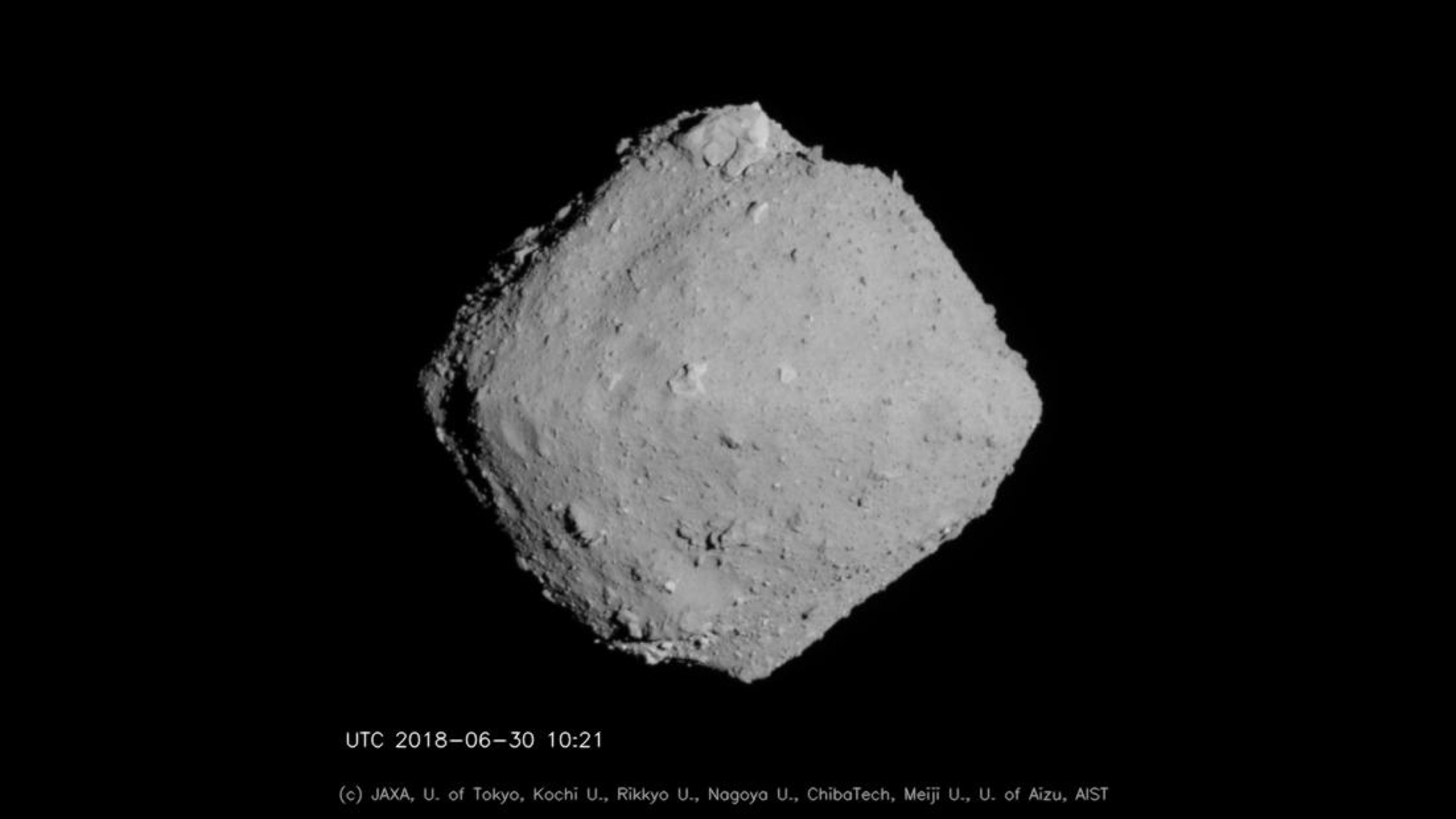
The samples didn’t arrive by accident. Japan’s space agency, JAXA, conducted a years-long mission to collect material directly from Ryugu’s surface and return it to Earth for analysis. The research involved scientists from a wide range of institutions, including the University of Tokyo, Kochi University, Rikkyo University, Nagoya University, Chiba Institute of Technology, Meiji University, the University of Aizu, and AIST.
That collaborative effort made it possible to study pristine asteroid material in a controlled laboratory setting — a massive advantage over studying meteorites, which spend time in Earth’s atmosphere and on the ground before anyone can analyze them.
The Ryugu samples represent one of the most scientifically valuable collections of extraterrestrial material ever returned to Earth, and researchers are still working through what they contain.
What This Tells Us About the Origins of Life
The presence of all five DNA and RNA nucleobases on Ryugu points toward a process scientists call panspermia — or more specifically, the idea that organic chemistry capable of seeding life can travel across space on asteroids and comets.
Earth formed around 4.5 billion years ago, and for hundreds of millions of years, it was bombarded by asteroids and comets in a period known as the Late Heavy Bombardment. If those impacting bodies carried nucleobases and other organic molecules, they could have delivered the chemical raw materials that eventually combined, evolved, and gave rise to the first living organisms.
This doesn’t mean life itself came from space. It means the chemistry that makes life possible may have had a cosmic delivery system. The difference is subtle but important — scientists aren’t suggesting microbes rained down from the sky, but rather that the molecular building blocks arrived and then assembled into life through processes that played out here on Earth.
The fact that all five nucleobases appear together in a single source strengthens that hypothesis considerably. It’s not a partial alphabet. It’s the whole set.
Key Facts About Asteroid Ryugu and the Discovery
| Detail | Information |
|---|---|
| Asteroid name | Ryugu |
| Asteroid size | Approximately 3,000 feet (900 meters) wide |
| Classification | Potentially hazardous asteroid |
| Sample collection agency | JAXA (Japan Aerospace Exploration Agency) |
| DNA letters found | All 5 nucleobases (adenine, thymine, cytosine, guanine, uracil) |
| Significance | First confirmed detection of all five DNA/RNA bases in asteroid samples |
- Ryugu is classified as a “potentially hazardous” asteroid due to its orbit near Earth
- The five nucleobases found are the same ones that form the genetic code in all known life on Earth
- Samples were returned to Earth by JAXA and analyzed by a consortium of Japanese universities and research institutions
- Direct sample collection avoids the contamination risk associated with studying meteorites
Why This Finding Reaches Beyond One Asteroid
Ryugu is one asteroid. But the solar system contains millions of them, and many share similar compositions and histories. If Ryugu carries all five nucleobases, the logical implication is that these molecules may be widespread — present across a vast number of space rocks that have been circling the sun for billions of years.
That reframes the question of life’s origins in a striking way. Rather than asking how Earth managed to produce such complex chemistry from scratch, scientists can now ask how Earth assembled those delivered ingredients into something living. The chemistry, it seems, may have come pre-packaged.
It also raises questions about other planets and moons. If asteroid impacts delivered these molecules to early Earth, they likely delivered them elsewhere too — to Mars, to the moons of Jupiter and Saturn, and potentially to worlds far beyond our solar system.
What Comes Next for Ryugu Research
Scientists are continuing to analyze the Ryugu samples, and additional findings are expected as researchers work through the material. The discovery of all five nucleobases is a milestone, but it’s likely just one chapter in a longer story about what this asteroid contains and what it can tell us.
Future asteroid sample-return missions — including NASA’s OSIRIS-REx mission, which collected material from asteroid Bennu — will offer additional opportunities to compare findings across different space rocks and build a more complete picture of organic chemistry in the solar system.
The question of how life began remains one of the deepest in all of science. But with each sample analyzed, researchers are narrowing the gap between what we know and what we’re still trying to understand.
Frequently Asked Questions
What is asteroid Ryugu?
Ryugu is a “potentially hazardous” asteroid approximately 3,000 feet (900 meters) wide that orbits near Earth. Japan’s space agency JAXA collected samples from its surface and returned them to Earth for scientific analysis.
What are the five letters of DNA found on Ryugu?
The five nucleobases are adenine, thymine, cytosine, guanine, and uracil — the same chemical “letters” that form the genetic code in all known life on Earth, used in DNA and RNA.
Does this mean life came from space?
Not exactly. The finding suggests the chemical building blocks of life may have arrived on Earth via asteroid impacts, but scientists are not claiming that living organisms themselves originated in space.
Why are Ryugu samples more reliable than meteorites?
Meteorites pass through Earth’s atmosphere and land on the ground before analysis, creating contamination risks. Ryugu samples were collected directly in space and returned in controlled conditions, providing a much cleaner scientific picture.
Who conducted the research on the Ryugu samples?
The research was conducted by scientists from JAXA and multiple Japanese institutions, including the University of Tokyo, Nagoya University, Meiji University, Kochi University, Rikkyo University, the University of Aizu, Chiba Institute of Technology, and AIST.
What happens to the Ryugu samples now?
Scientists are continuing to analyze the returned material, and further discoveries are expected. The samples represent one of the most scientifically valuable collections of extraterrestrial material ever brought back to Earth.



Leave a Reply