
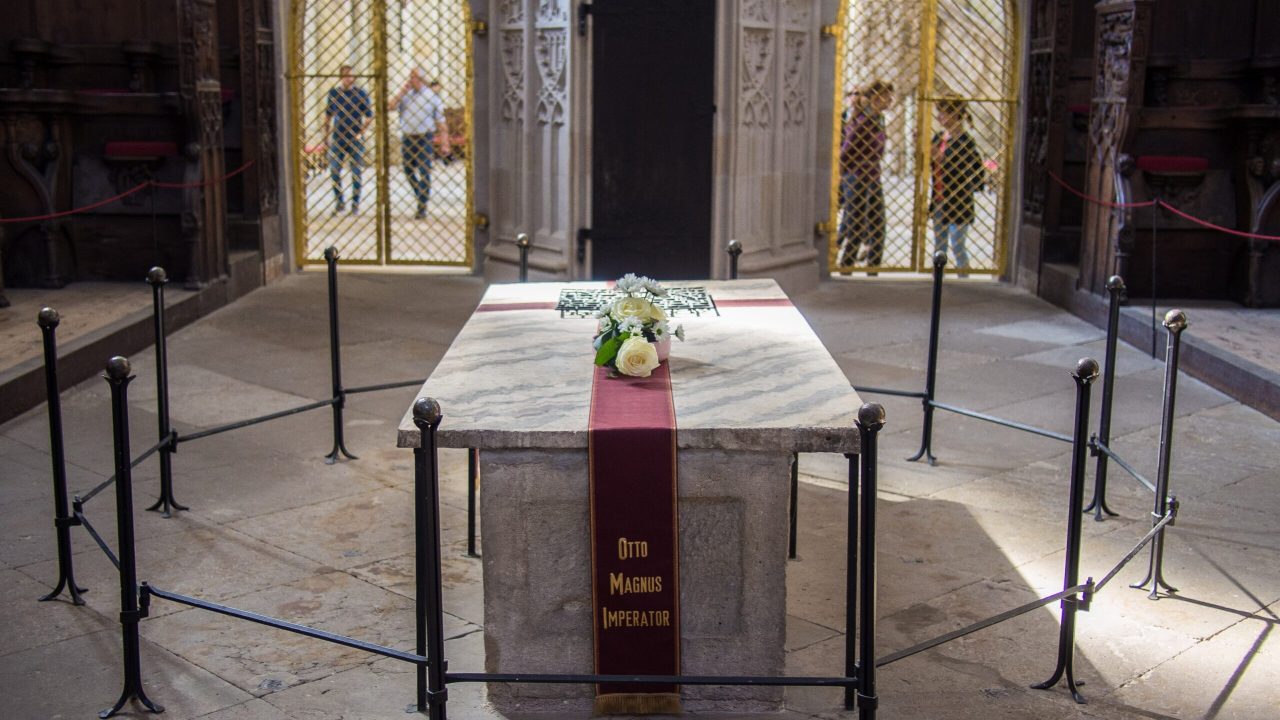
A question that historians have debated for centuries has finally been answered by science. New research confirms that the remains resting inside Magdeburg Cathedral do indeed belong to Emperor Otto the Great — one of the most powerful rulers in all of medieval European history.
The findings are the result of months of painstaking investigation, drawing on archaeology, anthropology, and cutting-edge DNA analysis. Together, those methods have done what centuries of historical assumption alone could not: provide scientific confirmation of the identity of a man buried since 973.
https://www.instagram.com/p/DWGpQLDgVvy/
For anyone interested in medieval history, this is a significant moment. Otto I wasn’t a peripheral figure — he was the architect of what would eventually become the Holy Roman Empire. Confirming his remains isn’t just an academic footnote. It’s a direct physical connection to one of the pivotal turning points in Western civilization.
Who Was Otto the Great — and Why Does This Discovery Matter?
Otto I, born in 912 and died in 973, earned the title “the Great” for good reason. He is widely regarded as the restorer of the imperial title in Western and Central Europe, essentially reviving the concept of a unified Christian empire in the West that had fragmented after Charlemagne’s death.
His reign reshaped the political landscape of an entire continent. He brought fractious German duchies under firmer royal control, pushed back against Magyar invasions, and extended his influence deep into Italy. When Pope John XII crowned him Holy Roman Emperor in 962, it was a moment that would echo through European politics for nearly a thousand years.
Magdeburg held a special place in Otto’s ambitions. In 968, he elevated the city to an archbishopric — a deliberate move that transformed it into a major religious and economic centre. It was also where he chose to be buried, and his tomb in Magdeburg Cathedral has drawn historical interest ever since.
But interest and certainty are different things. Despite centuries of tradition pointing to the sarcophagus in the cathedral choir as Otto’s resting place, the authenticity of the remains was never scientifically established — until now.
How Scientists Confirmed the Identity of Otto the Great
The research team combined three distinct scientific disciplines to build their case. No single method alone would have been conclusive, but together they produced a result researchers are confident in.
- Archaeology: Physical examination of the sarcophagus and its contents, including the structure of the tomb itself and associated artifacts.
- Anthropology: Analysis of the skeletal remains to assess age, sex, physical characteristics, and health indicators consistent with historical records.
- DNA Analysis: Cutting-edge genetic testing to compare the remains against known biological relatives or reference populations, helping to establish identity at a molecular level.
The investigation also revealed something about the physical state of the tomb itself. Iron clamps beneath the lid of the stone sarcophagus had corroded over time, causing visible cracks in the side wall. It’s a reminder that even the most historically significant burial sites are subject to the slow damage of centuries — and that the decision to investigate came with some urgency.
| Key Fact | Detail |
|---|---|
| Emperor’s full name | Otto I, known as Otto the Great |
| Years of life | 912–973 |
| Burial location | Magdeburg Cathedral, Germany |
| Key historical act | Elevated Magdeburg to an archbishopric in 968 |
| Scientific methods used | Archaeology, anthropology, DNA analysis |
| Duration of investigation | Several months |
What This Means for History — and for Magdeburg
Confirming the identity of Otto the Great’s remains carries weight well beyond academic circles. Magdeburg Cathedral now holds something it always claimed to hold — but can now prove it. That distinction matters for the site’s historical standing, its cultural significance, and its place in the broader story of European heritage.
For historians and archaeologists, the research also demonstrates what modern science can achieve when applied to long-standing historical questions. The combination of traditional archaeological methods with DNA analysis is increasingly powerful, and this case adds to a growing list of historical figures whose identities have been confirmed or revised through genetic science in recent years.
There’s also a broader cultural resonance here. Otto the Great wasn’t just a German ruler — he was a European one. His decisions shaped the political structures that governed much of the continent for centuries. Knowing with scientific certainty where he rests gives that history a physical anchor.
The Tomb Itself Needed Attention
Beyond the question of identity, the investigation drew attention to the physical condition of the sarcophagus. The corroding iron clamps that had been used beneath the lid were causing structural damage — cracking the stone walls of the tomb from within.
This kind of slow, invisible deterioration is a common threat to ancient burial sites, and discovering it now means steps can potentially be taken to preserve what remains. The sarcophagus sits in the choir of Magdeburg Cathedral, one of the most historically significant spaces in Germany, and its long-term preservation is now a matter of active concern for heritage authorities.
The State Office for Heritage Management and Archaeology Saxony-Anhalt was involved in documenting the investigation, underscoring that this was a formal, institutionally supported scientific effort — not an amateur excavation or speculative exercise.
What Comes Next for the Research
The confirmation of Otto the Great’s identity is likely to prompt renewed scholarly interest in both the emperor himself and the cathedral that has housed his remains for over a thousand years. Researchers may look more closely at other associated artifacts, the broader burial context, and what the physical remains can reveal about Otto’s life, health, and final years.
Conservation efforts for the sarcophagus will also likely move forward, given the documented structural damage caused by the corroding iron clamps. Preserving the tomb in its current location remains the priority for heritage authorities.
For Magdeburg, the confirmation adds another layer to a city already rich in medieval significance — a city that Otto himself chose to elevate, and where he chose, ultimately, to remain.
Frequently Asked Questions
Who was Otto the Great?
Otto I (912–973) was a medieval emperor credited with restoring the imperial title in Western and Central Europe and laying the foundations for what became the Holy Roman Empire.
Where is Otto the Great buried?
He has been buried in Magdeburg Cathedral since his death in 973, with his sarcophagus located in the cathedral’s choir.
How did scientists confirm the identity of the remains?
Researchers used a combination of archaeology, anthropology, and cutting-edge DNA analysis over several months of detailed investigation.
Was there any doubt about the remains before this study?
Yes — while tradition long held that the sarcophagus contained Otto’s remains, the authenticity had never been scientifically confirmed until this research.
Is the tomb in good condition?
Not entirely. Corroding iron clamps beneath the lid have caused visible cracks in the side wall of the stone sarcophagus, raising preservation concerns.
Which institution oversaw the investigation?
The State Office for Heritage Management and Archaeology Saxony-Anhalt was involved in documenting the scientific investigation.

Leave a Reply