
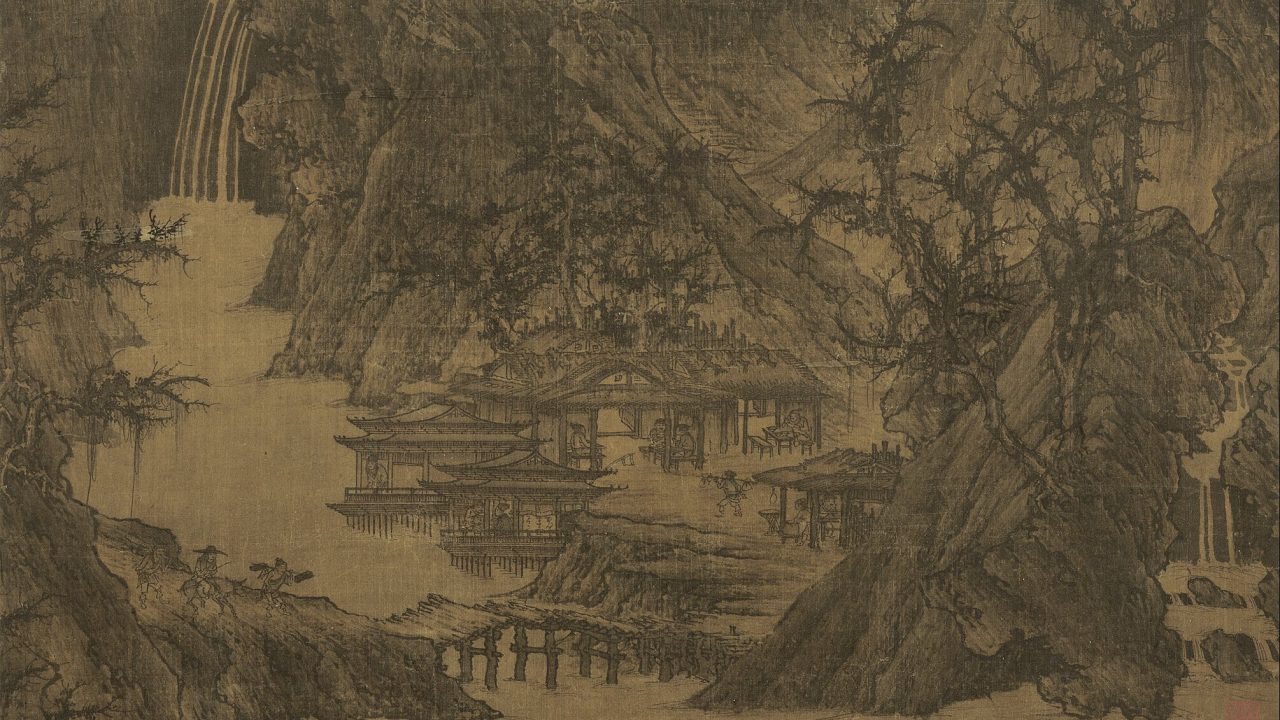
Dr. Liang Wei had always wondered why her grandmother’s village stories spoke of terrible famines during what should have been China’s golden age. As a climate researcher at Beijing University, she never expected her atmospheric data analysis to reveal that ancient droughts and floods might have toppled one of history’s greatest empires. “When I saw the correlation between extreme weather patterns and the Tang Dynasty’s collapse, it gave me chills,” she recalls.
Her grandmother’s tales weren’t just folklore—they were echoes of a climate catastrophe that helped bring down the Tang Dynasty over a thousand years ago.
A groundbreaking new study has revealed that extreme climate events may have played a crucial role in the downfall of China’s Tang Dynasty, one of the most prosperous and culturally rich periods in Chinese history. The research combines historical records with advanced climate data to paint a picture of how environmental stress can destabilize even the mightiest civilizations.
When Nature Turned Against an Empire
The Tang Dynasty, which ruled from 618 to 907 CE, was considered the pinnacle of Chinese civilization. During its height, the empire stretched from Korea to Central Asia, fostering unprecedented cultural exchange, artistic achievement, and economic prosperity. Yet this mighty dynasty eventually crumbled, and researchers now believe climate extremes were a significant contributing factor.
The study analyzed tree ring data, ice cores, and historical Chinese records to reconstruct climate patterns during the late Tang period. What they found was startling: a series of devastating droughts punctuated by catastrophic floods that would have crippled agricultural production and triggered widespread social unrest.
The climate data shows us that the late Tang period experienced some of the most extreme weather variability in over a millennium. These weren’t just bad harvests—they were civilization-threatening events.
— Dr. Chen Ming, Environmental Historian
Between 850 and 900 CE, the empire faced what researchers describe as a “perfect storm” of environmental disasters. Prolonged droughts in northern China devastated wheat and millet crops, while excessive flooding in the south destroyed rice paddies. This dual catastrophe created food shortages that rippled throughout the empire.
The Domino Effect of Climate Disaster
The research reveals how climate extremes created a cascade of problems that weakened the Tang Dynasty from within. Here’s what the data shows about this environmental catastrophe:
| Climate Event | Time Period | Impact |
|---|---|---|
| Severe Drought | 851-855 CE | Crop failures in northern provinces |
| Yellow River Floods | 858-860 CE | Displacement of millions of people |
| Extended Drought | 875-884 CE | Widespread famine and social unrest |
| Extreme Cold | 892-895 CE | Agricultural collapse in multiple regions |
The consequences of these climate disasters went far beyond agriculture:
- Mass Migration: Millions of people fled drought-stricken areas, overwhelming urban centers
- Tax Revenue Collapse: Failed harvests meant farmers couldn’t pay taxes, bankrupting the imperial treasury
- Military Weakness: Underfed populations couldn’t supply healthy recruits for the army
- Social Unrest: Hungry people joined rebellions against imperial authority
- Trade Disruption: Climate refugees blocked major trade routes, damaging commerce
What we see in the Tang collapse is a textbook example of how environmental stress can unravel the complex systems that hold a civilization together. It’s not just about crops—it’s about everything that depends on those crops.
— Professor Sarah Mitchell, Archaeological Climate Studies
The most devastating period came during the 870s and 880s, when a massive peasant rebellion led by Huang Chao swept across the empire. Historical records suggest this rebellion was fueled partly by desperation from repeated crop failures and famines caused by extreme weather.
Lessons for Our Climate-Challenged World
The Tang Dynasty’s climate-related collapse offers sobering lessons for our modern world, which faces its own environmental challenges. The parallels are striking: a prosperous civilization confident in its stability, suddenly confronted with unprecedented climate extremes.
Today’s China, like many nations, grapples with increasing weather volatility, from record-breaking floods to severe droughts. The Tang Dynasty’s experience shows how quickly environmental stress can compound into systemic failure, even in highly organized societies.
The research also highlights how climate impacts go far beyond immediate weather damage. Food security, economic stability, social cohesion, and political legitimacy all become vulnerable when environmental systems break down. The Tang Dynasty had sophisticated irrigation, extensive trade networks, and advanced agricultural techniques—yet none of these innovations could withstand the sustained climate assault of the late 9th century.
The Tang collapse reminds us that no civilization is too advanced or too powerful to be brought down by environmental catastrophe. It’s a warning we should take seriously.
— Dr. James Rodriguez, Climate Impact Specialist
Modern climate scientists point out that today’s global warming is creating similar patterns of extreme variability—more intense droughts, more devastating floods, and more unpredictable weather overall. The difference is that today’s climate change is happening much faster than the gradual shifts that challenged the Tang Dynasty.
The study also reveals how climate impacts can persist for generations. Even after the Tang Dynasty fell, it took centuries for China to fully recover its population and economic strength. The environmental trauma created lasting effects that shaped Chinese society for hundreds of years.
We often think about climate change in terms of temperature increases, but the Tang example shows us that variability and unpredictability can be just as destructive as gradual warming.
— Dr. Lisa Park, Historical Climatologist
Understanding these historical climate catastrophes helps us prepare for future challenges. The Tang Dynasty’s collapse wasn’t inevitable—better preparation, more resilient agricultural systems, and more flexible governance might have helped the empire survive. These lessons remain relevant as modern societies work to build climate resilience.
FAQs
How long did it take for climate change to bring down the Tang Dynasty?
The climate-related collapse took about 50 years, from the first major droughts in the 850s to the dynasty’s end in 907 CE.
Were climate extremes the only reason the Tang Dynasty fell?
No, climate change combined with political corruption, military weakness, and social tensions to create the perfect conditions for collapse.
How do we know about Tang Dynasty climate conditions?
Researchers use tree rings, ice cores, lake sediments, and detailed Chinese historical records to reconstruct ancient weather patterns.
Could the Tang Dynasty have survived with better preparation?
Possibly, though the climate extremes were severe. Better food storage, more flexible agriculture, and stronger social safety nets might have helped.
Are modern societies more vulnerable to climate change than ancient ones?
Modern societies are both more vulnerable due to complexity and interdependence, but also more resilient due to technology and global cooperation.
What can we learn from the Tang Dynasty’s experience?
Climate resilience requires preparation across multiple systems—agriculture, governance, economics, and social support—not just technological solutions.

Leave a Reply