
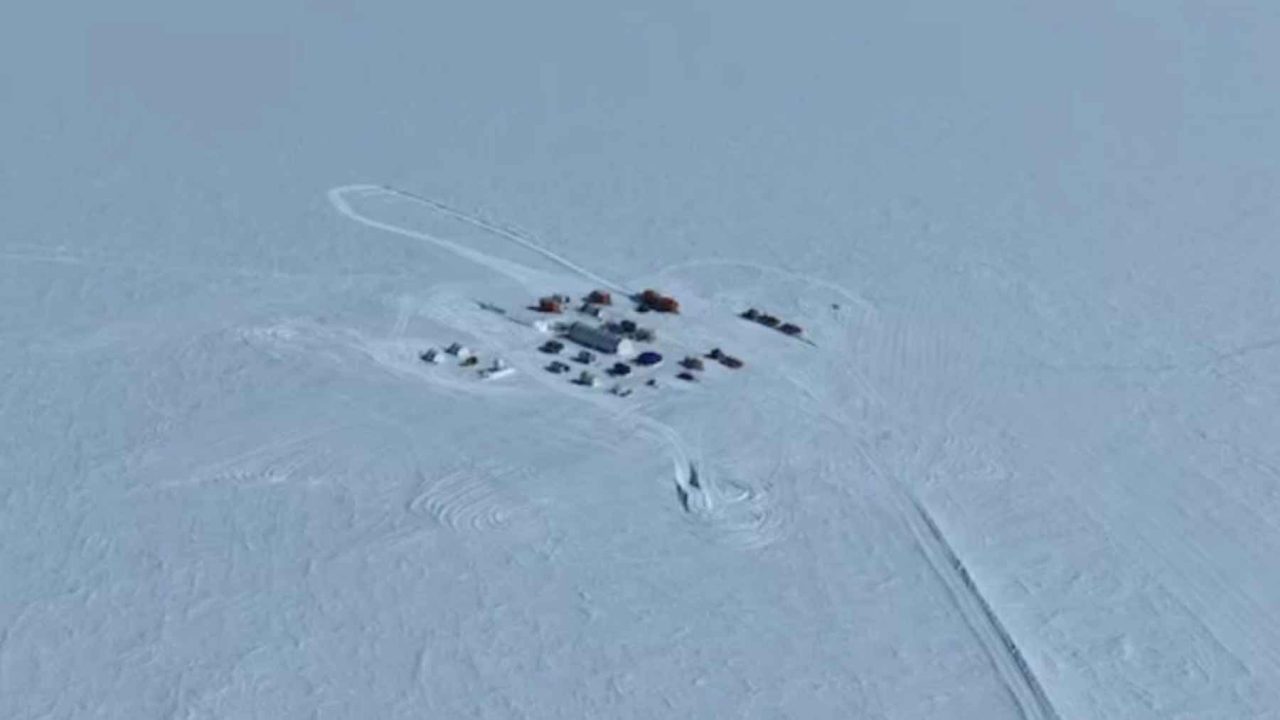
A tube of rock and mud pulled from beneath nearly 2,000 feet of Antarctic ice is now the deepest sediment core ever recovered from West Antarctica — and what it contains could reshape what scientists understand about the future of our coastlines.
The sample stretches 228 meters (roughly 748 feet) in length and was extracted from beneath 523 meters of ice at a remote location called Crary Ice Rise, more than 700 kilometers (about 435 miles) from Scott Base. Preliminary dating suggests the layers captured inside reach back approximately 23 million years.
That is not just a drilling achievement. It is a window into a version of Antarctica that no longer exists — and one that scientists fear could return.
The Record-Breaking Drill at the Heart of This Discovery
The work was carried out by an international research team operating under the SWAIS2C project, led by Earth Sciences New Zealand, Te Herenga Waka Victoria University of Wellington, and Antarctica New Zealand. Getting a drill through more than half a kilometer of ice to reach the sediment below, in one of the most hostile environments on Earth, is an extraordinary logistical feat on its own.
But the real prize is what those 228 meters of layered material contain. Sediment cores work like a natural archive. Newer deposits sit closest to the surface, older ones lie deeper, and each layer preserves physical and chemical evidence of the conditions that existed when it formed — ocean temperatures, the presence or absence of ice, and the kinds of microscopic life that were alive at the time.
The longer the core, the further back that archive reaches. At 228 meters, this one reaches further back than any previously recovered from this part of the continent.
What the Layers Are Actually Telling Researchers
The most striking finding so far is not the age of the material — it is what some of those ancient layers suggest about ice cover. According to the research team, preliminary analysis points to periods when this part of West Antarctica was not sealed under thick ice at all, but was instead exposed to open ocean during climates that were significantly warmer than today’s.
That matters enormously for one reason: the West Antarctic Ice Sheet sits on land that lies below sea level in many places. If it melted or collapsed, it would contribute substantially to global sea level rise. Understanding when and how that has happened before — and under what temperature conditions — gives scientists a more grounded basis for projecting what could happen as global temperatures continue to rise.
The core does not answer every question about future sea levels. But it provides a type of direct physical evidence that climate models alone cannot replicate.
Key Facts From the SWAIS2C Drilling Mission
| Detail | Confirmed Data |
|---|---|
| Core length recovered | 228 meters (approximately 748 feet) |
| Ice thickness drilled through | 523 meters |
| Distance from Scott Base | More than 700 kilometers (roughly 435 miles) |
| Drill site location | Crary Ice Rise, West Antarctica |
| Estimated age of deepest layers | Approximately 23 million years |
| Project name | SWAIS2C |
| Lead organizations | Earth Sciences New Zealand, Te Herenga Waka Victoria University of Wellington, Antarctica New Zealand |
- The core is described as the deepest sediment sample of its kind ever obtained from West Antarctica
- Preliminary analysis suggests some layers formed during periods when the region was exposed to open ocean rather than covered by ice
- Those periods correspond to climates warmer than today
- The findings are described as relevant to understanding future sea level changes
Why Sea Level Researchers Are Paying Close Attention
Sea level rise is one of the most consequential — and hardest to predict — consequences of a warming planet. The uncertainty largely comes down to ice sheets. Glaciers melt gradually and their contributions can be estimated with reasonable confidence. Ice sheets are different. They can be stable for long periods and then shift rapidly, and the West Antarctic Ice Sheet in particular has been identified as a potential source of significant and relatively fast sea level rise.
The problem for researchers has always been the limits of the historical record. Computer models can simulate how ice sheets might behave under different temperature scenarios, but those models need to be tested against real-world evidence. That is exactly what a core like this one provides — a physical record of what actually happened during past warm periods, laid down in the sediment itself.
Evidence that West Antarctica was once open ocean during warmer climates does not guarantee that history will repeat itself on any particular timeline. But it does confirm that the ice sheet is capable of retreating dramatically — and that evidence carries weight in scientific and policy discussions about long-term coastal risk.
What Comes Next for the SWAIS2C Project
The extraction of the core is the beginning of the scientific process, not the end. Researchers will now work through detailed analysis of the 228-meter sample — examining the chemical signatures, microscopic fossils, and physical structure of each layer to build a more precise timeline of ice and ocean conditions going back millions of years.
That analysis takes time. Dating individual layers accurately, identifying the conditions under which each section formed, and connecting those findings to broader climate patterns is painstaking laboratory work. The preliminary age estimate of approximately 23 million years for the deepest material will be refined as that work progresses.
The SWAIS2C project represents a multinational effort, and results from this core are expected to feed into the wider scientific conversation about Antarctic ice stability and sea level projections. Given that coastal communities worldwide are already planning infrastructure around sea level rise estimates, the data from this drill site carries implications that extend far beyond the research community.
Frequently Asked Questions
Where exactly was the core drilled?
The core was extracted at Crary Ice Rise in West Antarctica, located more than 700 kilometers from Scott Base.
How deep is the sediment core that was recovered?
The core is 228 meters long (approximately 748 feet), making it the deepest sediment sample of its kind ever recovered from West Antarctica.
How old is the material at the bottom of the core?
Preliminary dating suggests the deepest layers are approximately 23 million years old, though that figure will be refined through further laboratory analysis.
What does the core reveal about past Antarctic ice cover?
Early analysis indicates that some layers formed during periods when West Antarctica was not covered by thick ice but was instead exposed to open ocean, suggesting the region experienced much warmer climates in the past.
Why does this matter for sea level rise?
Evidence that the West Antarctic Ice Sheet has retreated significantly during past warm periods helps scientists better understand the conditions under which it could do so again, which is directly relevant to long-term sea level projections.
Who led this drilling mission?
The SWAIS2C project was led by Earth Sciences New Zealand, Te Herenga Waka Victoria University of Wellington, and Antarctica New Zealand, with an international team involved in the operation.




Leave a Reply