
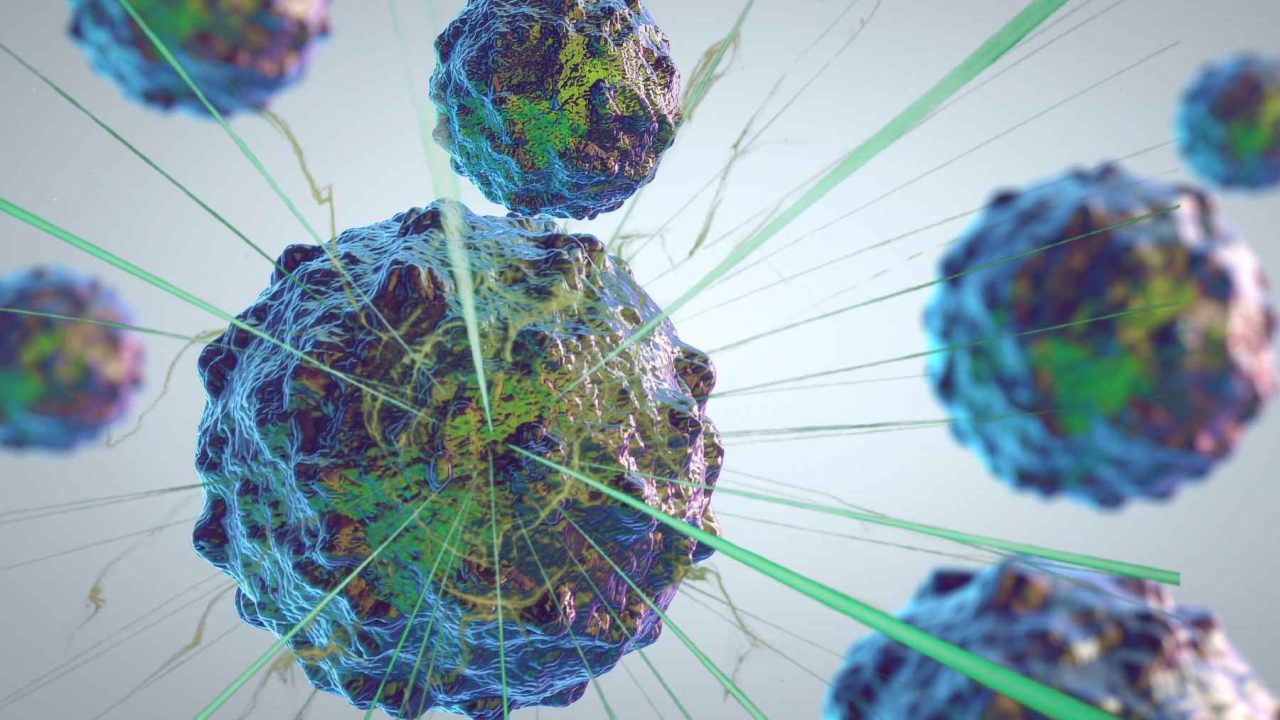
Scientists have figured out how to 3D print solid structures directly inside living human cells — without killing them. It sounds like something from a science fiction film, but researchers in Slovenia have demonstrated it in a real laboratory setting, and the implications for medicine and biology could be profound.
The work was led by physicist Maruša Mur at the Jožef Stefan Institute, in collaboration with colleagues at the University of Ljubljana and CENN Nanocenter. Using a precisely controlled laser technique, the team successfully built custom-shaped microstructures inside living HeLa cells — and many of those cells survived the process and continued dividing afterward.
That last detail is what makes this genuinely remarkable. Placing a solid foreign object inside a living cell without destroying it has been one of biology’s stubborn unsolved problems. This research suggests it may no longer be.
Why Building Inside a Living Cell Is So Difficult
To understand why this is a big deal, it helps to appreciate just how small and crowded a human cell actually is. A typical human cell measures roughly twenty micrometers across — about one fifth the width of a single human hair. Inside that microscopic space sits the nucleus, mitochondria, and dozens of other structures, all suspended in cytoplasm, the gel-like fluid that fills the cell’s interior.
Getting anything solid into that environment without disrupting the delicate machinery inside has long been considered extraordinarily difficult. Most previous approaches relied on introducing small molecules or chemical agents — nothing with a defined three-dimensional shape, and nothing that could be precisely engineered to a custom form.
The Slovenian team changed that by turning to a laser technique called two-photon polymerization. The method uses a finely tuned laser beam to trigger a chemical reaction at a precise point in space, hardening a liquid material into a solid structure with extreme accuracy. Until now, this technique had been used in manufacturing and research settings — not inside a living biological cell.
How the Laser Printing Inside Living Cells Actually Works
Two-photon polymerization works by focusing a laser so precisely that the light triggers a reaction only at the exact focal point — nowhere else. This allows researchers to essentially “draw” a three-dimensional object point by point inside a defined space, with a level of control that other methods simply cannot match.
Applying that inside a living cell required solving a unique set of challenges. The laser had to be powerful enough to drive the polymerization reaction, but controlled carefully enough not to damage the surrounding cellular structures or the cell membrane itself.
The researchers used HeLa cells for their experiments — a well-established human cell line that has been used in biomedical research for decades. These cells are robust and well-understood, making them a logical choice for testing a technique this invasive.
The result: custom-shaped microstructures successfully printed inside the cells, with many cells surviving the procedure and continuing to divide — a strong indicator that the cells remained fundamentally healthy and functional after the process.
Key Facts About the Research
| Detail | Information |
|---|---|
| Lead researcher | Maruša Mur, physicist |
| Lead institution | Jožef Stefan Institute, Slovenia |
| Collaborating institutions | University of Ljubljana, CENN Nanocenter |
| Technique used | Two-photon polymerization (laser-based) |
| Cell type used | Living HeLa cells (human) |
| Average human cell size | ~20 micrometers (approx. 1/5 the width of a human hair) |
| Key outcome | 3D microstructures printed inside cells; many cells survived and continued dividing |
- The structures are described as custom-shaped microstructures, meaning their geometry can be deliberately designed
- The technique offers a new way to engineer cell interiors in a controlled way
- Cells surviving and continuing to divide post-procedure is considered a meaningful sign of cellular health
- The research brings together physics, materials science, and cell biology in an unusual collaboration
What This Could Mean for Medicine and Biology
The ability to place precisely shaped solid structures inside living cells opens up possibilities that researchers have barely begun to map out. Imagine being able to mechanically reinforce a cell, deliver a scaffold for structural repair, or create an internal platform for targeted drug release — all from inside the cell itself.
For now, those applications remain speculative. But the foundational proof is there: the technique works, cells can survive it, and the structures can be shaped to order. That combination is genuinely new.
This also represents a rare case where a manufacturing technology — 3D printing — crosses over directly into living biology. Two-photon polymerization is already used to build microscale devices and structures in research and industry. The Slovenian team has now demonstrated it operates in a completely different environment: the interior of a human cell.
Researchers studying how cells respond to mechanical forces, how disease alters cell structure, or how to deliver therapies at the cellular level will likely be watching this work closely. The ability to introduce a defined, solid object into a cell — and have the cell keep functioning — is a tool that didn’t exist before.
What Comes Next for This Research
The current research establishes proof of concept. The immediate next questions are practical ones: Can the technique be refined further? Can it work reliably across different cell types beyond HeLa cells? And crucially, what happens to cells over longer time periods after a structure has been printed inside them?
What is confirmed is that the researchers have demonstrated the technique is viable and that cellular survival post-procedure is achievable — two hurdles that had to be cleared before any further development could be meaningfully pursued.
The work coming out of the Jožef Stefan Institute puts Slovenia at the forefront of a field that barely existed a year ago. Whether this becomes a platform for future therapies or remains a fascinating scientific tool, the fact that a laser can now sculpt structures inside a living human cell — and leave it alive — marks a genuine shift in what biology and physics can do together.
Frequently Asked Questions
What technique did the researchers use to print inside living cells?
They used a method called two-photon polymerization, which uses a precisely focused laser to harden material into a solid three-dimensional structure at a specific point in space.
Who led this research and where was it conducted?
The research was led by physicist Maruša Mur at the Jožef Stefan Institute in Slovenia, with collaborators from the University of Ljubljana and CENN Nanocenter.
Did the cells survive having structures printed inside them?
According to the research, many of the cells survived the procedure and continued dividing afterward, which is considered a positive indicator of ongoing cellular health.
What kind of cells were used in the experiment?
The team used HeLa cells, a well-established human cell line widely used in biomedical research.
How small is a human cell, and why does that make this difficult?
A typical human cell is about twenty micrometers across — roughly one fifth the width of a human hair — leaving very little room to introduce solid objects without damaging the cell’s internal structures.
When will this technology be used in medical treatments?
This has not yet been confirmed. The current research establishes proof of concept; clinical or therapeutic applications have not been announced or detailed in the available source material.


Leave a Reply