
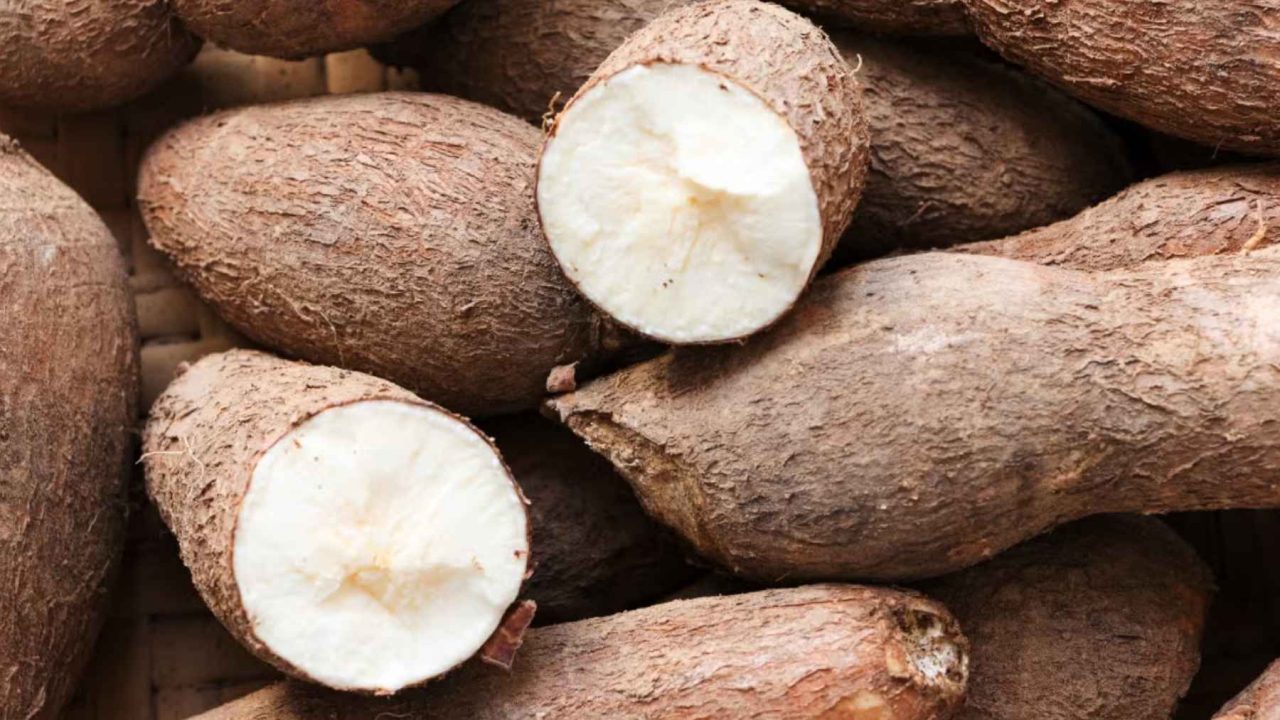
For centuries, people across West Africa, the Caribbean, and the Pacific Islands have built entire food traditions around a rough-skinned, starchy tuber most Americans barely recognize. Now, that same ingredient is quietly drawing attention in scientific research circles — not as a miracle food, but as a plant whose natural compounds may influence two of the most pressing health concerns of our time: blood sugar regulation and cognitive function.
The tuber in question is the true yam — a plant from the Dioscorea family that has nothing to do with the orange sweet potatoes most U.S. grocery stores mislabel as “yams.” Researchers keep finding compounds in yam that may affect how the body handles sugar and how the brain protects and rebuilds its connections. The science is still early, but the signals are real enough that they deserve a clear-eyed look.
Here is what is confirmed, what is still being studied, and what you should treat with caution.
What a True Yam Actually Is — And Why Most Americans Have Never Had One
The confusion starts at the supermarket. In the United States, the word “yam” is routinely used to describe orange-fleshed sweet potatoes. They are a different plant entirely. True yams belong to the Dioscorea group and are characterized by rougher, barkier skin and starchier, drier flesh compared to most sweet potatoes.
True yams are a dietary staple across large parts of Africa, the Caribbean, South America, and the Pacific Islands. They show up in Caribbean stews, in West African fufu, and increasingly in U.S. grocery stores as immigrant communities grow and international food sections expand.
They are not a trendy new ingredient. Millions of people have been eating them for generations. What is new is the scientific curiosity about what those centuries of consumption might tell us about human health.
What the Research Is Actually Claiming About Yam and the Brain
The headline here matters: researchers are not calling yam a “superfood.” The actual claim is more measured and more interesting than that.
Early research — including at least one small human trial, according to Separately, other studies point toward potential benefits for blood sugar control in specific settings.
Both areas of research are still in early stages. The word “may” is doing real work in those sentences. Small trials produce preliminary signals, not settled conclusions. What they do is justify larger, more rigorous follow-up studies — which appears to be exactly what is happening.
The scientific interest is not random. Yam contains natural compounds that researchers believe could be biologically active in ways relevant to both brain health and metabolic function. Identifying those compounds, understanding their mechanisms, and testing them at scale is the work that still lies ahead.
Breaking Down What Is Known vs. What Is Still Being Studied
| Area of Research | Current Status | What It Means |
|---|---|---|
| Memory and cognitive function | Small human trial conducted; early positive signals reported | Promising but not conclusive — larger studies needed |
| Blood sugar regulation | Studies point to potential benefits in specific settings | Context-dependent; not a blanket finding for all people |
| “Superfood” status | Not claimed by researchers | Early research does not support sweeping health claims |
| Dietary history | Centuries of consumption across multiple continents | Long-standing food tradition, not a new discovery |
The distinction between “confirmed” and “suggested” matters enormously when it comes to food and health reporting. Early studies create hypotheses. They do not prove treatments. Anyone selling yam supplements based on this research is running well ahead of what the science actually supports.
Why This Research Matters Beyond the Lab
Blood sugar dysregulation and cognitive decline are two of the most significant public health challenges in the developed world. The global rise in type 2 diabetes and the growing burden of dementia mean that researchers are actively searching for dietary and lifestyle factors that could reduce risk — even modestly.
That context is part of why yam is attracting scientific attention now. It is not that yam is suddenly new. It is that the tools to analyze plant compounds and their effects on human biology have become far more sophisticated, and researchers are revisiting traditional foods with fresh eyes and better methods.
For the communities that have eaten yam for generations, there is something quietly validating about this moment. Foods that were once dismissed as unfamiliar or “ethnic” in Western nutritional discourse are being studied seriously and finding real scientific footing.
What This Could Mean for People Who Eat — or Are Curious About — Yam
If you already eat yam as part of your cultural food tradition, the emerging research adds context to something you may have known intuitively for a long time. If you have never tried it, the science gives you a reason to be curious — though not a reason to treat it as medicine.
True yams are available in many U.S. grocery stores, particularly in neighborhoods with West African, Caribbean, or Latin American communities. They are starchier and less sweet than the orange sweet potatoes most Americans are familiar with, and they work well in stews, boiled dishes, and pounded preparations.
The practical takeaway is straightforward: yam is a nutritious, widely eaten food with a long history and growing scientific interest. It is not a cure. It is not a supplement. It is food — and the research around it is worth watching as it develops.
Where the Science Goes From Here
The next step for researchers is scaling up. Small trials and early studies generate questions; larger, controlled trials attempt to answer them. Scientists will need to identify which specific compounds in yam are responsible for the observed effects, at what doses those effects appear, and whether they hold up across diverse populations.
Until that work is done, the honest position is this: yam is a food with a strong nutritional profile and early research suggesting it may offer benefits for memory and blood sugar. That is worth knowing. It is not worth overstating.
The science is early. The food is real. And for millions of people around the world, it has been on the table all along.
Frequently Asked Questions
Is a yam the same as a sweet potato?
No. In the United States, orange-fleshed sweet potatoes are often mislabeled as yams, but they are a different plant. True yams belong to the Dioscorea group and have rougher skin and starchier flesh.
What health effects are researchers studying in yam?
Early research suggests certain yam extracts may slightly improve some measures of thinking and memory, and other studies point to potential benefits for blood sugar control in specific settings.
Has yam been proven to improve memory or blood sugar?
Not conclusively. The research includes a small human trial and early studies — promising signals, but not definitive proof. Larger, more rigorous trials are needed before firm conclusions can be drawn.
Where are true yams grown and eaten?
True yams are grown and eaten across Africa, parts of South America, the Caribbean, and the Pacific Islands, and they are increasingly available in U.S. grocery stores.
Should I take yam supplements based on this research?
The current research does not support using yam extracts or supplements as a treatment. The science is still early, and researchers themselves have not made that recommendation.
Why is yam getting scientific attention now?
Researchers are revisiting traditional foods using more advanced tools to analyze plant compounds and their biological effects — particularly as blood sugar disorders and cognitive decline have become major global health concerns.




Leave a Reply