
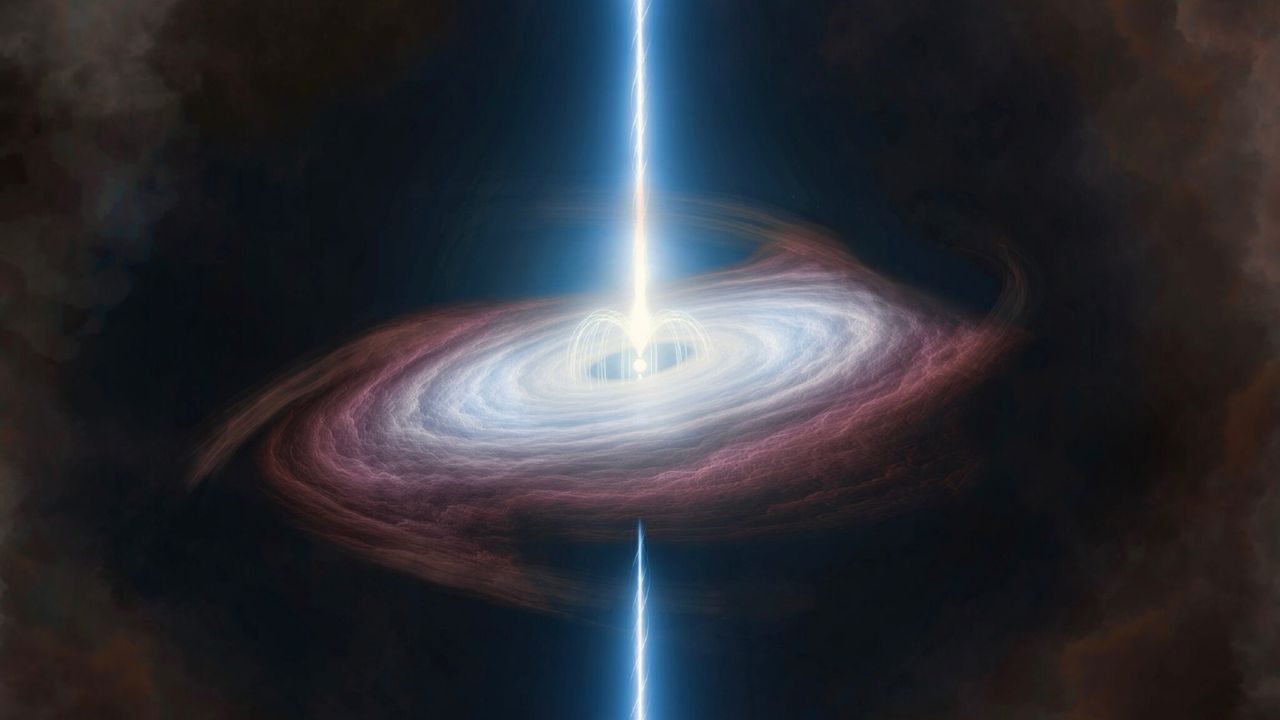
A magnetic field 300 trillion times stronger than Earth’s — that is what astronomers believe they have just watched come into existence for the very first time in recorded scientific history.
The object at the center of this discovery is called a magnetar: a rare, supercharged type of neutron star that ranks among the most extreme objects in the known universe. And according to researchers, its birth was captured at the heart of an unusually bright supernova, made visible thanks to an effect first predicted by Albert Einstein more than a century ago.
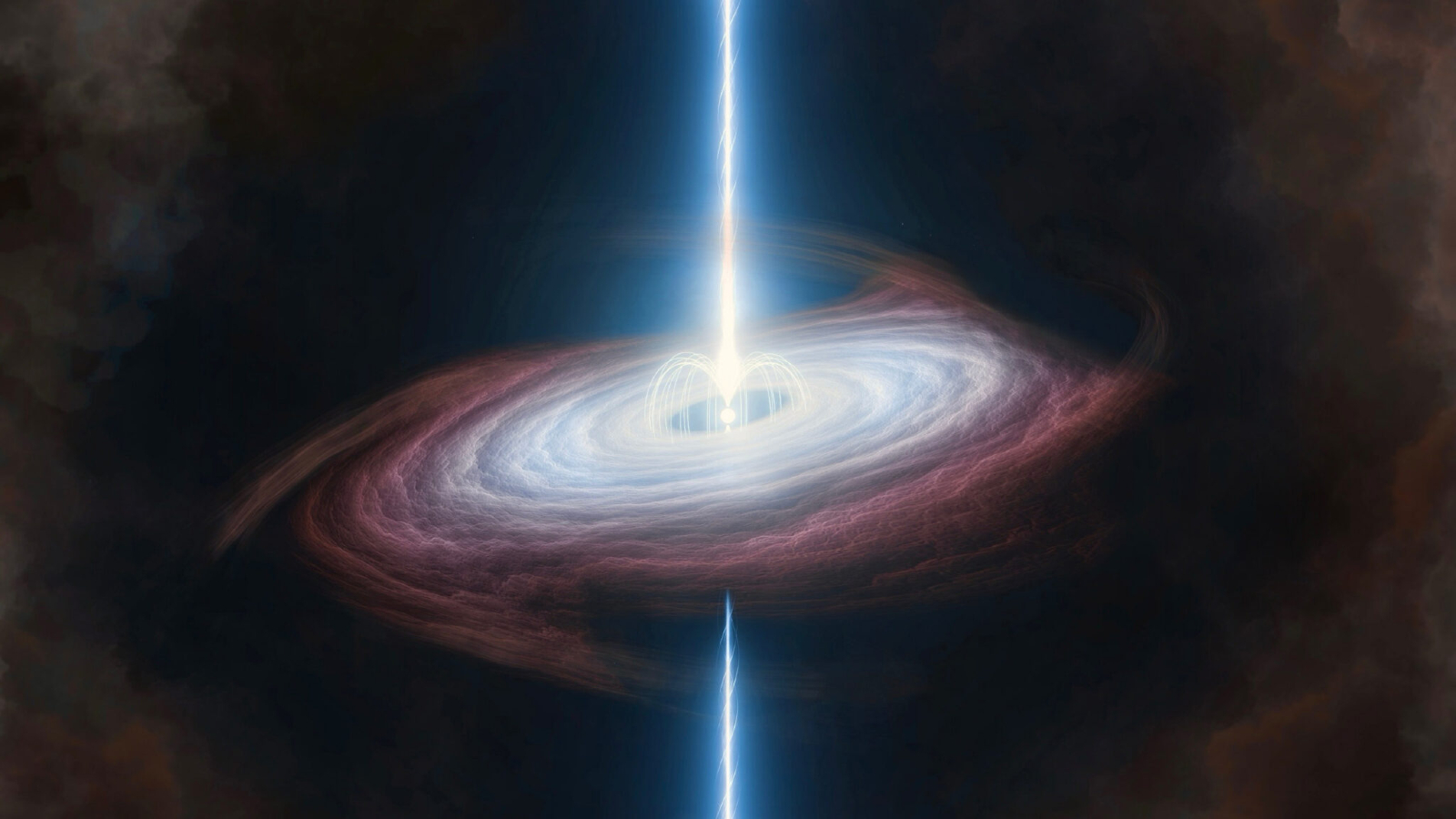
This is the kind of moment astronomers train entire careers to witness. It has never been observed before — and the way it was found makes the story even more remarkable.
What Is a Magnetar — and Why Does Its Birth Matter?
To understand why this discovery is significant, it helps to know what a magnetar actually is. When a massive star reaches the end of its life, it can explode in a supernova — one of the most energetic events in the universe. What gets left behind is sometimes a neutron star: an incredibly dense object packed with more mass than our Sun, compressed into a sphere roughly the size of a city.
A magnetar is a neutron star with an extraordinarily powerful magnetic field. These fields are so intense they would strip the electrons from your atoms if you came anywhere near one. They are considered some of the strongest magnets in the universe — and they are extraordinarily rare.
Until now, scientists had never actually watched one being born. Magnetars had only ever been detected after the fact, already formed and spinning in the depths of space. Observing the formation process in real time changes what researchers can learn about how these objects come to exist — and about the violent stellar deaths that create them.
How Einstein’s Work Made the Discovery Possible
The birth of this magnetar was spotted at the center of an unusually bright supernova — but the key to seeing it at all came down to a phenomenon rooted in Einstein’s theory of general relativity.
Einstein predicted that massive objects warp the fabric of space-time around them, and that this warping can bend light traveling nearby. This effect, known as gravitational lensing, acts like a natural magnifying glass in space. Light from a distant object gets bent and amplified as it passes near something with enormous gravitational pull, making the distant source appear brighter and more visible from Earth.
Researchers describe this as a kind of “general relativity magic trick” — and in this case, it appears to have given astronomers a front-row seat to one of the rarest events in the cosmos. Without that amplification effect, the magnetar’s birth may never have been detected at all.
What the Researchers Found — Key Facts at a Glance
Here is what has been reported:
- Astronomers believe they have witnessed a magnetar being born for the first time ever
- The magnetar is thought to have a magnetic field approximately 300 trillion times stronger than Earth’s magnetic field
- It was found at the core of an unusually bright supernova
- The discovery was made possible in part by an effect predicted by Albert Einstein’s general relativity
- The object is classified as a neutron star — the dense remnant left behind after a massive star explodes
| Feature | Detail |
|---|---|
| Object type | Magnetar (supercharged neutron star) |
| Magnetic field strength | ~300 trillion times stronger than Earth’s |
| Discovery context | Unusually bright supernova |
| Key enabling phenomenon | General relativity (gravitational lensing effect) |
| First-ever observation of | Magnetar birth in real time |
Why This Moment Is a Milestone in Astronomy
Catching the birth of a magnetar is not like spotting a new planet or a distant galaxy. These objects form in conditions so extreme, and in events so brief relative to cosmic timescales, that the window for observation is incredibly narrow. The fact that this one was caught at all — and that the mechanism for seeing it traces back to Einstein’s 100-year-old predictions — speaks to how modern astronomy is layering old theory with new technology.
For the broader scientific community, this observation opens a new line of research. Magnetars are thought to play roles in some of the universe’s most powerful phenomena, including fast radio bursts — intense flashes of radio energy detected from deep space whose origins are still being debated. Understanding how magnetars form could help explain those events too.
The supernova itself being described as “unusually bright” is also worth noting. That brightness is part of what drew attention in the first place, and it aligns with what researchers might expect when a magnetar is powering the explosion from within. A newly formed magnetar can inject enormous energy into the surrounding supernova, making it shine far more intensely than a typical stellar explosion.
What Comes Next for Magnetar Research
This observation is being treated as a significant first step rather than a final answer. Researchers will likely use this event as a reference point — a confirmed example of magnetar formation — to search for similar signals in existing and future astronomical data.
Advances in telescope technology and sky survey programs mean that more unusually bright supernovae are being detected than ever before. With this discovery as a template, scientists now have a better sense of what signatures to look for when a magnetar may be forming at the heart of a stellar explosion.
The role of gravitational lensing in making this observation possible also suggests that Einstein’s general relativity will continue to serve as an unexpected but essential tool for peering deeper into the universe’s most violent events.
Frequently Asked Questions
What is a magnetar?
A magnetar is a type of neutron star with an extraordinarily powerful magnetic field — in this case, believed to be around 300 trillion times stronger than Earth’s.
Has a magnetar birth ever been observed before?
According to the researchers behind this discovery, this is the first time astronomers have witnessed a magnetar being born.
How did scientists detect the magnetar forming?
The magnetar was detected at the heart of an unusually bright supernova, with the observation made possible in part by a gravitational lensing effect predicted by Einstein’s general relativity.
What is gravitational lensing?
Gravitational lensing is an effect predicted by Einstein where massive objects bend and amplify light passing near them, acting like a natural magnifying glass in space.
Why was this supernova unusually bright?
What does this discovery mean for future research?
This has not yet been fully detailed in the available source material, but the observation is expected to give astronomers a new reference point for identifying magnetar formation in future supernova events.


Leave a Reply