
Hundreds of near-perfect circular formations have appeared on the seafloor off the coast of Scotland — and scientists are genuinely stumped about what is drawing them there. They look like something a drone photographer might stage for a viral shot, but they are entirely natural, entirely real, and entirely mysterious.
Captured on aerial video in the Sound of Barra, a shallow channel in the Outer Hebrides, these pale turquoise rings sit against darker water like halos etched into the seabed. Marine staff have given them a nickname that has stuck: seagrass donuts. Others have compared them to fairy circles — those strange bare patches that appear in grasslands on land and have puzzled researchers for decades. The underwater version is no less puzzling.
What makes this discovery particularly striking is not just the shapes themselves, but what they represent — a rare and fragile ecosystem that has already suffered enormous losses, now showing up in a formation no one has ever documented on video in Scottish waters before.
What Are Seagrass Donuts, and Where Did They Come From?
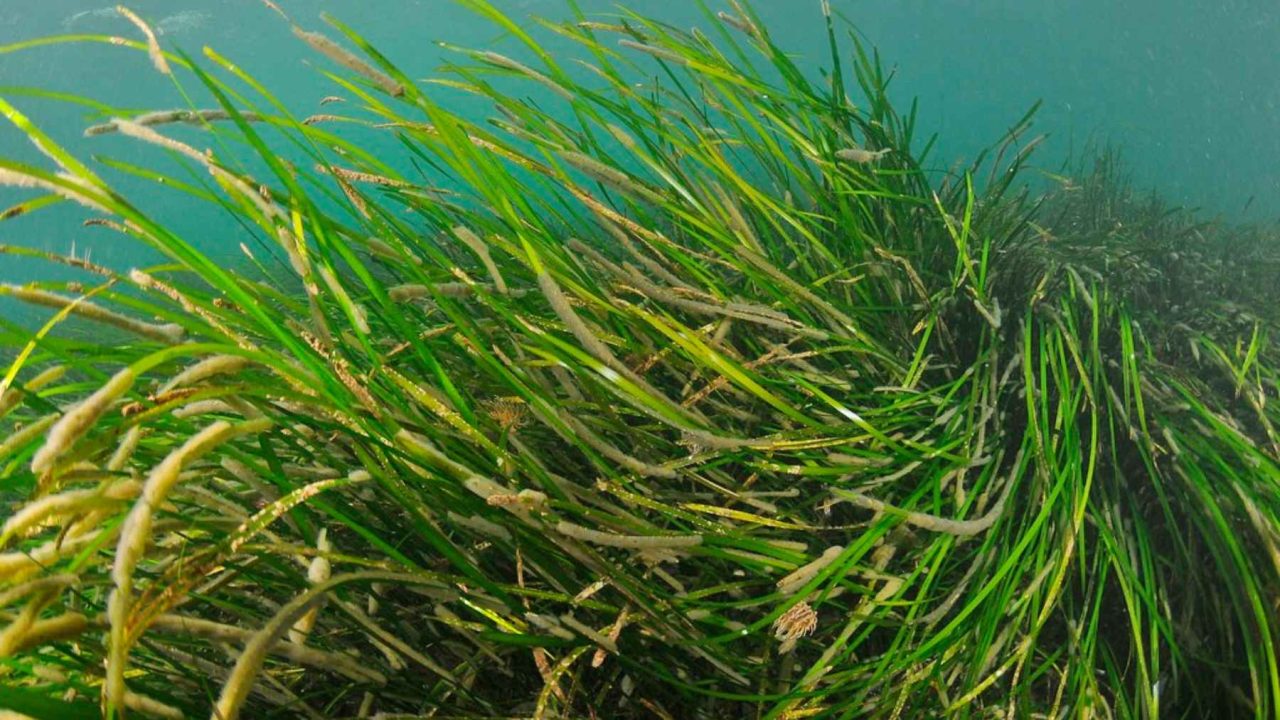
Seagrass meadows typically grow as continuous green carpets across shallow coastal floors. They are not dramatic to look at in their usual form — dense, low, quietly productive. So when aerial footage revealed hundreds of almost geometric rings in the Sound of Barra, the departure from the expected was impossible to ignore.
According to NatureScot, the Scottish government’s nature agency, this is the first time seagrass circles of this kind have ever been recorded on video in Scottish waters. The rings appear as pale turquoise halos — living seagrass growing in a circular band around a bare central patch, giving the formation its donut shape when viewed from above.
The critical question — what mechanism causes seagrass to grow in these near-perfect rings rather than spreading uniformly — does not yet have a confirmed scientific answer. Researchers are only beginning to understand the patterns. The formations are real, the footage is clear, but the explanation remains open.
On land, similar ring formations in grasslands have been attributed to a range of causes including fungal activity, animal behavior, and soil chemistry. Whether any comparable process drives the seagrass version is not yet established.
The Sound of Barra: Why This Location Matters
The Sound of Barra sits within the Outer Hebrides, a remote island chain off Scotland’s northwest coast. Its shallow, sheltered waters make it suitable habitat for seagrass — a plant that requires light to reach the seafloor and tends to thrive in calm, clear conditions.
The fact that hundreds of these rings were found in a single location suggests the conditions there are doing something specific, even if what that something is remains unclear. The sheer number of formations visible in the aerial footage points to a repeating process rather than a random event.
| Feature | Detail |
|---|---|
| Location | Sound of Barra, Outer Hebrides, Scotland |
| What they are | Ring-shaped seagrass formations on the seafloor |
| Nickname | Seagrass donuts |
| First recorded on video in Scotland | Yes — confirmed by NatureScot |
| Cause | Not yet scientifically established |
| Appearance from above | Pale turquoise halos against darker water |
Why Seagrass Matters Far Beyond Its Appearance
Seagrass is one of the most valuable marine ecosystems on the planet, and one of the least celebrated. It stores carbon at rates that rival forests, provides nursery habitat for fish and invertebrates, stabilizes sediment, and filters coastal water. Losing it has cascading effects that reach well beyond the immediate area.
The discovery of these rings comes alongside a serious and ongoing story about seagrass loss. Coastal development, water quality decline, boat anchoring, and physical disturbance have all contributed to seagrass decline across the UK and globally.
Finding an intact, active seagrass bed displaying unusual and complex growth patterns is therefore significant not just scientifically but ecologically. It signals that this stretch of water is healthy enough to support a functioning seagrass community — and that the community is doing something researchers have not fully seen before in this region.
- Seagrass stores carbon efficiently, making it relevant to climate discussions
- It supports fish populations that coastal communities depend on
- Its decline is well-documented across UK waters
- Intact seagrass beds like those in the Sound of Barra are increasingly rare
- The ring formations suggest active, established growth — not a recovering or degraded meadow
The Fairy Circle Comparison That Scientists Cannot Yet Dismiss
The comparison to fairy circles is more than poetic. Fairy circles — those mysterious bare patches ringed by thriving vegetation found in Namibian grasslands and parts of Australia — remained scientifically contested for years. Competing theories included termite activity, water distribution patterns, and plant self-organization. The debate was long and genuinely unresolved.
The seagrass donuts face a similar situation. The pattern is clear and documentable. The mechanism is not. Scientists working in this field are at an early stage of understanding, and the aerial footage from the Sound of Barra represents a starting point for investigation rather than a conclusion.
What the footage does confirm is that seagrass is capable of organizing itself — or being organized by its environment — into formations that are visually striking and structurally consistent. Whether that is driven by the plant’s own growth dynamics, by physical water movement, by the behavior of species living within the meadow, or by something else entirely is a question that remains genuinely open.
What Researchers and Conservationists Are Watching For
NatureScot’s documentation of the rings through aerial video marks a first step. Recording the formations on film creates a baseline — researchers can now track whether the rings change over time, expand, contract, merge, or disappear. That kind of longitudinal observation is often how the mechanism behind a natural pattern eventually reveals itself.
Conservation interest in the site is likely to grow. Areas that support unusual or complex seagrass behavior are often indicators of broader ecological health, and protecting them from disturbance gives researchers the best chance of understanding what is actually happening on the seafloor.
For now, the seagrass donuts of the Sound of Barra sit in a category that science finds both exciting and uncomfortable — clearly real, visually extraordinary, and not yet explained.
Frequently Asked Questions
What are seagrass donuts?
They are ring-shaped formations of seagrass on the seafloor, with living seagrass growing in a circular band around a bare central area, giving them a donut-like appearance from above.
Where were these formations discovered?
They were filmed in the Sound of Barra, a shallow channel in the Outer Hebrides off the coast of Scotland.
Has this ever been seen in Scotland before?
According to NatureScot, this is the first time seagrass circles of this kind have been recorded on video in Scottish waters.
Do scientists know what causes the ring shapes?
Not yet. The mechanism behind the formations has not been scientifically established, and researchers are described as only beginning to understand the patterns.
Are seagrass donuts related to fairy circles?
The comparison has been made because of the visual similarity — rings of growth surrounding a bare central patch — but whether they share any common cause has not been confirmed.
Why does seagrass matter beyond this discovery?
Seagrass meadows store carbon, support marine life, and stabilize coastal sediment, but they have suffered significant losses in UK and global waters, making intact beds like those in the Sound of Barra ecologically important.


Leave a Reply