
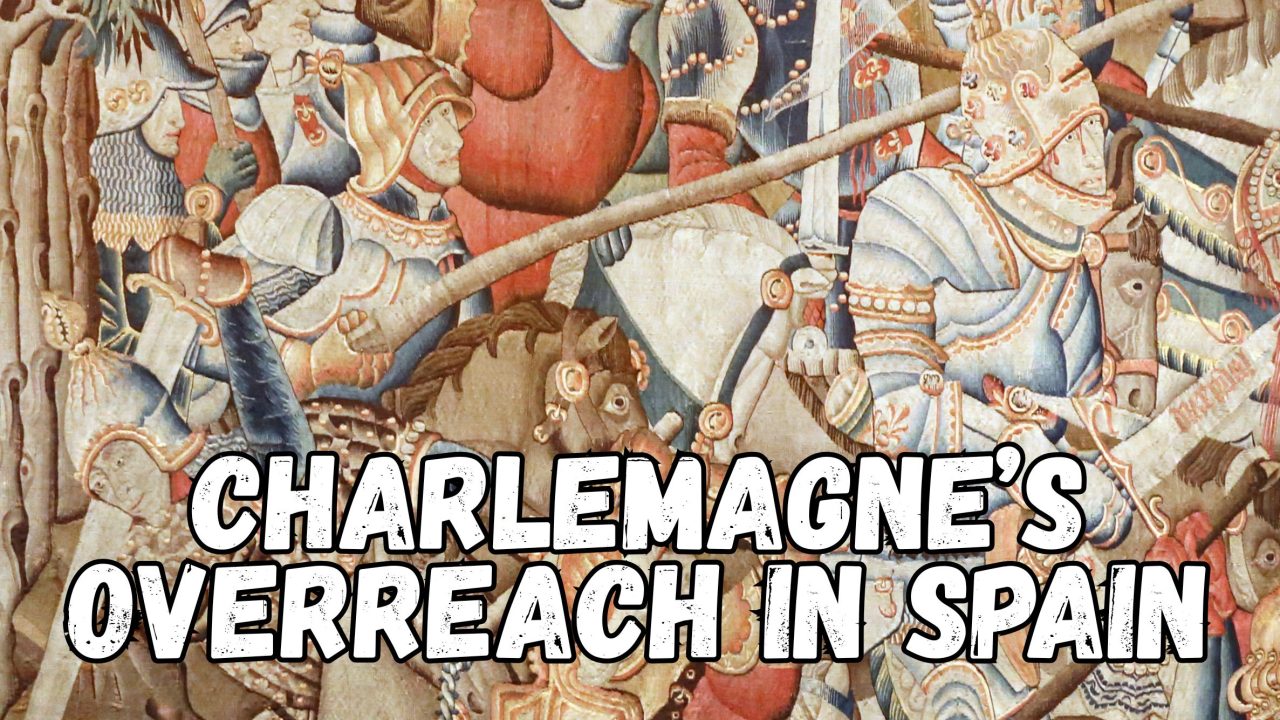
Brother Anselm clutched the messenger’s bloodied cloak, his hands trembling as he read the hastily scrawled words. The great Charlemagne—conqueror of the Saxons, protector of Christendom—had retreated from Spain in chaos. Worse yet, his nephew Roland and the entire rearguard had been slaughtered in the mountain passes.
The monk’s world shifted beneath his feet. How could the most powerful ruler in Europe suffer such a devastating defeat? This wasn’t supposed to happen to the man blessed by God himself.
What Brother Anselm witnessed that day in 778 AD was news of one of medieval history’s most shocking military disasters—a campaign that would transform from Charlemagne’s greatest ambition into his most humiliating failure.
The Ambitious Dream That Became a Nightmare
Charlemagne’s invasion of Spain began not with conquest in mind, but with what seemed like a golden opportunity. In 777, Muslim leaders from northern Spain approached the Frankish king with an irresistible proposal: help them overthrow their rivals, and they’d hand over key Spanish cities.
For Charlemagne, this wasn’t just about expanding his empire. It was about fulfilling his destiny as the defender of Christian Europe against Muslim expansion. The chance to push back Islamic forces without a costly siege seemed too good to pass up.
The Spanish expedition represented everything Charlemagne believed about his divine mission—spreading Christianity and expanding Frankish power simultaneously.
— Dr. Margaret Whitfield, Medieval Military Historian
But from the moment Charlemagne crossed the Pyrenees in 778, nothing went according to plan. The Muslim allies who had promised support either vanished or switched sides. Cities that were supposed to welcome him as a liberator slammed their gates shut.
The most crushing blow came at Zaragoza, the campaign’s primary target. Instead of the easy conquest he’d been promised, Charlemagne found himself staring at massive walls defended by a united Muslim garrison. Without siege equipment adequate for such fortifications, his army sat helplessly outside the city for months.
When Everything Falls Apart
The details of Charlemagne’s Spanish disaster reveal just how completely his plans unraveled:
- Broken promises: Muslim allies either fled or actively worked against Frankish forces
- Supply failures: Long supply lines from Francia couldn’t sustain a prolonged campaign
- Weather challenges: Summer heat and difficult terrain wore down troops and horses
- Intelligence gaps: Charlemagne had severely underestimated Spanish Muslim unity and military strength
- Political pressure: Urgent Saxon rebellions back home demanded immediate attention
| Campaign Phase | Duration | Outcome |
|---|---|---|
| Initial Advance | Spring 778 | Mixed success, some cities taken |
| Zaragoza Siege | Summer 778 | Complete failure |
| Retreat Begins | Late Summer 778 | Orderly withdrawal initially |
| Roncevaux Disaster | August 15, 778 | Rearguard annihilated |
Charlemagne’s Spanish campaign shows how quickly medieval warfare could shift from opportunity to catastrophe. Intelligence failures and overconfidence proved deadlier than any enemy army.
— Professor James Rothwell, University of Edinburgh
By late summer, Charlemagne faced a brutal reality check. His army was achieving nothing, his supplies were running low, and urgent messages from Francia reported Saxon uprisings that threatened his core territories. The king who had never retreated from a major campaign now had no choice but to abandon his Spanish ambitions.
The Massacre That Shook an Empire
The retreat itself should have been manageable. Charlemagne’s forces were still largely intact, and the route home through the Pyrenees was familiar territory. But the disaster at Roncevaux Pass turned an embarrassing withdrawal into a genuine catastrophe.
On August 15, 778, Basque warriors attacked the Frankish rearguard in the narrow mountain pass. These weren’t Muslim forces—they were Christian mountaineers who saw Charlemagne’s army as foreign invaders threatening their independence.
The slaughter was complete and devastating. Roland, Charlemagne’s nephew and one of his most trusted commanders, died along with virtually every man in the rearguard. The Basques vanished into the mountains with their loot, leaving no one alive to pursue them.
Roncevaux wasn’t just a military defeat—it was a psychological blow that shattered Charlemagne’s image of invincibility. For the first time, people across Europe saw the great emperor as fallible.
— Dr. Elena Vasquez, Spanish Medieval Studies Institute
The impact on Charlemagne personally was profound. This wasn’t just the loss of an army—it was the death of family, friends, and his most capable military leaders. The king who had seemed blessed by divine favor now faced questions about whether God had withdrawn his support.
Lessons Written in Blood and Failure
Charlemagne’s failed Spanish invasion changed medieval European politics in ways that lasted for centuries. The disaster taught crucial lessons about the limits of even the most powerful medieval armies when facing unfamiliar territory and unreliable allies.
The campaign’s failure also shifted Charlemagne’s strategic focus permanently. Instead of dreaming about southern expansion, he concentrated on consolidating and defending his existing territories. This more cautious approach ultimately proved far more successful than his ambitious Spanish gamble.
Perhaps most importantly, the disaster at Roncevaux inspired the epic poem “The Song of Roland,” which transformed a humiliating military defeat into one of medieval literature’s greatest heroic tales. In death, Roland became more valuable to Charlemagne’s legacy than he ever was in life.
The Spanish campaign’s failure actually strengthened Charlemagne’s empire in the long run by teaching hard lessons about realistic military planning and the importance of reliable intelligence.
— Professor William Hayes, Medieval Warfare Specialist
For modern readers, Charlemagne’s Spanish disaster offers timeless insights into how overconfidence and poor planning can destroy even the most promising military ventures. The great emperor’s greatest failure became one of history’s most instructive examples of strategic hubris.
FAQs
Why did Charlemagne invade Spain in the first place?
Muslim leaders from northern Spain promised to help him take key cities if he supported them against their rivals, making conquest seem easy and profitable.
What went wrong with the Spanish campaign?
His Muslim allies either disappeared or switched sides, cities refused to surrender, and he couldn’t successfully siege major targets like Zaragoza.
Who killed Roland at Roncevaux Pass?
Basque warriors attacked the Frankish rearguard, killing Roland and virtually every soldier with him in the narrow mountain pass.
How did this defeat affect Charlemagne’s empire?
It ended his southern expansion plans and forced him to focus on consolidating existing territories, which ultimately made his empire stronger.
What is “The Song of Roland”?
An epic poem that transformed the military disaster at Roncevaux into a heroic tale, making Roland a legendary figure in medieval literature.
Did Charlemagne ever try to conquer Spain again?
No, the 777-778 campaign convinced him that Spanish conquest was too risky and costly compared to other strategic priorities.

Leave a Reply