
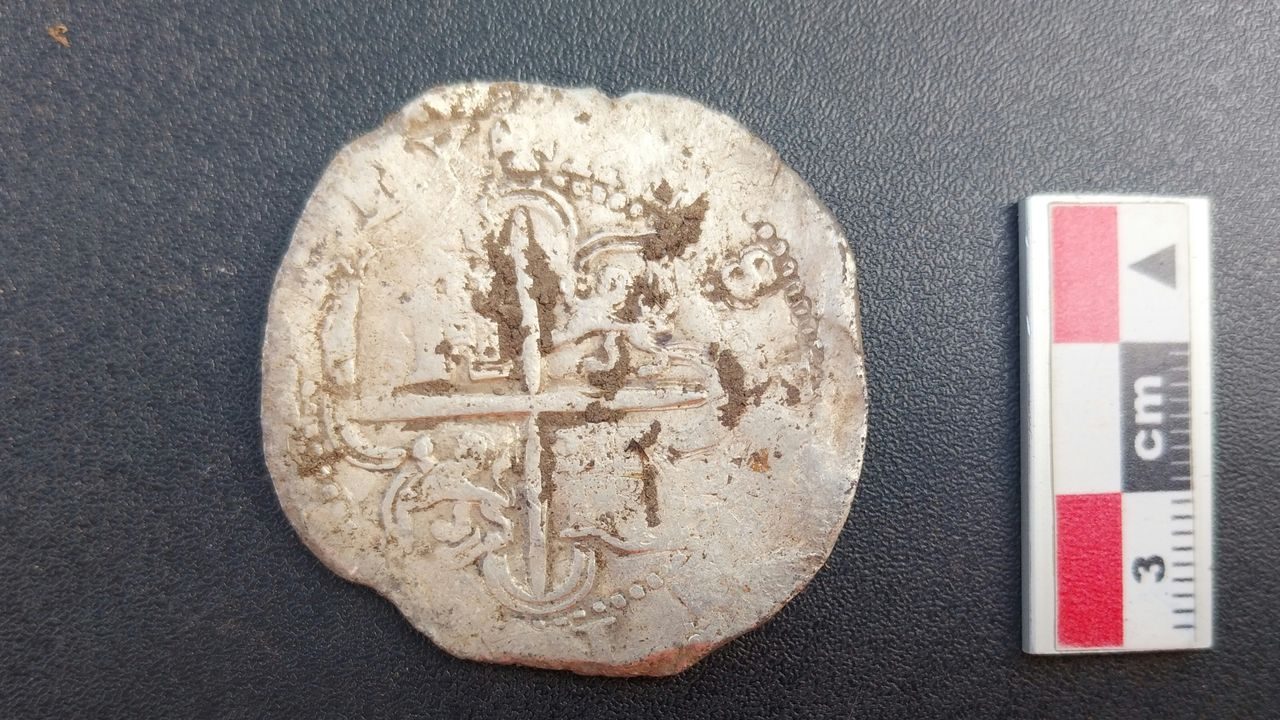
A small silver coin, buried in the soil of southern Chile for more than four centuries, may have just unlocked one of the most dramatic stories of colonial failure in the history of the Americas. Archaeologists have discovered a 16th-century Spanish coin near the Strait of Magellan — and what makes this find extraordinary is not just its age, but the ceremony it represents.
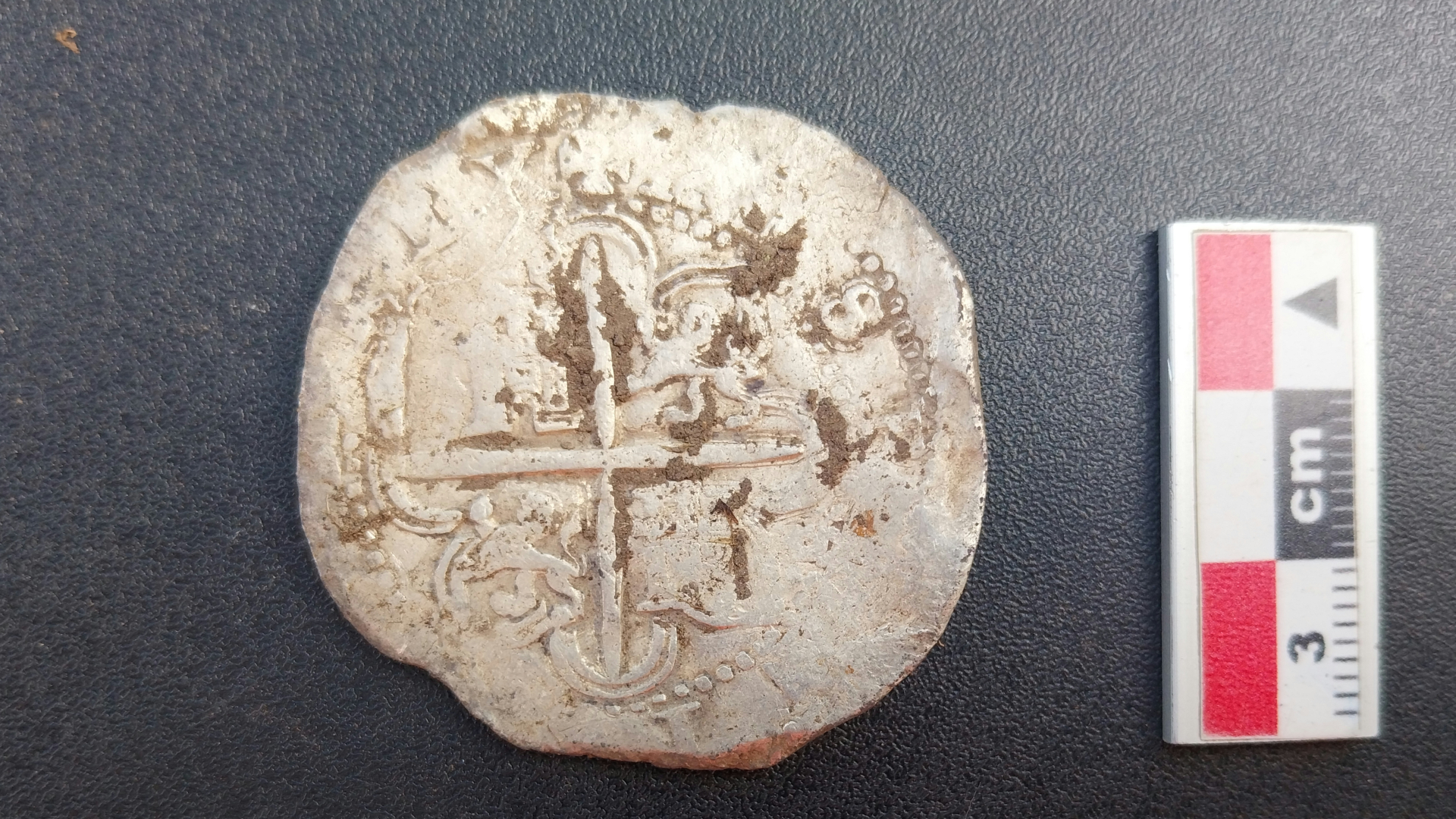
The coin is a silver “real de a ocho” — the same type of coin that pirates would later call a “piece of eight.” One side bears a Jerusalem cross. And according to researchers, its placement beside the Strait of Magellan was no accident. It was part of a deliberate Christian ceremony carried out by Spanish colonists more than 400 years ago.
What gives this discovery its real power is the paper trail. A surviving account from 1584 describes exactly this kind of ceremony — the ritual placement of a coin by Spanish settlers at a colonial site. The coin found by archaeologists matches that account in striking detail, giving researchers a rare moment of physical and documentary evidence aligning across centuries.
The Doomed Colony at the Edge of the World
The Strait of Magellan sits at the southern tip of South America, separating mainland Chile from the archipelago of Tierra del Fuego. It is one of the most remote and inhospitable places on Earth — a place of fierce winds, brutal cold, and waters that have claimed countless ships over the centuries.
It was here that Spanish colonists attempted to establish a settlement in the late 16th century. The effort was, by any historical measure, a catastrophe. The colony, situated at the edge of the known world for European explorers at the time, struggled against the extreme conditions of Patagonia and ultimately failed. The discovery of this coin is helping archaeologists piece together exactly where and how that settlement existed — and what its inhabitants believed as they tried to make their mark on an unforgiving landscape.
The fact that the coin was placed as part of a ceremony speaks volumes about the mindset of the colonists. Far from home, in a land that offered little comfort, they still carried out the rituals of their faith — embedding a piece of silver into the ground as a formal act of Christian observance.
What the Coin Actually Is — and Why It Matters
The real de a ocho, or “piece of eight,” was one of the most widely circulated coins in the world during the age of exploration. Minted in Spanish colonial territories, it became the dominant currency of global trade in the 16th and 17th centuries — used from the Caribbean to the Philippines. Pirates prized them. Merchants depended on them. And Spanish colonists carried them to the far corners of the earth.
The Jerusalem cross on one face of this particular coin is a significant detail. It was a common design on Spanish coinage of the period, reflecting the deeply Catholic identity of the Spanish Empire and its colonial enterprises. Every settlement, every expedition, every act of territorial claim was framed in religious terms — and the placement of a coin bearing a Jerusalem cross as part of a founding ceremony fits that pattern precisely.
For archaeologists, the coin serves as more than a historical artifact. It is a locational marker — physical proof that a colonial settlement existed at this specific site, at this specific time. Combined with the 1584 written account describing the ceremony, the find gives researchers a rare convergence of object and document.
| Detail | What Is Known |
|---|---|
| Coin type | Silver “real de a ocho” (piece of eight) |
| Coin design | Jerusalem cross on one side |
| Location of discovery | Near the Strait of Magellan, southern Chile |
| Estimated date of placement | 16th century (more than 400 years ago) |
| Supporting historical document | Surviving 1584 account of a Christian ceremony involving a coin |
| Significance | Matches documented ceremony; confirms location of Spanish colonial settlement |
A Ceremony Frozen in Time
What makes this discovery particularly compelling to historians is the nature of the ceremony itself. The placement of coins during the founding or construction of colonial settlements was a standard practice in the Spanish colonial world. It was not a casual act — it was a formal, documented ritual, often recorded in official accounts sent back to Spain.
The 1584 account that researchers have matched to this coin describes exactly this kind of ceremony. The fact that the account survived, and that a coin matching its description has now been physically recovered from the ground, is the kind of alignment that archaeologists work years — sometimes entire careers — to achieve.
It also puts a human face on a colony that history largely remembers as a failure. These were real people, conducting real rituals, trying to build something permanent in one of the most remote corners of the planet. The coin is a small object, but it carries the weight of that entire effort.
What Researchers Hope to Learn Next
The discovery opens up a broader investigation into the colonial settlement itself. Archaeologists working at the site are using the coin as a key reference point — a confirmed marker of where the colony stood and when it was active. From here, the work of excavating and documenting the broader site can proceed with greater confidence.
The Strait of Magellan region has long been of interest to historians of the age of exploration, but physical evidence of the specific settlements attempted there has been difficult to pin down. This coin changes that. It is a fixed point in both time and space, and researchers will be working to understand what else surrounds it.
Whether further excavation reveals structures, additional artifacts, or human remains that shed more light on the colony’s fate remains to be seen. But the piece of eight has already done something remarkable — it has confirmed that a doomed Spanish colony once stood at this exact spot, and that its inhabitants marked the moment with a ceremony they believed would last forever.
Frequently Asked Questions
What type of coin was discovered near the Strait of Magellan?
The coin is a silver “real de a ocho,” commonly known to pirates as a “piece of eight.” One side features a Jerusalem cross.
Where exactly was the coin found?
The coin was discovered near the Strait of Magellan in southern Chile, at a site believed to be the location of a Spanish colonial settlement.
Why was the coin placed there?
According to archaeologists, the coin was placed as part of a Christian ceremony carried out by Spanish colonists — a standard practice during the colonial era when establishing a settlement.
How do researchers know the coin is connected to a ceremony?
A surviving written account from 1584 describes a Christian ceremony involving a coin at a colonial site in the region, and the discovered coin matches that account in significant detail.
How old is the coin?
The coin dates to the 16th century, meaning it was placed in the ground more than 400 years ago.
What happened to the Spanish colony near the Strait of Magellan?
The colony is described as “doomed,” suggesting it ultimately failed, though further details about its fate are the subject of ongoing archaeological investigation.



Leave a Reply