
Around 200 silver objects buried more than a thousand years ago have been pulled from the earth along the banks of the Schlei in northern Germany — and what they contain says as much about the medieval world’s global reach as it does about the region where they were found.
The discovery was announced last year after archaeologists from the Archaeological State Office of Schleswig-Holstein (ALSH), working alongside the Schleswig-Holstein Detector Group, uncovered the 10th-century hoard. It is the kind of find that stops researchers in their tracks — not just because of its size, but because of what the objects represent: a snapshot of life, trade, and belief at the edge of the Viking world.
The location alone is striking. The hoard was found not far from Haithabu, one of the most significant trading centres of the Viking Age, positioned at the narrow neck of land connecting the North Sea and the Baltic Sea. That geography was everything in the early medieval period — it made this stretch of northern Germany a crossroads for long-distance commerce spanning continents.
What Was Found — and Why This Hoard Is Remarkable
The hoard contains roughly 200 items, the vast majority made of silver. But it is not the quantity that makes this discovery stand out. It is the variety — and what that variety tells us about the people who buried it.
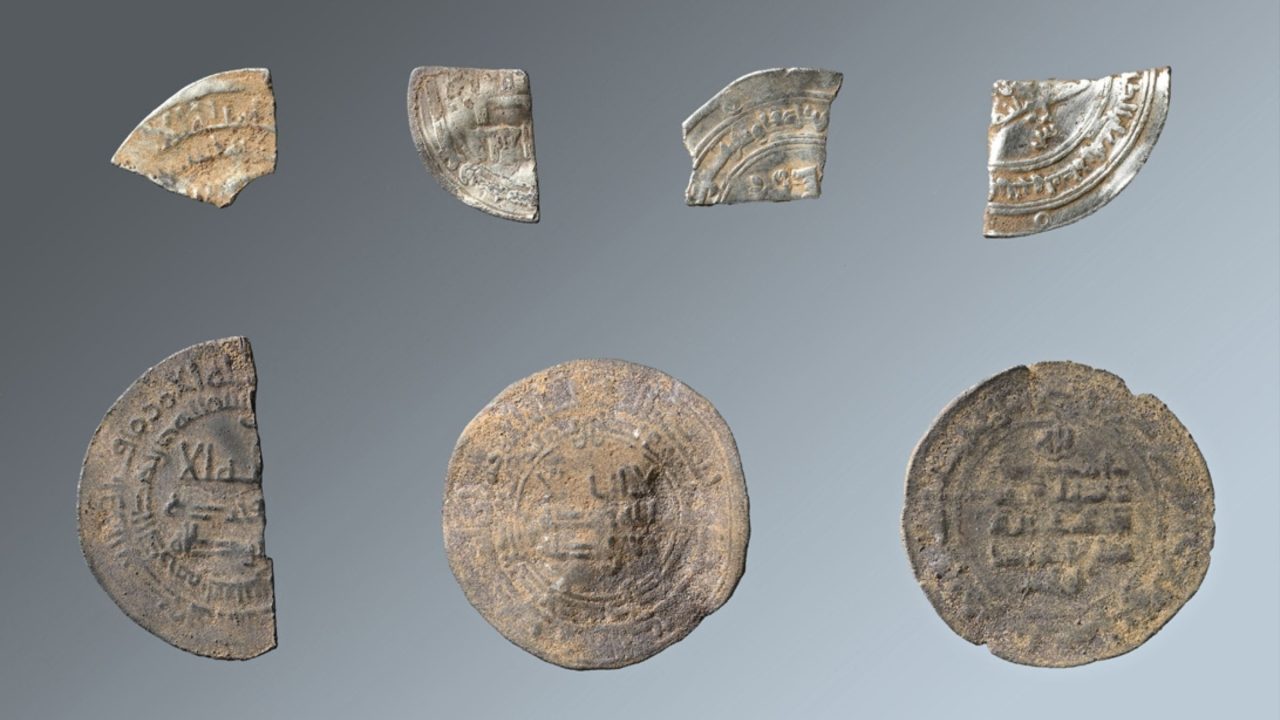
Among the objects are pieces of hacksilver, which were fragments of silver deliberately cut into smaller pieces to serve as a form of currency. This was a common practice in Viking Age economies, where silver was weighed and exchanged by mass rather than by denomination. Alongside the hacksilver, archaeologists found silver ingots, jewellery, and fragments of Arabic coins known as dirhams.
Those coins are perhaps the most telling objects in the entire hoard. Minted in the Islamic world, dirhams have been found at Viking Age sites across northern Europe, and their presence here confirms just how far-reaching the trade networks of this era really were — connecting the fjords and trading posts of Scandinavia all the way to the markets of the Middle East.
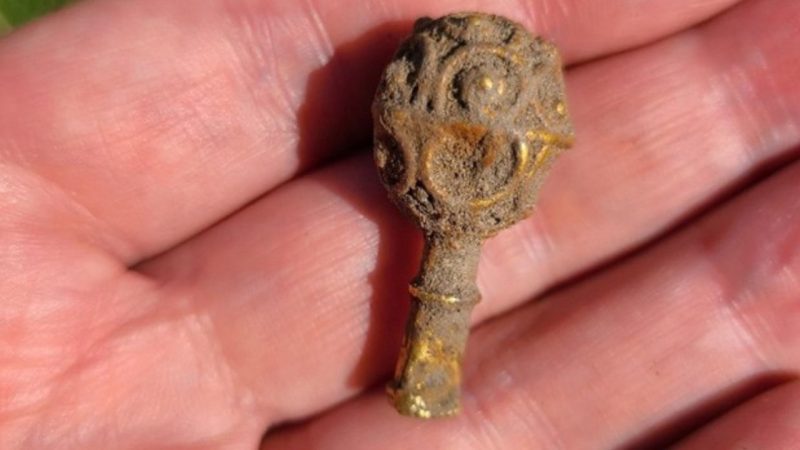
Then there is the cross pendant.
Found among the other pieces, this finely crafted object may represent one of the earliest material signs of Christianization in the region. Researchers have noted that it hints at the gradual cultural and religious transformation that was beginning to reshape northern Europe during the 10th century — a process that would eventually see the old Norse traditions give way to the new faith spreading from the south.
A Breakdown of the Key Finds
| Object Type | Significance | Origin/Context |
|---|---|---|
| Hacksilver | Used as weighed currency in Viking Age trade | Common across northern European Viking contexts |
| Silver ingots | Stored wealth; raw material for trade or crafting | Typical hoard component of the period |
| Jewellery fragments | Personal adornment; potential trade goods | Reflects local and imported craft traditions |
| Arabic dirhams | Evidence of long-distance trade with the Islamic world | Minted in the Islamic world; reached northern Europe via trade routes |
| Cross pendant | Possible early sign of Christianization in the region | Reflects gradual religious transformation of the 10th century |
- Total number of objects: approximately 200
- Majority of items are made of silver
- Date of burial: estimated 10th century
- Location: banks of the Schlei, near Haithabu, northern Germany
- Discovered by: ALSH archaeologists in cooperation with the Schleswig-Holstein Detector Group
Why Haithabu Makes This Discovery So Significant
To understand why this hoard matters, you have to understand Haithabu. Known in English as Hedeby, it was one of the largest and most important urban centres in northern Europe during the Viking Age. Merchants, craftspeople, and travellers passed through constantly, making it a place where goods — and ideas — from across the known world converged.
The Schlei waterway connected Haithabu directly to the Baltic, while overland routes linked it westward toward the North Sea. This dual access made it almost uniquely positioned for trade, and it attracted commerce from Scandinavia, the British Isles, the Frankish Empire, and, as the dirhams in this hoard confirm, the Islamic world far to the east and south.
Finding a hoard of this composition so close to Haithabu fits neatly into everything archaeologists already know about the site — but it also adds texture and detail to that picture. Someone buried these objects here for a reason, likely for safekeeping, and never came back for them. That single human act of concealment is what preserved this extraordinary collection for more than a millennium.
What the Cross Pendant Could Change About Our Understanding
The cross pendant deserves particular attention. The 10th century was a period of enormous religious upheaval across Scandinavia and the surrounding regions. Christianity was spreading steadily, meeting resistance in some places and gradual acceptance in others.
A cross pendant buried alongside hacksilver and Islamic coins is a striking combination. It suggests that whoever owned this hoard was living through — and perhaps participating in — a moment of genuine cultural transition. Whether the pendant was a personal expression of faith, a trade object, or a diplomatic gift is impossible to say with certainty. But its presence in the hoard raises questions that researchers will be examining for years.
Archaeologists have noted that this object may represent an early sign of Christianization in the region, which would make it one of the more historically layered finds in the entire collection.
What Comes Next for the Hoard
The hoard is now in the care of the Archaeological State Office of Schleswig-Holstein, where the objects will undergo further analysis.
What researchers will be looking for, among other things, is more precise dating of individual objects, analysis of the silver’s composition to trace its origins, and closer examination of the cross pendant and jewellery fragments for stylistic clues about where they were made.
Each of those answers, when they come, will add another layer to what is already a remarkably rich picture of life — and trade, and faith — on the edge of the Viking world more than a thousand years ago.
Frequently Asked Questions
Where exactly was the early medieval hoard discovered?
The hoard was found along the banks of the Schlei in northern Germany, not far from Haithabu, one of the most important Viking Age trading centres.
How many objects were in the hoard?
The hoard contains approximately 200 items, the majority of which are made of silver.
What are Arabic dirhams doing in a Viking Age hoard in Germany?
Dirhams are coins minted in the Islamic world that frequently appear in Viking Age contexts across northern Europe, demonstrating the extensive long-distance trade networks that connected Scandinavia with the Middle East.
What is hacksilver?
Hacksilver refers to fragments of silver objects that were deliberately cut apart and used as a form of currency, weighed rather than counted, which was a common practice in Viking Age economies.
What does the cross pendant found in the hoard suggest?
Researchers have noted that the cross pendant may represent an early sign of Christianization in the region, hinting at the gradual religious and cultural transformation taking place in northern Europe during the 10th century.
Who made the discovery?
The hoard was uncovered by archaeologists from the Archaeological State Office of Schleswig-Holstein (ALSH), working in close cooperation with the Schleswig-Holstein Detector Group.

Leave a Reply