
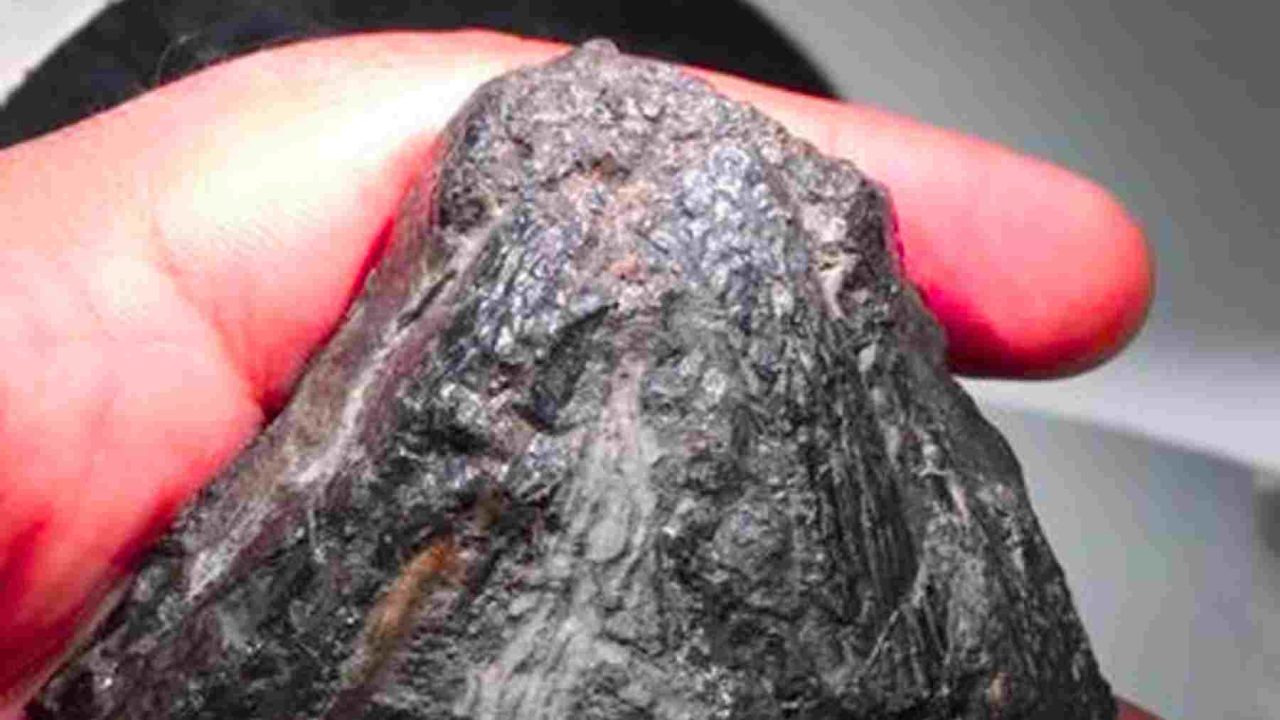
A skull roughly the size of a soccer ball, hidden inside a fossilized tree stump for over 300 million years, may have just rewritten one of paleontology’s most settled assumptions: when animals first started eating plants.
The fossil, discovered on Cape Breton Island in Nova Scotia, Canada, belongs to a newly named species called Tyrannoroter heberti — and its teeth tell a story that researchers weren’t expecting to find. The creature lived approximately 307 million years ago, placing it among the earliest known land animals. What makes it remarkable isn’t its age alone. It’s what was in its mouth.
The find suggests that herbivory — the ability to survive primarily on plant material — evolved on land far earlier than the scientific community had previously believed. That single shift in understanding has ripple effects across how we reconstruct ancient ecosystems and early food webs.
What Was Found Inside a Fossilized Tree Stump
The skull was preserved inside a fossilized tree stump on Cape Breton Island, Nova Scotia. That kind of preservation is unusual and speaks to the specific environmental conditions of the Carboniferous period, when dense forests and swampy landscapes created natural traps for organic material.
Researcher Arjan Mann, Ph.D., at the Field Museum of Natural History in Chicago examined the fossil and connected its distinctive dental structure to a plant-based diet. Mann and colleagues formally named the species Tyrannoroter heberti and described a body roughly the size of a soccer ball — compact, but clearly built for a specific kind of feeding.
Only the head bones were preserved. That might sound like a limitation, but for paleontologists studying diet, the skull is often the most informative part of an animal’s anatomy. Teeth don’t lie about what an animal ate.
Why These Teeth Change Everything We Thought About Early Herbivory
The dental anatomy of Tyrannoroter heberti is what makes this fossil genuinely significant. Across the palate, the creature had thick rows of teeth that created a broad chewing surface — far larger than what you’d see from edge teeth alone.
Crucially, those rows aligned with matching teeth on the lower jaw. That kind of opposing dental arrangement is a strong indicator of herbivory. It’s the type of bite that allows an animal to process tough, fibrous plant material efficiently — grinding it down rather than simply puncturing or tearing it.
Early land animals were generally assumed to have been carnivores or insectivores first, with plant-eating evolving later as a secondary adaptation. This fossil complicates that picture considerably. The evidence from the skull suggests that at least one lineage was already committed to a plant diet very early in the history of land-based vertebrate life.
Key Facts About the Tyrannoroter heberti Fossil
| Detail | Information |
|---|---|
| Age of fossil | Approximately 307 million years old |
| Discovery location | Cape Breton Island, Nova Scotia, Canada |
| Where it was preserved | Inside a fossilized tree stump |
| Species name | Tyrannoroter heberti |
| Estimated body size | Approximately the size of a soccer ball |
| Parts preserved | Head bones only |
| Lead researcher | Arjan Mann, Ph.D., Field Museum of Natural History, Chicago |
| Key finding | Thick palatal tooth rows consistent with plant-eating diet |
- The skull is described as heart-shaped in appearance
- Broad chewing surface created by multiple rows of teeth across the palate
- Upper and lower teeth aligned in a way that supports grinding rather than puncturing
- The dental structure points to herbivory as the primary feeding strategy
What This Means for How We Understand Ancient Food Webs
The implications here go beyond one species. If Tyrannoroter heberti was genuinely herbivorous 307 million years ago, it pushes back the timeline for plant-eating on land significantly. That changes the structure of the food web scientists have reconstructed for the Carboniferous period.
Early land ecosystems were thought to be dominated by predator-prey relationships built around meat and insects. Herbivores, in the traditional view, came later — after plants became abundant enough and digestive systems evolved to handle them. This fossil challenges that sequence directly.
Researchers argue the find shows animals began eating plants much sooner after moving onto land than previously thought. That’s not a minor adjustment to existing timelines. It means the base of ancient food chains may have included plant-eaters far earlier than models currently account for — and that the evolutionary pressure to develop herbivory appeared almost immediately once animals colonized land environments.
What Researchers Are Looking For Next
Because only the skull of Tyrannoroter heberti was recovered, many questions about the animal remain open. Researchers have not yet confirmed the full body plan, limb structure, or precise ecological niche the creature occupied beyond its diet.
The broader scientific community will likely look to additional fossil sites from the same geological period for corroborating evidence. Cape Breton Island has a history of yielding significant Carboniferous-era specimens, and the fossilized tree stump environment that preserved this skull may contain further material.
For now, the skull alone carries the argument — and by most accounts, the teeth make a compelling case on their own.
Frequently Asked Questions
How old is the Tyrannoroter heberti fossil?
The fossil is approximately 307 million years old, dating to the Carboniferous period.
Where was the fossil discovered?
It was found inside a fossilized tree stump on Cape Breton Island, Nova Scotia, Canada.
Who identified and named the species?
Arjan Mann, Ph.D., at the Field Museum of Natural History in Chicago led the research and named the species Tyrannoroter heberti along with colleagues.
How do scientists know this animal ate plants?
The skull contains thick rows of teeth across the palate that created a broad grinding surface, with upper and lower teeth aligned in a way consistent with processing tough plant material rather than catching prey.
How big was Tyrannoroter heberti?
Based on the skull, researchers described the animal’s body as roughly the size of a soccer ball.
Was the entire skeleton recovered?
No — only the head bones were preserved, which means conclusions about diet rest entirely on the dental anatomy of the skull.



Leave a Reply