
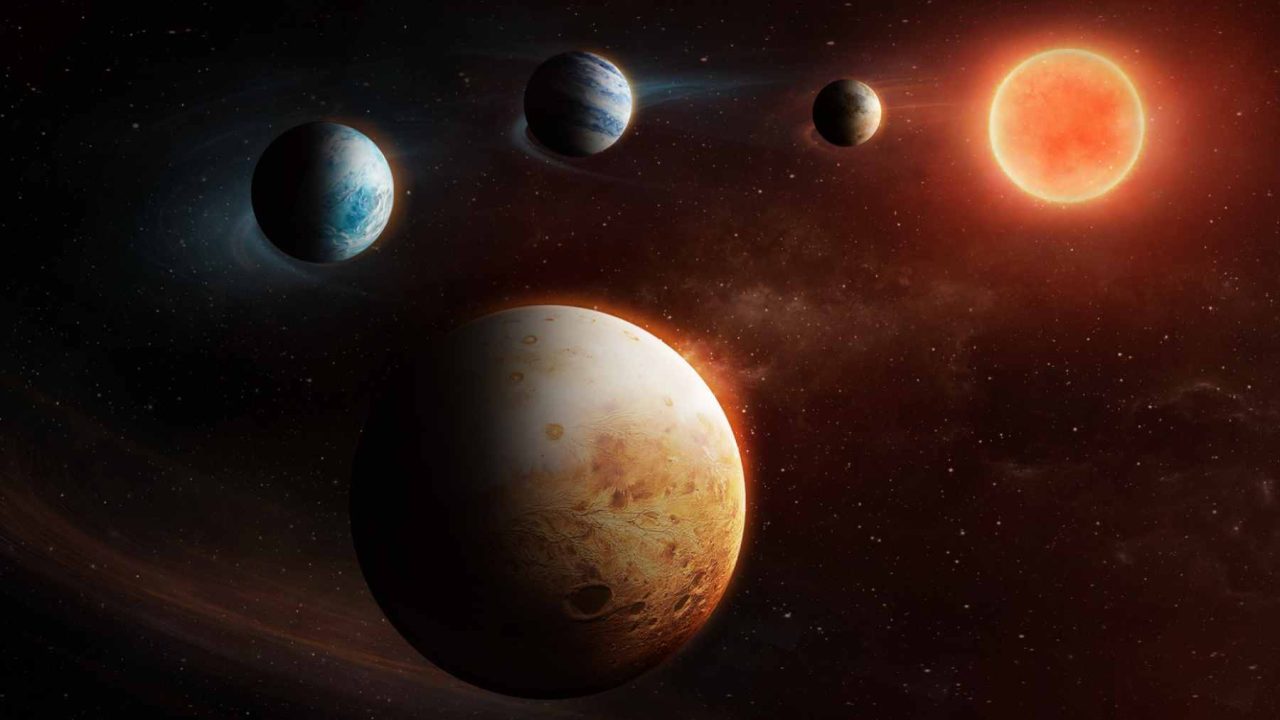
A planetary system 116 light-years from Earth is breaking every rule astronomers thought they understood about how solar systems form — and the planet sitting at its outer edge may be the strangest piece of the puzzle.
The system orbits a small red dwarf star called LHS 1903, and what researchers found there doesn’t match any known formation model. Four planets circle this star in an order that, according to current scientific understanding, simply shouldn’t exist. The arrangement has forced astronomers to reconsider some of their most basic assumptions about how rocky and gaseous worlds end up where they do.
The discovery is drawing significant attention in the astronomy community — not just because of what was found, but because of what it implies about planetary formation across the universe.
A Solar System That Doesn’t Follow the Rules
The standard expectation for a multi-planet system is fairly straightforward: rocky planets form close to the star, where it’s too hot for gas to condense, and gas-rich worlds form farther out, where volatile materials can accumulate. Our own solar system follows roughly this logic — four rocky planets close in, gas giants farther out.
LHS 1903 throws that model out entirely.
Instead of a clean rocky-to-gassy progression moving outward from the star, this system appears to follow a rocky, gas, gas, rocky sequence. Two puffier, gas-rich planets sit in the middle of the lineup, while rocky worlds bookend them on either side. The researchers say that odd arrangement is one of the strongest signs yet that some planets may form individually in a gas-depleted disk — a process very different from the one thought to produce most planetary systems.
That idea challenges decades of established thinking. If confirmed, it suggests the universe builds planets in more varied ways than scientists had previously accounted for.
The Planet That Doesn’t Belong — But Does Exist
The outer rocky world, designated LHS 1903 e, is the one drawing the most scientific interest. It sits farther from its star than two gas-rich neighbors, yet it has no thick gaseous envelope of its own. By every expectation of current formation theory, a rocky super-Earth in that position shouldn’t be there.
And yet, the measurements are clear. Researchers have characterized it in considerable detail:
- It completes one full orbit in 29.3 days
- Its mass is 5.79 times that of Earth
- Its radius is 1.732 times Earth’s radius
- It appears to be a rocky super-Earth with no thick gaseous envelope
- It sits farther from LHS 1903 than two puffier, gas-rich planetary neighbors
Astronomers typically sort small worlds into two broad categories: rocky planets and atmosphere-rich ones. LHS 1903 e, as researchers describe it, looks like the piece that landed in the wrong box. Its position in the system, combined with its rocky composition, is precisely what current models cannot explain.
What the Numbers Tell Us About LHS 1903
The confirmed data from the LHS 1903 system paints a picture of a planetary lineup unlike anything previously catalogued. Here’s a summary of what is known about the outermost planet and its host star:
| Property | Value |
|---|---|
| Host star | LHS 1903 (red dwarf) |
| Distance from Earth | ~116 light-years |
| Number of known planets | 4 |
| Outer rocky planet designation | LHS 1903 e |
| Orbital period (LHS 1903 e) | 29.3 days |
| Mass (LHS 1903 e) | 5.79 × Earth’s mass |
| Radius (LHS 1903 e) | 1.732 × Earth’s radius |
| Planet type (LHS 1903 e) | Rocky super-Earth, no thick gaseous envelope |
| System arrangement | Rocky → Gas → Gas → Rocky |
The system arrangement column in that table is, in many ways, the most important line. It’s the sequence that no existing formation model predicted — and the one that researchers say demands a new explanation.
Why This Discovery Matters Beyond the Headlines
It’s easy to see a story like this as a curiosity — a strange solar system far away with no direct bearing on daily life. But the implications reach further than that.
Planetary formation models aren’t just academic exercises. They shape how astronomers search for potentially habitable worlds, how they interpret data from missions like the James Webb Space Telescope, and how they estimate the likelihood of Earth-like conditions existing elsewhere in the galaxy.
If a system like LHS 1903 can form with rocky planets in positions where gas worlds were expected — and gas worlds where rocky ones should be — then scientists may be systematically misreading other planetary systems. Worlds that appear to be in the “wrong” place for habitability might be more common than current models suggest. Conversely, worlds assumed to be rocky might turn out to be something else entirely.
Researchers suggest the LHS 1903 arrangement could indicate that some planets form one by one in a gas-depleted disk, rather than through the more commonly assumed bulk-accumulation processes. That would represent a meaningful shift in how planetary science understands the early stages of solar system development.
What Comes Next for LHS 1903
The discovery raises more questions than it answers, and that’s precisely what makes it valuable to the scientific community. The LHS 1903 system is close enough — at roughly 116 light-years — to be a candidate for follow-up observations with current and next-generation telescopes.
Characterizing the atmospheres of the inner gas-rich planets, confirming the rocky nature of LHS 1903 e in greater detail, and mapping the full architecture of the system are likely priorities for researchers going forward. Whether the two Earth-like rocky worlds show any signs of conditions favorable to life remains an open and deeply compelling question.
For now, LHS 1903 stands as a reminder that the universe is under no obligation to follow the patterns scientists have mapped out for it — and that the most important discoveries are often the ones that break the existing models entirely.
Frequently Asked Questions
How far away is the LHS 1903 system from Earth?
The system orbits a red dwarf star approximately 116 light-years from Earth.
What makes the LHS 1903 planetary system so unusual?
Instead of following the expected rocky-to-gaseous progression moving outward from the star, the system appears to follow a rocky, gas, gas, rocky sequence — an arrangement no current formation model predicted.
What is LHS 1903 e, and why is it significant?
LHS 1903 e is the outermost known planet in the system — a rocky super-Earth with a mass of 5.79 Earths and a radius 1.732 times that of Earth, orbiting every 29.3 days. It’s significant because it lacks a thick gaseous envelope despite sitting farther from the star than two gas-rich neighbors, which contradicts standard planetary formation theory.
Could any of these planets support life?
The rocky composition of LHS 1903 e makes it a subject of interest, but no determination about life-supporting conditions has been reported.
What type of star does this system orbit?
LHS 1903 is a small red dwarf star, a common stellar type in our galaxy and one frequently targeted in the search for exoplanets.
What does this discovery mean for how scientists search for Earth-like planets?
Researchers suggest it could indicate that some planets form individually in gas-depleted disks, which would challenge existing models and potentially change how astronomers identify and interpret rocky worlds in other solar systems.


Leave a Reply