
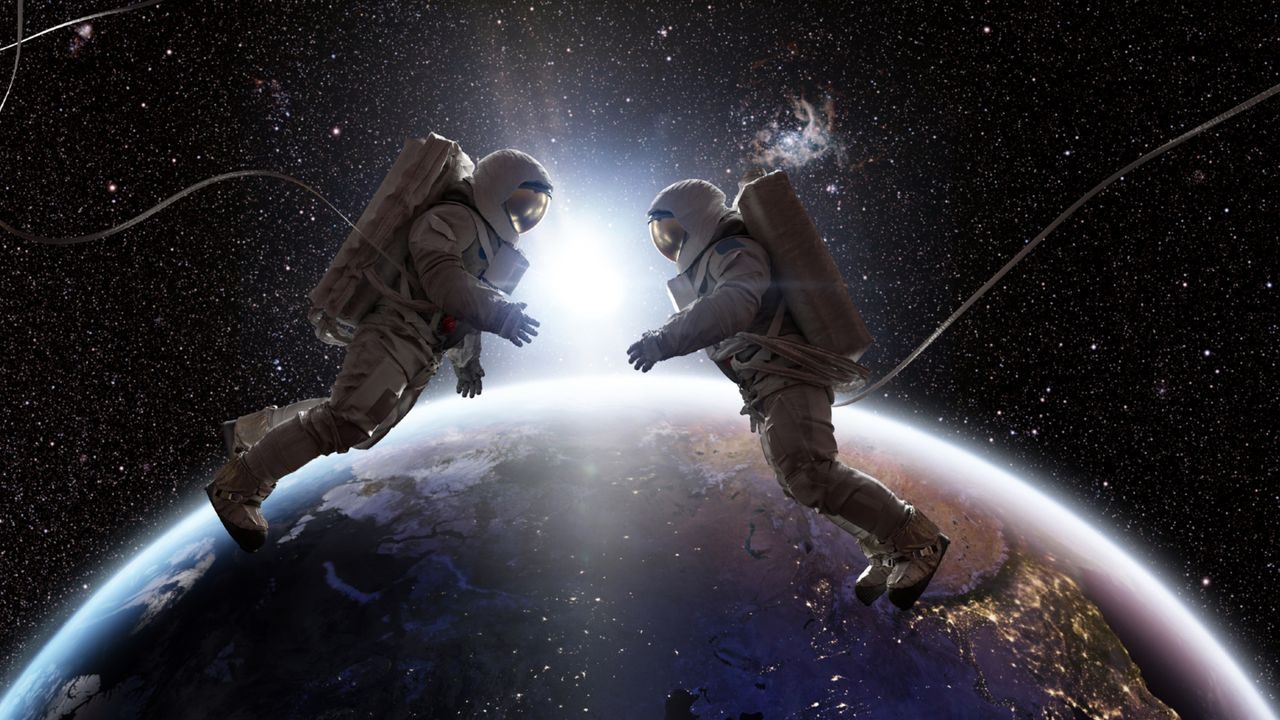
What happens to human reproduction when gravity disappears? A new study published in the journal Communications Biology on March 26 suggests the answer is deeply concerning — and it has major implications for humanity’s long-term ambitions in space.
Scientists examining sperm and egg cells in simulated microgravity found that the weightless environment created serious problems at nearly every stage of the reproductive process. Sperm navigation was disrupted. Fertilization became harder. And embryo development was compromised. The research used human, mouse, and pig cells, giving it a broader biological base than most studies of this kind.
For anyone who has ever wondered whether humans could one day build permanent colonies on the Moon, Mars, or beyond, this study offers a sobering reality check. Reproduction isn’t just one piece of the colonization puzzle — it’s the foundation of everything.
What the Study Actually Found
The researchers didn’t send anything into orbit. Instead, they used simulated microgravity — a ground-based method of replicating the near-weightless conditions astronauts experience in space — to observe how reproductive cells behave without the pull of Earth’s gravity.
The results pointed to problems across multiple stages of reproduction. Sperm struggled to navigate properly in the microgravity environment, which would make reaching and fertilizing an egg far more difficult. When fertilization did occur, the process itself was hampered. And even when embryos began to form, their development was affected.
The fact that these findings held across three different species — human, mouse, and pig — lends the results additional weight. It suggests this isn’t an isolated quirk of one organism’s biology. It may reflect something more fundamental about how reproductive biology depends on gravitational forces that life on Earth has evolved with for billions of years.
Why Microgravity Is So Disruptive to Fertility
Gravity is so constant a presence in our lives that it’s easy to forget biology has been shaped around it. Cell movement, fluid dynamics, and the mechanical signals that guide development all operate in an environment where gravity is a given.
Remove it, and the rules change. Sperm cells rely on coordinated movement to reach an egg — and that movement appears to be thrown off in microgravity conditions. The fertilization process itself involves precise biochemical and physical steps, and disrupting the physical environment can cascade into disruptions at the cellular level.
Embryo development is particularly sensitive. Early-stage embryos are undergoing rapid cell division and differentiation, processes that may depend on cues — including physical and gravitational ones — that simply aren’t present in space.
The Key Findings at a Glance
| Reproductive Stage | Effect Observed in Simulated Microgravity | Species Studied |
|---|---|---|
| Sperm navigation | Hampered — sperm struggled to move effectively | Human, mouse, pig |
| Fertilization | Reduced success rate | Human, mouse, pig |
| Embryo development | Compromised development observed | Human, mouse, pig |
The breadth of the disruption is what makes this study stand out. It’s not just one problem at one stage. The challenges appear to compound across the entire reproductive chain.
- Sperm cells lose navigational effectiveness in simulated weightlessness
- The fertilization process itself becomes less reliable
- Even if fertilization occurs, embryo development faces additional hurdles
- Findings were consistent across human, mouse, and pig biological models
- The study was published in Communications Biology on March 26
What This Means for the Future of Space Colonization
Dreams of permanent human settlements beyond Earth — whether on the Moon, Mars, or space stations — depend on one unavoidable biological fact: humans must be able to reproduce. A colony that cannot sustain its population through natural birth is not really a colony. It’s a temporary outpost.
This study raises serious questions about whether that kind of self-sustaining settlement is biologically possible in a low-gravity or zero-gravity environment without significant medical intervention. The challenges identified — disrupted sperm movement, reduced fertilization, impaired embryo development — aren’t small inconveniences. They strike at the core of what reproduction requires.
Researchers and space agencies planning long-duration missions or permanent off-world habitats will need to grapple with these findings. The question of whether artificial gravity, assisted reproduction technologies, or other interventions could overcome these barriers remains open — but the study makes clear that the barriers are real and significant.
It also raises ethical dimensions that the scientific community is only beginning to consider. If natural reproduction in space proves extremely difficult or impossible, what alternatives exist? And what are the implications of those alternatives for future generations born off-world?
Where the Research Goes From Here
This study used simulated microgravity rather than conditions in actual space, which means real-world results could differ — potentially for better or worse. Ground-based simulations are valuable tools, but they are approximations. Follow-up research conducted in orbit or aboard the International Space Station would provide a more definitive picture.
Scientists are also likely to investigate whether any aspects of the reproductive process are more resilient to microgravity than others, and whether interventions at specific stages could meaningfully improve outcomes. The multi-species approach used in this study gives researchers a useful comparative framework to build on.
For now, the findings serve as a clear signal that reproductive biology must be treated as a central — not secondary — concern in the planning of any long-term human presence in space. The ambition to become a multi-planetary species is real. But so, apparently, are the biological obstacles standing in the way.
Frequently Asked Questions
What did the new study find about reproduction in space?
The study found that simulated microgravity hampered sperm navigation, reduced fertilization success, and compromised embryo development across human, mouse, and pig cells.
Where was this study published?
The research was published on March 26 in the journal Communications Biology.
Did the study use actual space conditions?
No — the researchers used simulated microgravity, a ground-based method of replicating the conditions astronauts experience in space, rather than conducting experiments in orbit.
Which species were included in the research?
The study examined reproductive cells from humans, mice, and pigs, giving the findings a broader biological base than single-species studies.
Does this mean humans definitely cannot reproduce in space?
The study identifies serious challenges at multiple reproductive stages, but whether these obstacles can be overcome through medical intervention or other means has not yet been confirmed by this research.
Why does this matter for space colonization?
Any permanent human colony beyond Earth would need to sustain its population through reproduction — making the fertility challenges identified in this study a fundamental obstacle to long-term space settlement.


Leave a Reply