
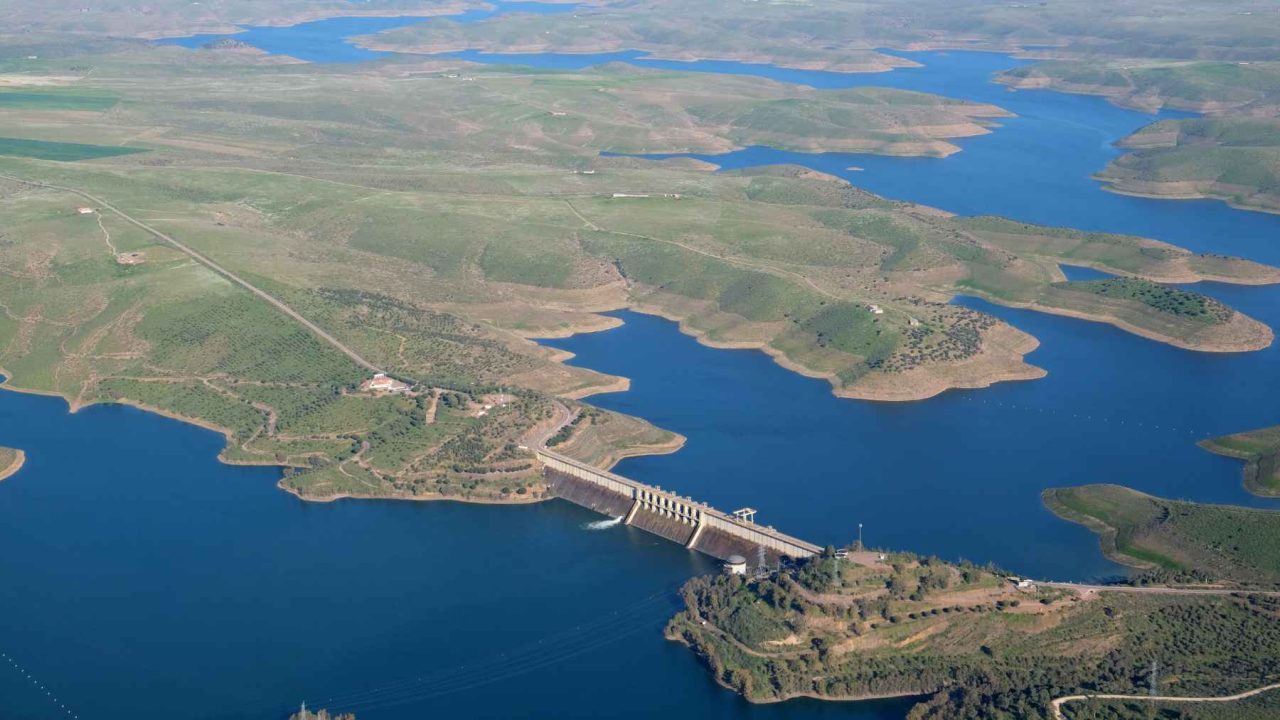
In its 35 years of operation, Spain’s largest reservoir has opened its floodgates just four times. That alone tells you how extraordinary the moment was when La Serena reservoir let the water run on February 9 — and what it says about the scale of rainfall battering the Iberian Peninsula.
The release wasn’t a malfunction or an emergency. It was a carefully managed decision, made once the reservoir climbed to roughly 92 percent of its total capacity — a level that demanded action to protect both the dam infrastructure and the river communities downstream.
For a country that has spent decades managing chronic drought and water scarcity, watching Spain’s biggest reservoir spill over is a striking sight. But it also raises real questions about what happens when too much water arrives all at once.
What Actually Happened at La Serena Reservoir
Around midday on Monday, February 9, technicians from the Confederación Hidrográfica del Guadiana authorized the opening of four floodgates at La Serena reservoir in western Extremadura. At that point, the reservoir was holding approximately 2,981 cubic hectometers of water — just shy of its maximum capacity of around 3,219 cubic hectometers.
Rather than releasing water directly into the wider Guadiana River system, officials directed the flow toward the nearby Zújar reservoir in what they described as an internal transfer. The controlled release moved water at a rate of close to 180 cubic meters per second.
Officials described the move as a safety measure — creating headroom for additional rainfall while keeping river levels manageable. Weeks of powerful Atlantic storms had driven the reservoir to a point where holding more water without releasing any carried its own risks.
Why La Serena Is Unlike Any Other Reservoir in Spain
La Serena isn’t just the largest reservoir in Spain — it ranks as the third largest in all of Europe, behind only Portugal’s Alqueva reservoir and Greece’s Kremasta reservoir. That context matters. When a structure of this scale reaches near-capacity, the decisions made around it ripple across an enormous geographic and hydrological area.
The reservoir spreads across nearly 14,000 hectares in Extremadura and plays a central role in regulating the flow of the Guadiana River. Its sheer size means it acts as a buffer for the entire region — absorbing heavy rainfall events and releasing water in controlled ways to protect farmland, towns, and ecosystems downstream.
That buffering role is exactly what was being managed on February 9. The floodgate opening wasn’t a failure of the system. It was the system working as designed — just under conditions rare enough that it’s only been needed four times since the reservoir entered service roughly 35 years ago.
The Numbers Behind a Historic Release
| Detail | Figure |
|---|---|
| Reservoir capacity at time of release | ~2,981 cubic hectometers |
| Maximum total capacity | ~3,219 cubic hectometers |
| Percentage full at release | ~92% |
| Release flow rate | ~180 cubic meters per second |
| Floodgates opened | 4 |
| Total surface area of reservoir | ~14,000 hectares |
| Times floodgates opened in 35 years | 4 |
| European ranking by size | 3rd largest |
| Destination of released water | Zújar reservoir |
| Managing authority | Confederación Hidrográfica del Guadiana |
The numbers make clear just how close La Serena was to its absolute limit. With only about 238 cubic hectometers of space remaining when the release was authorized, and Atlantic storms still active in the region, water managers had little margin to wait.
What This Means for the Region and the River
The Guadiana River runs through one of Spain’s most agriculturally significant regions. Extremadura depends heavily on water management for irrigation, livestock, and the ecosystems that support both. A sudden, uncontrolled overflow from a reservoir the size of La Serena could cause serious damage downstream — to crops, infrastructure, and communities that sit along the river’s path.
By routing the excess toward the Zújar reservoir rather than letting it run freely into the main river channel, officials kept the situation under tight control. The Zújar reservoir acts as a secondary holding point, adding another layer of protection for the broader system.
For residents and farmers in the area, the message from authorities was essentially: this is managed, not alarming. The floodgates are doing their job. But the rarity of this event — only the fourth time in 35 years — does underline how unusually wet the preceding weeks had been.
A Rare Event in a Region That Knows Drought Well
Spain’s relationship with water is complicated. Much of the country spends significant stretches of each year under drought conditions, with reservoirs in some basins sitting at dangerously low levels. The sight of La Serena — the country’s biggest reservoir — not just full but actively releasing water is a sharp contrast to the images of cracked riverbeds and depleted lakes that have dominated headlines in recent years.
That contrast is worth sitting with. The same Atlantic storm systems that can devastate communities with flooding are also refilling the water stores that Spain depends on for drinking water, agriculture, and power generation. Managing that balance — capturing enough without holding too much — is precisely what the Confederación Hidrográfica del Guadiana exists to do.
The February 9 release was, by that measure, a success. A historic one, but a controlled one.
Frequently Asked Questions
Why did La Serena reservoir open its floodgates?
The reservoir reached approximately 92 percent of its capacity following weeks of Atlantic storms, prompting water managers to authorize a controlled release to create room for additional rainfall and keep river levels safe.
Where was the released water directed?
Rather than flowing directly into the Guadiana River, the water was transferred to the nearby Zújar reservoir at a rate of around 180 cubic meters per second.
How rare is a floodgate opening at La Serena?
It has happened only four times in the reservoir’s approximately 35 years of service, making the February 9 event genuinely historic.
How large is La Serena reservoir?
La Serena has a maximum capacity of around 3,219 cubic hectometers and covers nearly 14,000 hectares, making it the largest reservoir in Spain and the third largest in Europe.
Which reservoirs are larger than La Serena in Europe?
According to the source, only Portugal’s Alqueva reservoir and Greece’s Kremasta reservoir are larger in Europe.
Who manages La Serena reservoir?
The reservoir is managed by the Confederación Hidrográfica del Guadiana, the Spanish river basin authority responsible for the Guadiana catchment area.



Leave a Reply