
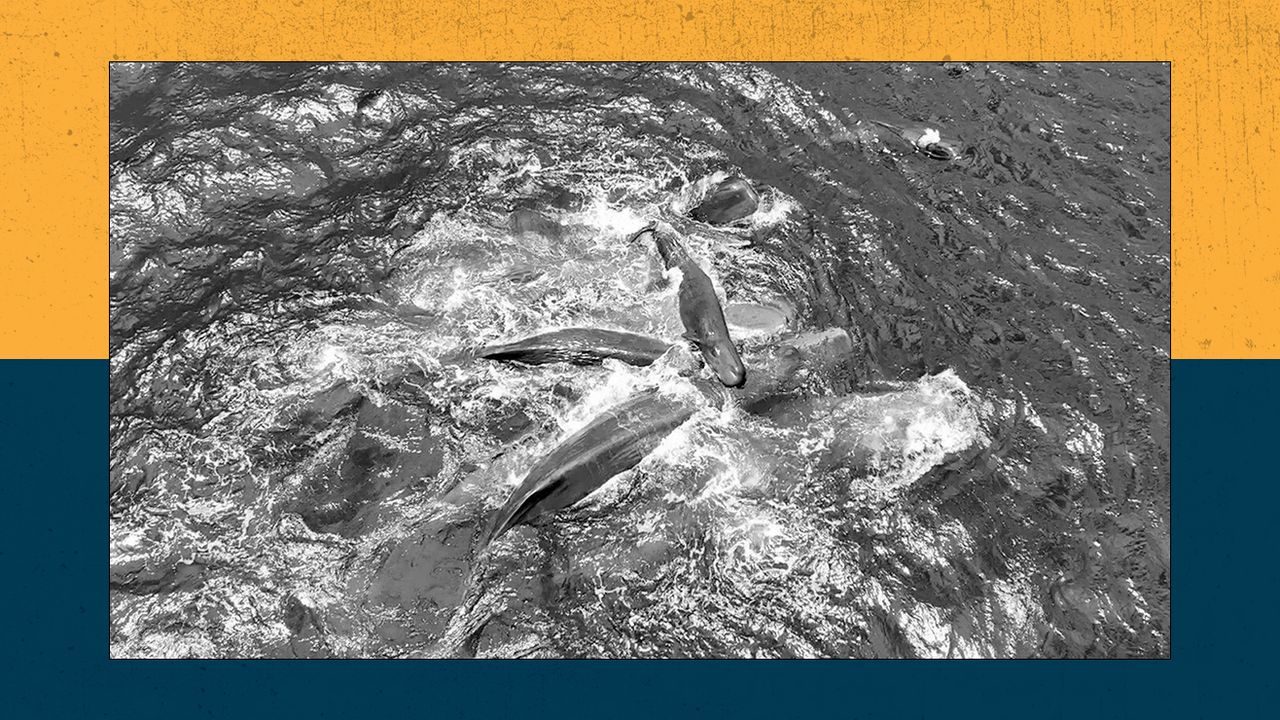
For the first time in recorded history, scientists have captured footage of a sperm whale giving birth — and what the cameras revealed goes far beyond the birth itself. Ten other females surrounded the mother, actively assisting in bringing the newborn into the world. It is a level of collective care that researchers had never before documented in any non-primate species.
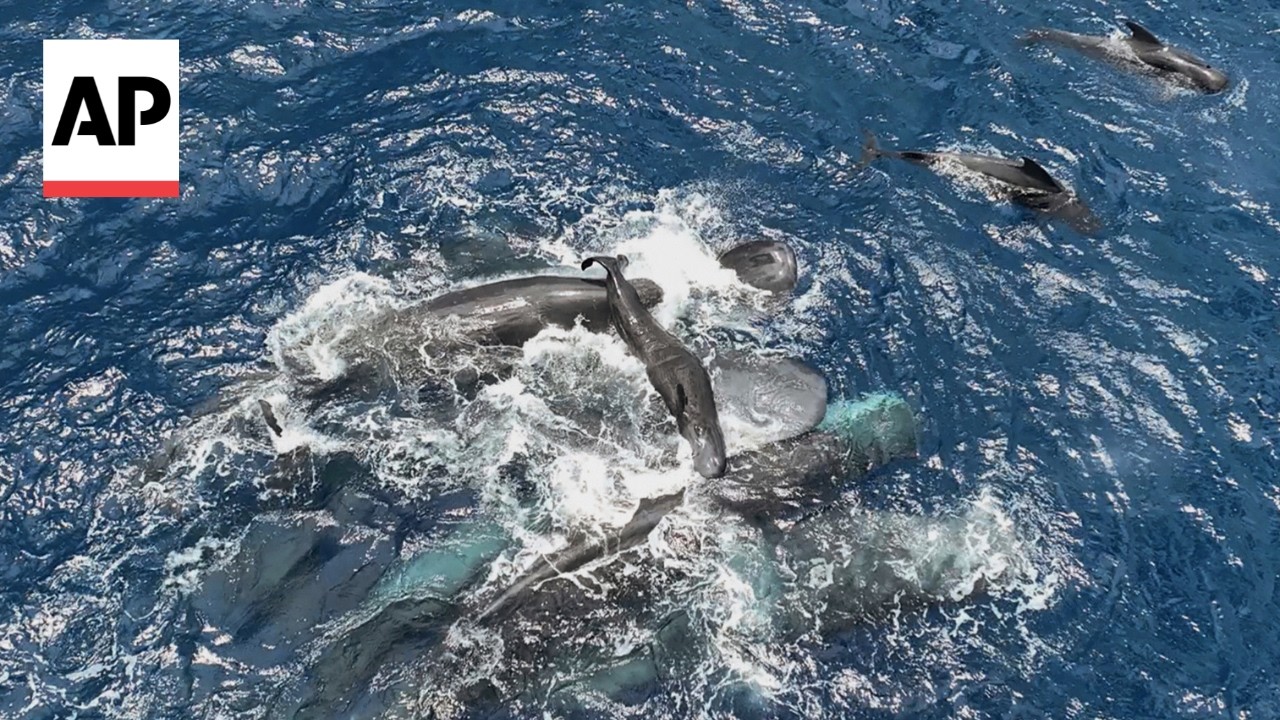
The footage, captured by airborne drones in July 2023, was recorded by researchers working with Project CETI. The images show the group of females lifting the newborn calf out of the water — a moment that marine biologists are calling unprecedented. Not just remarkable for what it shows, but for what it suggests about the inner social lives of one of the ocean’s most mysterious creatures.
This is the kind of discovery that quietly rewrites what we thought we knew. And it arrived in the same week that NASA confirmed it is using astronauts as medical test subjects in orbit — two stories that, taken together, say a lot about how far science is reaching right now.
What the Sperm Whale Birth Footage Actually Shows
Sperm whales are notoriously difficult to study. They dive deep, travel vast distances, and spend much of their lives in waters that are hard to monitor. That’s part of what makes this footage so significant — researchers were not only in the right place at the right time, they had the aerial technology to document it clearly.
What the drone cameras recorded was not a solitary birth. The mother was accompanied by at least 10 other females from her social unit, and those females were not passive bystanders. They actively participated, helping lift the calf above the water’s surface.
This kind of cooperative birth assistance — sometimes called “allomaternal care” — has been well documented in primates, including humans. But seeing it play out among sperm whales marks the first time this behavior has been confirmed in a non-primate species during an actual birth event. It raises immediate and profound questions: Is this behavior common? Do sperm whale groups routinely organize around births? And if so, what does that tell us about their cognitive and social complexity?
Those questions don’t yet have full answers. But the footage itself is now a landmark data point in cetacean research.
Why This Discovery Matters Beyond the Moment
Sperm whales already occupy a unique place in our understanding of animal intelligence. They communicate using complex patterns of clicks called codas, they form tight matrilineal social groups, and they have the largest brains of any animal on Earth. Project CETI — the organization behind this footage — is specifically focused on decoding sperm whale communication using machine learning and bioacoustics.
The birth footage adds a behavioral layer to that research. If sperm whales coordinate during something as critical and vulnerable as birth, it implies a level of social trust, communication, and possibly planning that science is only beginning to appreciate.
It also highlights how much we still don’t know about what happens beneath — and just above — the ocean’s surface.
At the Same Time: NASA Is Turning Astronauts Into Test Subjects
The sperm whale story wasn’t the only jaw-dropping development this week. NASA has confirmed that it is actively using astronauts as medical research subjects during spaceflight — a practice that raises both scientific and ethical questions worth paying attention to.
Space is one of the most hostile environments the human body has ever been asked to endure. Microgravity affects bone density, muscle mass, fluid distribution, vision, and immune function. Every long-duration mission is, in a very real sense, an experiment. What NASA is formalizing is the collection of that data in a more structured, deliberate way.
The implications are significant — not just for future deep-space missions to Mars or beyond, but for medicine on Earth. Research conducted on astronauts in orbit has historically produced insights into aging, muscle atrophy, and cardiovascular health that benefit patients who never leave the ground.
Two Stories, One Bigger Picture
It’s worth pausing to notice what these two stories have in common. Both involve pushing the limits of observation — using technology to see things that were previously invisible to science. Drones above the Atlantic capturing a whale birth. Biomedical sensors aboard the International Space Station tracking what happens to the human body in zero gravity.
Science, at its best, is exactly this: finding ways to look where no one has looked before, and being willing to be surprised by what’s there.
| Story | Key Detail | Why It’s a First |
|---|---|---|
| Sperm Whale Birth | Filmed by airborne drones in July 2023, assisted by 10 females | First documented cooperative birth assistance in a non-primate species |
| NASA Astronaut Research | Astronauts used as structured medical test subjects during spaceflight | Formalizes data collection on human physiology in microgravity |
What Researchers Are Watching Next
For Project CETI, the birth footage is one piece of a much larger puzzle. The organization’s broader mission is to decode sperm whale communication — and behavioral data like this helps build the context for interpreting what those clicks and codas might mean. Future drone monitoring of sperm whale social units could reveal whether cooperative births are routine or rare.
On the NASA side, the question is how this data gets used — and how astronaut-derived medical research eventually reaches clinical applications for people on Earth. Both fields are moving fast, and both are producing the kind of results that tend to arrive without warning.
That’s what makes this week’s science worth paying attention to. Not because everything is solved, but because the edges of what we know just got a little wider.
Frequently Asked Questions
Who filmed the sperm whale birth?
The birth was captured by researchers working with Project CETI, using airborne drones in July 2023.
Why is this sperm whale footage considered historic?
It is the first time cooperative birth assistance — where other females actively helped during the delivery — has been documented in a non-primate species.
How many whales were involved in the birth?
At least 10 other females from the mother’s social unit were present and actively assisted in lifting the newborn calf out of the water.
What is Project CETI?
Project CETI is a research organization focused on decoding sperm whale communication using bioacoustics and machine learning technology.
What is NASA doing with astronaut health data?
NASA is using astronauts as structured medical research subjects during spaceflight to study how the human body responds to the conditions of space, including microgravity.
Does space medicine research benefit people on Earth?
Research conducted on astronauts has historically generated insights into aging, muscle atrophy, and cardiovascular health that have practical medical applications for non-astronauts.




Leave a Reply