
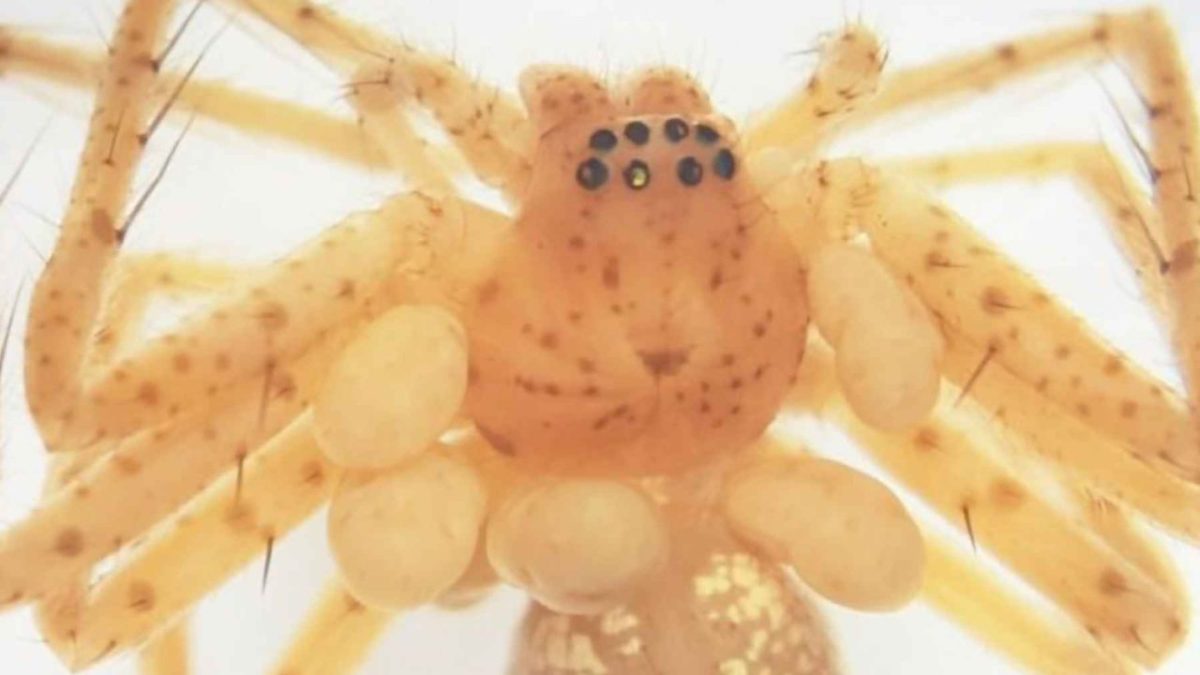
What looked like a delicate pearl necklace draped around a tiny spider’s body turned out to be something far stranger — and far more unsettling. Each pale, bead-like structure clinging to the spider was alive. They were parasitic mite larvae, feeding on their host, and they belong to a species that scientists had never formally described before.
The discovery, made at a research institute in São Paulo, Brazil, has given scientists a new species to add to the scientific record — and raised fresh questions about just how much hidden parasitic life exists on the spiders we think we already know.
For most people, a spider is already an uncomfortable enough creature. The idea that spiders themselves can be quietly overwhelmed by parasites they can’t shake off adds a whole new layer to that discomfort.
The Spider in the Jar That Changed Everything
The story began not in the field, but in a laboratory storage room. Researchers at the Zoological Collections Laboratory at Butantan Institute in São Paulo were doing something fairly routine — sorting through jars of preserved spiders and scorpions. It’s the kind of methodical, unglamorous work that makes up a large part of scientific discovery.
One specimen stopped them cold. A juvenile spider, just a few millimeters long, appeared to be wearing a ring of pale beads around its body. Under normal viewing conditions, the beads almost looked decorative — like something delicate and ornamental.
Under a microscope, the picture changed completely. Those beads were mite larvae. They were parasitic, they were attached to the spider’s body, and they were a species that had never been formally named or described in scientific literature.
The new species was named Araneothrombium brasiliensis. It belongs to a group of mites with a genuinely unusual life cycle: as larvae, they are parasites, latching onto host animals to feed. As adults, they become free-living predators — no longer dependent on a host at all.
Why This Discovery Matters Beyond the “Gross” Factor
It would be easy to file this story under “weird nature facts” and move on. But the scientific significance here is real and worth understanding.
Araneothrombium brasiliensis is the first member of its family ever recorded in Brazil. It is also only the second spider-parasitic mite species ever documented in the entire country. That’s a striking gap in the scientific record for one of the most biodiverse nations on Earth.
The discovery also extends the known geographic range of the genus Araneothrombium significantly. Before this find, the genus had only been confirmed in Costa Rica. Now it is known to exist in another part of the Neotropical region entirely, suggesting the group may be far more widespread than previously understood.
In other words, the parasites weren’t just unknown in Brazil — the entire genus was thought to be confined to a different country. This single jar of preserved spiders has redrawn part of the map.
Key Facts About the New Species at a Glance
| Detail | Information |
|---|---|
| Species name | Araneothrombium brasiliensis |
| Type of organism | Parasitic mite (larvae stage) |
| Host | Juvenile spider (a few millimeters long) |
| Discovery location | Butantan Institute, São Paulo, Brazil |
| First record in Brazil? | Yes — first of its family recorded in the country |
| Only second of its kind in Brazil? | Yes — second spider-parasitic mite species documented in Brazil |
| Previously known range of genus | Costa Rica only |
| Adult behavior | Free-living predators (not parasitic as adults) |
- The larvae attach to the spider’s body in a ring pattern, resembling beads or pearls
- The species belongs to a family of mites in which only the larval stage is parasitic
- The find expands the known range of the genus Araneothrombium into South America
- The discovery came from museum collection specimens, not live field observation
What This Tells Us About Hidden Parasitic Life
One of the quieter implications of this discovery is what it says about how much we still don’t know — even about species we’ve already collected and stored in jars.
The spider carrying these mite larvae had been sitting in a museum collection at Butantan Institute. It wasn’t a new catch from the wild. It was already in the system, already preserved, already part of an existing collection. The parasite on it had simply never been examined closely enough to identify.
Researchers who study parasitic mites argue that this kind of oversight is common. Parasites that attach to small invertebrates are easy to miss, especially when the host itself is tiny. A juvenile spider measured in millimeters, carrying larvae that appear to be decorative beads — it’s the kind of thing that gets catalogued and shelved without a second look.
The fact that this is only the second spider-parasitic mite species ever recorded in Brazil also points to a broader gap. Brazil is home to an extraordinary range of spider species, many of them still being described. The parasites living on those spiders are even less studied. Scientists note that the true diversity of spider-parasitic mites in the Neotropical region is almost certainly far greater than the current record suggests.
What Researchers Are Watching Next
The extension of Araneothrombium‘s range from Costa Rica into Brazil raises an obvious follow-up question: where else does this genus exist that we simply haven’t looked yet?
Museum collections across South America likely hold specimens that carry unexamined parasites. The Butantan Institute discovery suggests that a closer look at already-collected material — not just new field expeditions — could yield significant new species records without leaving the building.
For the genus Araneothrombium specifically, researchers will likely now investigate whether it appears in other parts of the Neotropical region between Costa Rica and Brazil, filling in what is currently a large and unexplained geographic gap in the record.
The pearl necklace spider, as it will almost certainly be remembered informally, is a reminder that nature’s most surprising discoveries don’t always come from remote jungles or deep oceans. Sometimes they’re already sitting on a shelf, waiting for someone to look a little closer.
Frequently Asked Questions
What is Araneothrombium brasiliensis?
It is a newly described species of parasitic mite whose larvae were found attached to a juvenile spider in Brazil. As adults, members of this group become free-living predators rather than parasites.
Where was the spider with the parasitic mites discovered?
The specimen was found during a review of preserved collections at the Zoological Collections Laboratory at Butantan Institute in São Paulo, Brazil.
Why does this discovery matter scientifically?
It is the first member of its mite family ever recorded in Brazil and only the second spider-parasitic mite species documented in the country. It also extends the known range of the genus Araneothrombium beyond Costa Rica for the first time.
Are these mites dangerous to humans?
The mites described are parasitic specifically on spiders during their larval stage.
How did the mites come to look like a pearl necklace?
The larvae attached themselves to the spider’s body in a ring-like arrangement. Their pale, rounded appearance made them resemble beads or pearls when viewed without magnification.
Could there be more undescribed parasitic mite species on Brazilian spiders?
Based on the findings, researchers suggest the true diversity of spider-parasitic mites in the Neotropical region is likely far greater than current records show, with many specimens potentially sitting unexamined in museum collections.




Leave a Reply