
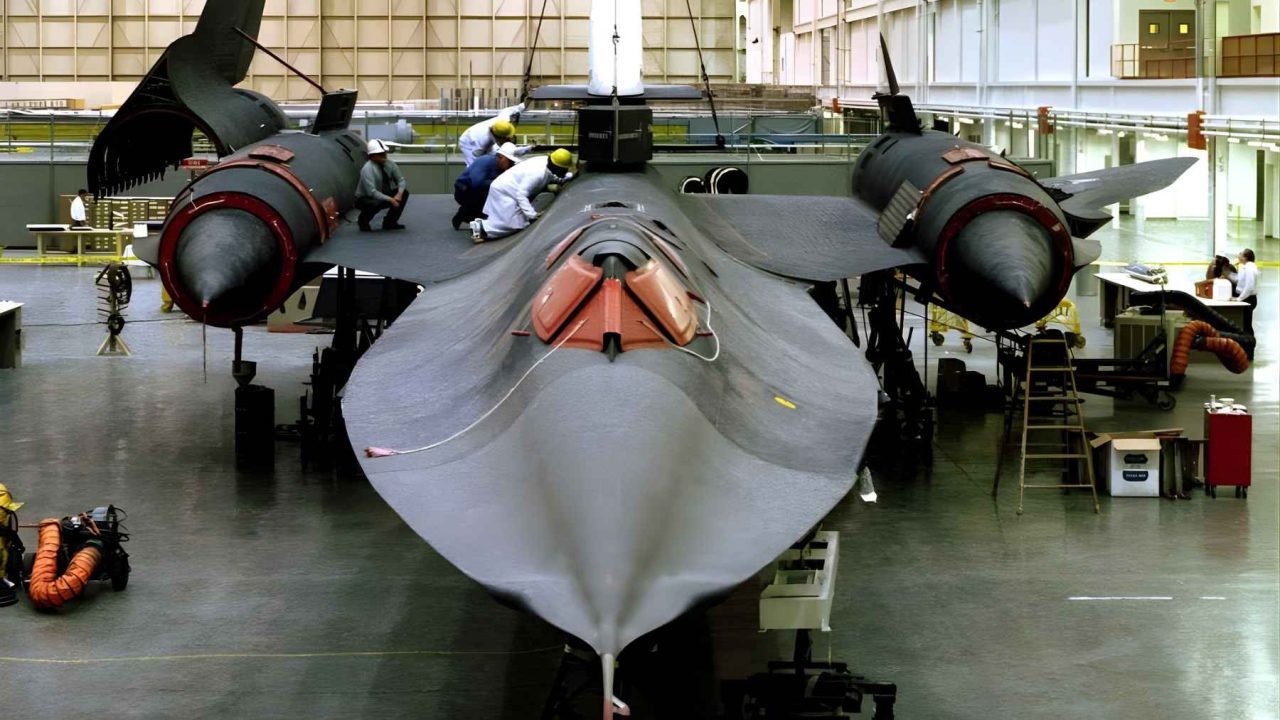
What if a plane landed before it ever took off — at least according to the calendar? That is exactly what happened during a transpacific flight by the SR-71 Blackbird, one of the most extraordinary aircraft ever built. A crew departed Japan on a Saturday morning and touched down in California on a Friday afternoon. No tricks, no science fiction. Just extreme speed, geography, and the strange arithmetic of time zones.
The story was recently retold by former SR-71 pilot David Peters, who flew the mission while stationed at Kadena Air Base in Okinawa. It is a reminder that the Blackbird was not just fast — it was so fast that it could outrun ordinary human experience of time itself.
For anyone who grew up hearing about the SR-71 as a Cold War legend, Peters’ account puts the aircraft’s capabilities into terms that are almost impossible to wrap your head around — and then somehow makes them feel completely real.
How the SR-71 Blackbird Made Time Run Backwards
The mechanics behind the “time travel” flight are straightforward once you understand them, but the effect is still startling. Japan sits far to the west of California, placing it well ahead on the global clock. When it is Saturday morning in Okinawa, it is still Friday in much of the United States.
The SR-71 Blackbird could cruise above 85,000 feet at more than three times the speed of sound. Flying eastward across the Pacific at that velocity, the aircraft effectively chased the sun — and the clock — backward across the International Date Line. The jet crossed so much longitude so quickly that it arrived in California still on the previous calendar day.
According to Peters, the crew had drinks together on a Friday evening before the mission, then reported early the next morning — Saturday — for the transpacific flight. The route involved refueling from tanker aircraft along the way before the final sprint toward Beale Air Force Base in California. They landed on Friday afternoon, local time. Saturday had, in a sense, been erased from their day.
It was not a glitch. It was physics meeting geography at Mach 3-plus.
The Aircraft Behind the Story: What Made the SR-71 Different
The SR-71 Blackbird was not a fighter jet or a bomber. It was a strategic reconnaissance aircraft — a spy plane — built during the Cold War to gather intelligence at speeds and altitudes that made it virtually untouchable. No missile ever successfully shot one down in operational service.
Its performance figures remain jaw-dropping even by modern standards:
| SR-71 Blackbird — Key Performance Facts | Detail |
|---|---|
| Cruising Altitude | Above 85,000 feet |
| Top Speed | More than three times the speed of sound (Mach 3+) |
| Mission Type | Strategic reconnaissance (spy plane) |
| Notable Base (Pacific) | Kadena Air Base, Okinawa, Japan |
| U.S. Arrival Base | Beale Air Force Base, California |
| Transpacific Refueling | Mid-air, via tanker aircraft |
The aircraft operated during some of the tensest decades of the Cold War, and its legacy continues to shape conversations about military intelligence and aerial surveillance technology today. It remains a benchmark against which modern reconnaissance platforms are measured.
Why the “Friday Arrival” Moment Captures Something Bigger
Stories like Peters’ do more than entertain — they illustrate something that textbooks struggle to communicate. The SR-71 was not just an engineering achievement. It was a machine that operated at the edges of what was physically possible for a piloted aircraft, and the crew members who flew it experienced the world in ways most people never will.
Crossing the Pacific fast enough to arrive on the previous calendar day is not something a commercial airliner can do. Even the fastest modern passenger jets are nowhere near Mach 3. The Blackbird existed in a category almost entirely its own.
There is also something quietly human about the detail Peters included: the crew grabbed drinks on Friday night before the Saturday morning mission. That small, ordinary moment makes the time-bending arrival all the more striking. They socialized on a Friday, flew on a Saturday, and landed on a Friday — all within the span of a single mission.
The Cold War Legacy That Still Matters
The SR-71 program is long retired, but the aircraft’s influence has not faded. Military planners, aerospace engineers, and defense analysts still reference the Blackbird when discussing high-speed reconnaissance and the future of intelligence-gathering platforms. The debates it sparks — about speed, altitude, survivability, and the value of crewed versus uncrewed spy aircraft — remain live questions in defense circles.
Peters’ retelling of the Japan-to-California flight is part of a broader effort by former pilots and crew members to document what flying the SR-71 was actually like — not just the statistics, but the experience. Those firsthand accounts are becoming increasingly valuable as the generation that flew the aircraft grows older.
The Blackbird may be in museums now, but the stories it generated are still very much alive.
What This Story Tells Us About Speed, Time, and Human Perception
Most of us experience time zones as an inconvenience — jet lag after a long flight, a conference call at an awkward hour. The SR-71 mission flips that experience entirely. At sufficient speed, moving eastward across the globe does not just shift the clock. It can actually roll the calendar backward by a full day.
That is not a metaphor. It happened. A crew left on Saturday and arrived on Friday. The math works, and the Blackbird was the machine that made the math real.
It is the kind of fact that sounds like a riddle — and turns out to be history.
Frequently Asked Questions
How did the SR-71 Blackbird arrive in California on Friday after leaving Japan on Saturday?
The SR-71 flew eastward across the Pacific at more than three times the speed of sound, crossing the International Date Line fast enough that it arrived in California while it was still Friday there, even though the crew had departed Okinawa on Saturday morning.
Who told this story about the SR-71 time travel flight?
The account was retold by former SR-71 pilot David Peters, who flew the mission while stationed at Kadena Air Base in Okinawa, Japan.
How high and how fast did the SR-71 Blackbird fly?
According to the source, the SR-71 could cruise above 85,000 feet at more than three times the speed of sound.
Where did the transpacific SR-71 flight depart from and land?
The flight departed from Kadena Air Base in Okinawa, Japan, and landed at Beale Air Force Base in California, with mid-air refueling from tanker aircraft along the route.
Was the SR-71 a fighter jet or a bomber?
Neither — the SR-71 Blackbird was a strategic reconnaissance aircraft, meaning it was designed to gather intelligence rather than engage in combat.
Is the SR-71 Blackbird still in active service?
The source does not confirm current operational status, but notes that the aircraft’s legacy continues to shape debates about military intelligence and reconnaissance today, suggesting it is no longer in active service.


Leave a Reply