
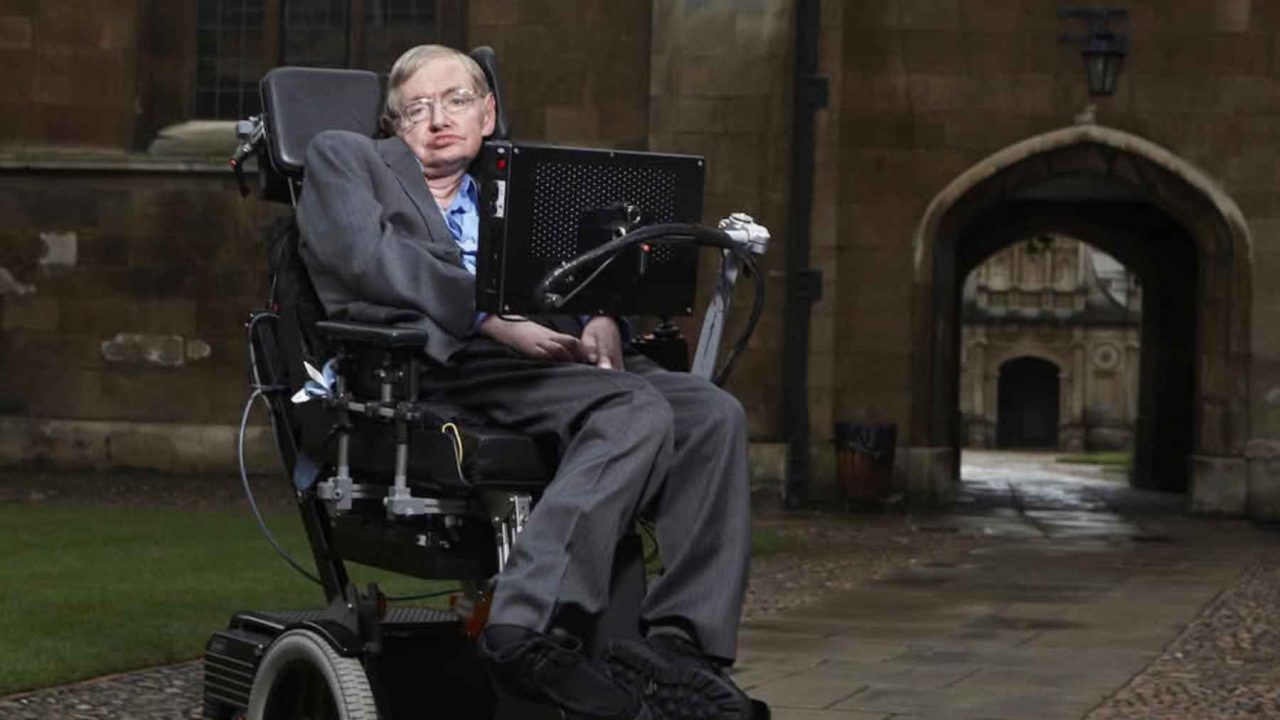
One of the most recognized scientific minds of the modern era built his legacy not through physical strength or conventional ability, but through extraordinary mental focus and an almost unshakeable calm. Stephen Hawking, who spent decades working under the severe physical constraints of ALS, became living proof that the quietest, most composed minds can carry the heaviest intellectual weight.
The quote attributed to Hawking — that calm and peaceful people have the strongest and most expressive minds — resonates precisely because his own life illustrated it so clearly. Here was a man who could not move freely, who spoke through a computerized voice, and who still managed to reshape how humanity understands black holes, time, and the structure of the universe itself.
That combination of personal limitation and intellectual output is what makes his story worth returning to, even now. It is not just biography. It is a lesson about what the mind can do when it is given stillness rather than noise.
How Stephen Hawking Became One of Science’s Most Defining Voices
Hawking’s academic path began at University College Oxford, where he studied natural science and finished with first-class honors in physics. From there, he moved to Trinity Hall, Cambridge, where his doctoral research focused on expanding universes — work that would set the direction for everything that followed.
His rise through the academic world was fast and unconventional. In 1979, he was appointed Lucasian Professor of Mathematics at Cambridge, one of the most celebrated positions in the university’s history. The role had previously been held by Isaac Newton. That context alone signals how seriously the scientific community regarded his contributions.
What made his career even more remarkable was the timeline of his illness. Hawking was diagnosed with ALS at just 21 years old. The disease progressively damages nerve cells, gradually stripping away movement and, eventually, natural speech. Doctors at the time did not expect him to survive long. Instead, he remained active in research and public life for more than five decades.
His computerized voice — the one generated by a speech-synthesis system after he lost the ability to speak naturally — became one of the most recognizable sounds in modern science. It appeared in lectures, documentaries, television programs, and interviews. Far from limiting his reach, it somehow amplified it.
What His Work Actually Changed
Hawking’s contributions to physics were not abstract curiosities. They helped rewrite modern cosmology — the branch of science concerned with the origin, structure, and eventual fate of the universe.
His research on expanding universes, developed during his time at Cambridge, formed the foundation of a career that would go on to address some of the deepest questions in theoretical physics. His work on black holes, in particular, challenged long-held assumptions about what happens at the boundary between observable matter and the unknown.
Beyond the academic world, Hawking made a deliberate effort to bring these ideas to a general audience. His books transformed complex concepts about time, gravity, and cosmology into something that felt approachable. Ideas that might otherwise remain locked inside university journals became questions that ordinary readers could engage with and ask for themselves.
The Quiet Power Behind the Public Figure
There is something worth sitting with in the idea that calm and peaceful people carry the strongest minds. In a culture that often rewards loudness, speed, and constant output, Hawking’s life ran on a different frequency entirely.
He could not move quickly. He could not speak without the aid of technology. Every response, every lecture, every published idea required patience — both from him and from those around him. And yet the quality of thought that emerged from those constraints stands alongside the greatest scientific work of the twentieth century.
Observers who studied his life and work have noted that his ability to focus, to hold complex problems in his mind over long periods without distraction, appeared to be directly connected to the stillness his condition required. The limitations that might have silenced another person seemed, in his case, to have deepened the thinking.
Key Facts About Stephen Hawking’s Life and Career
| Detail | Information |
|---|---|
| Undergraduate institution | University College Oxford |
| Undergraduate degree | Natural science, first-class honors in physics |
| Graduate institution | Trinity Hall, Cambridge |
| Doctoral research focus | Expanding universes |
| Age at ALS diagnosis | 21 years old |
| Appointed Lucasian Professor of Mathematics | 1979 |
| Years active in research and public life after diagnosis | More than five decades |
- His work helped rewrite modern cosmology and black hole physics
- He communicated through a computerized voice after losing natural speech
- His books made complex ideas about time and gravity accessible to general readers
- The Lucasian Professor of Mathematics post is one of Cambridge’s most celebrated academic positions
Why This Story Still Matters to Readers Today
Hawking’s life does not belong only to physics students or science enthusiasts. The broader message — that mental composure and inner stillness can produce extraordinary results — applies well beyond academia.
In a world that tends to measure productivity by volume and speed, his example points in a different direction. The deepest thinking, the kind that actually changes how people understand reality, often comes from minds that have learned to be quiet. That is not a comfortable idea for a culture built around noise and urgency. But it is a well-supported one.
His decades of output under conditions that would have ended most careers serve as a durable argument that the quality of attention matters far more than the circumstances surrounding it. The mind, when focused and calm, reaches further than most people expect.
Frequently Asked Questions
Where did Stephen Hawking study as an undergraduate?
Hawking studied natural science at University College Oxford and graduated with first-class honors in physics.
What was Hawking’s doctoral research about?
His doctoral research at Trinity Hall, Cambridge focused on expanding universes, which became the foundation of his influential scientific career.
When was Hawking diagnosed with ALS?
He was diagnosed with ALS at the age of 21. The disease progressively damages nerve cells and gradually took away his movement and natural speech.
What is the Lucasian Professor of Mathematics?
It is one of Cambridge University’s most celebrated academic posts, which Hawking was appointed to in 1979.
How did Hawking communicate after losing his natural speech?
He used a computerized voice generated by a speech-synthesis system, which became one of the most recognizable sounds associated with modern science.
Did Hawking write books for general audiences?
Yes. His books were deliberately written to make ideas about time, gravity, and the universe accessible to readers outside of academic science.



Leave a Reply