
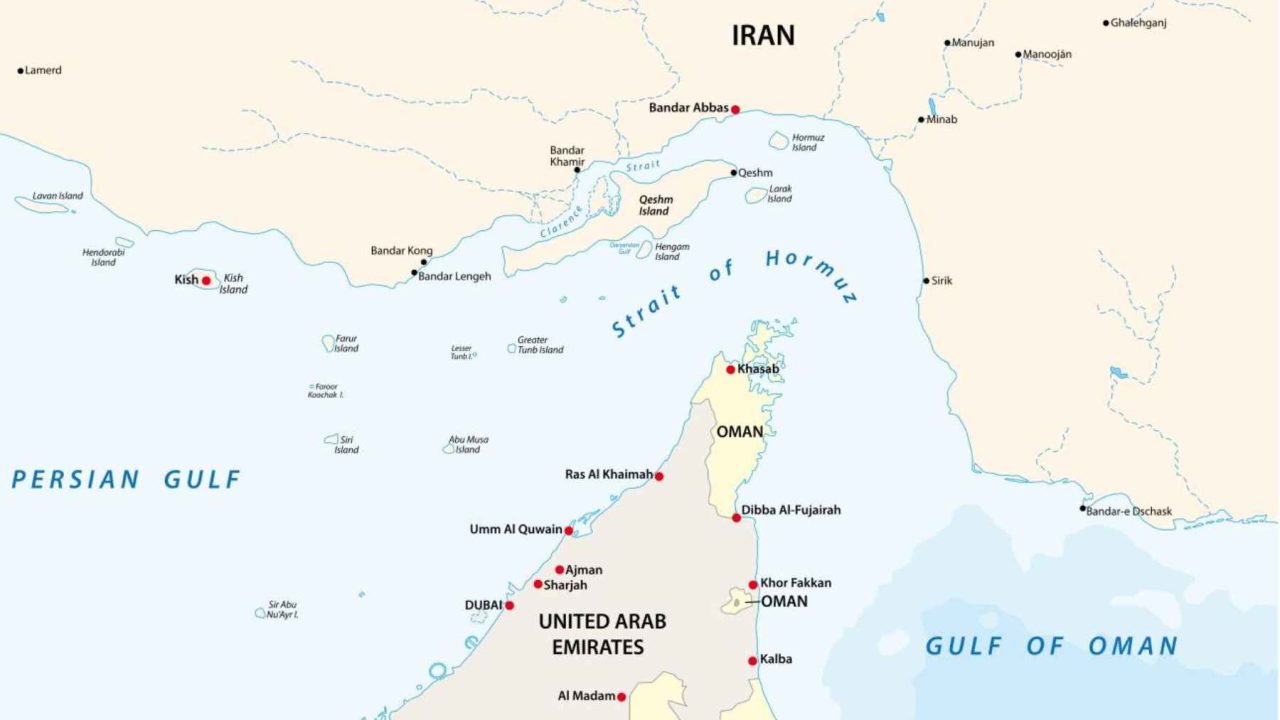
Just days ago, an average of 95 ships passed through the Strait of Hormuz every single day — roughly 55 of them oil tankers — making it one of the busiest and most consequential sea lanes on the planet. Now, a sharp drop in that traffic is raising alarms that what might seem like a distant geopolitical problem could quickly become something millions of ordinary people feel at the gas pump, the grocery store, and beyond.
The Strait of Hormuz sits between Iran and Oman at the mouth of the Persian Gulf. It is narrow, it is crowded, and there is essentially no practical alternative route for the enormous volume of oil and cargo that flows through it. When ships stop moving through that passage, the effects do not stay contained to the region — they travel outward through energy markets and supply chains with surprising speed.
The core concern is straightforward: when traffic slows at a maritime chokepoint, the shock can reach everyday goods within days, not months. That timeline is what makes the current situation worth paying close attention to.
What a Maritime Chokepoint Actually Is — and Why It Matters So Much
The term “maritime chokepoint” refers to a narrow passage or canal that a large share of global shipping must use to move between major markets. These are not just busy waterways — they are structural bottlenecks in the global economy, places where geography forces enormous volumes of trade into a single, vulnerable corridor.
The Strait of Hormuz is widely considered the most critical of these passages. Roughly a fifth of the world’s oil supply passes through it. There is no easy detour. If a vessel cannot transit the strait, the alternative route adds thousands of nautical miles, dramatically increasing fuel costs, delivery times, and the risk of cargo spoilage.
That concentration of risk is precisely the problem. A single disruption — whether from conflict, threat of conflict, or even the perception of danger — can trigger cascading effects far removed from the original trouble spot. Insurance premiums rise. Shipping companies reroute or delay. Cargo backs up. Prices follow.
The Numbers Behind the Strait of Hormuz Traffic Drop
The figures that were considered normal just days ago illustrate how much is at stake when that flow is interrupted.
| Metric | Recent Average (Before Drop) |
|---|---|
| Total ships per day through the Strait of Hormuz | Approximately 95 |
| Oil tankers per day | Approximately 55 |
| Share of global oil supply transiting the strait | Roughly one-fifth of world supply |
Those are not abstract statistics. Each of those tankers represents a delivery of crude oil or refined fuel destined for refineries and markets across Asia, Europe, and beyond. When the daily count falls sharply, the downstream effects begin almost immediately.
- Energy markets react first — oil prices respond to supply uncertainty before a single barrel is actually delayed
- Shipping insurance costs rise — carriers operating in or near conflict zones face dramatically higher premiums, which get passed along
- Cargo rerouting adds time and cost — longer alternative routes consume more fuel and delay deliveries
- Spoilage risk increases — perishable goods and time-sensitive cargo suffer when voyages are extended unexpectedly
Why This Distant Crisis Feels Closer Than It Should
Most people do not think about sea lanes when they fill up their car or buy groceries. That invisibility is exactly why disruptions at places like the Strait of Hormuz tend to catch people off guard when prices suddenly shift.
Global trade is built on the assumption that these narrow passages stay open. The entire logistics architecture — shipping schedules, refinery delivery windows, just-in-time manufacturing supply chains — is calibrated around reliable transit through a small number of critical waterways. When that reliability is questioned, the system does not have much slack to absorb the shock.
Observers have noted that the speed of market response to chokepoint disruptions has increased in recent years, as supply chains have become leaner and more globally integrated. There is less buffer. When something goes wrong at one end of the chain, the other end feels it faster than it once did.
The Strait of Hormuz is particularly sensitive because so much of the oil flowing through it serves markets in Asia — including major economies that are themselves deeply integrated into global manufacturing supply chains. A fuel price spike in those markets can ripple outward into the cost of goods exported worldwide.
Who Gets Hit First When Traffic Slows
The effects of a Hormuz slowdown do not land equally or all at once. Some sectors and regions feel it sooner than others.
- Fuel prices — consumers at the pump often see movement within days of a significant supply disruption signal
- Airlines and freight carriers — heavily exposed to jet fuel and diesel costs, which track crude oil prices closely
- Manufacturing sectors — industries dependent on petrochemical inputs face higher raw material costs
- Emerging market economies — countries with less energy self-sufficiency and thinner currency reserves are more vulnerable to oil price spikes
- Shipping companies and their customers — higher insurance and rerouting costs eventually pass through to the price of imported goods
For ordinary consumers, the most visible signal tends to be fuel prices — but the secondary effects on goods that depend on global shipping can take a few more weeks to fully show up on store shelves.
What to Watch as the Situation Develops
The immediate question is whether the drop in Strait of Hormuz traffic stabilizes, recovers, or continues to fall. Each of those trajectories carries a different set of consequences for energy markets and global supply chains.
Analysts who track maritime traffic patterns note that shipping companies are highly sensitive to perceived risk — sometimes pulling back from a route before any actual incident occurs, simply because the insurance and liability calculus changes. That means traffic numbers can drop faster than the on-the-ground situation might seem to justify, and can also recover quickly once uncertainty eases.
What is harder to reverse quickly is the knock-on effect on energy prices. Once oil markets price in a risk premium, it tends to persist until there is a clear and sustained signal that the disruption has passed. For consumers, that lag between the geopolitical moment and the eventual price relief is often the most frustrating part of the equation.
Frequently Asked Questions
How many ships were passing through the Strait of Hormuz each day before the recent drop?
An average of approximately 95 ships per day were transiting the strait, including around 55 oil tankers.
Why is the Strait of Hormuz so important to global trade?
It is a narrow maritime chokepoint with no practical alternative route, and roughly one-fifth of the world’s oil supply passes through it daily.
How quickly can a disruption at the Strait of Hormuz affect everyday prices?
According to the source reporting, the shock from a maritime chokepoint disruption can reach energy markets and everyday goods within days, not months.
What happens to ships if they cannot use the strait?
Vessels would need to take much longer alternative routes, significantly increasing fuel costs, transit times, and the risk of cargo spoilage.
What kinds of costs rise when a maritime chokepoint is disrupted?
Disruptions typically drive up shipping insurance premiums, fuel consumption from longer routes, and cargo spoilage risk — all of which can eventually pass through to consumers.
Has the exact cause of the current traffic drop been confirmed?


Leave a Reply